Designing a identity system for a global panel brand used by 850,000+ people.

Evolving a brand without breaking what people trust about it and that set the foundation for future GfK panels.

My role

I led the rebrand from a brand and visual identity perspective, defining the strategic direction, designing the new identity, and building the UI system that translated it into real product and marketing experiences across eight markets.

1. Where Nicequest was

Business Context & Business Goals
 
Nicequest is a global consumer panel operating across 30 countries in South America, Central America, Europe, and North America, where users share opinions and behavioural data in exchange for rewards.
 
Over time the platform expanded beyond traditional surveys into passive tracking, geolocation, and behavioural signals. It evolved from a simple research panel into a broader behavioural intelligence platform. The brand didn't evolve with it.
 
Like many platforms in the category, the identity had become static, generic, and disconnected from a generation of users increasingly aware of how their data was collected and used. The gap between what the platform had become and how it presented itself was turning into a trust problem.
 
The goal was to evolve the identity into something contemporary and trust-first, without losing the recognition the brand had earned over years, and to do it at the scale of a platform used by hundreds of thousands of people.
 
2. The trust problem
 
Problem (User + Business)
 
Nicequest had accumulated years of recognition and trust across millions of interactions. Rebuilding the identity from scratch would have created disruption exactly where reassurance was needed most. And the platform was entering a more sensitive phase: as behavioural tracking and passive data collection became central to the product, the brand had to communicate clarity and reassurance before a single survey appeared.
 
On the user side, people needed clarity before participation. They needed to understand what data was being collected, why it mattered, and what they received in return. Above all, the platform had to feel respectful rather than extractive.
 
On the business side, the identity had to expand without fragmenting. It had to survive across products, markets, campaigns, and systems that didn't exist yet.
 
The central question became: how do you evolve a brand without breaking what people trust about it?
 
3. The spiral
 
Approach & Rationale
 
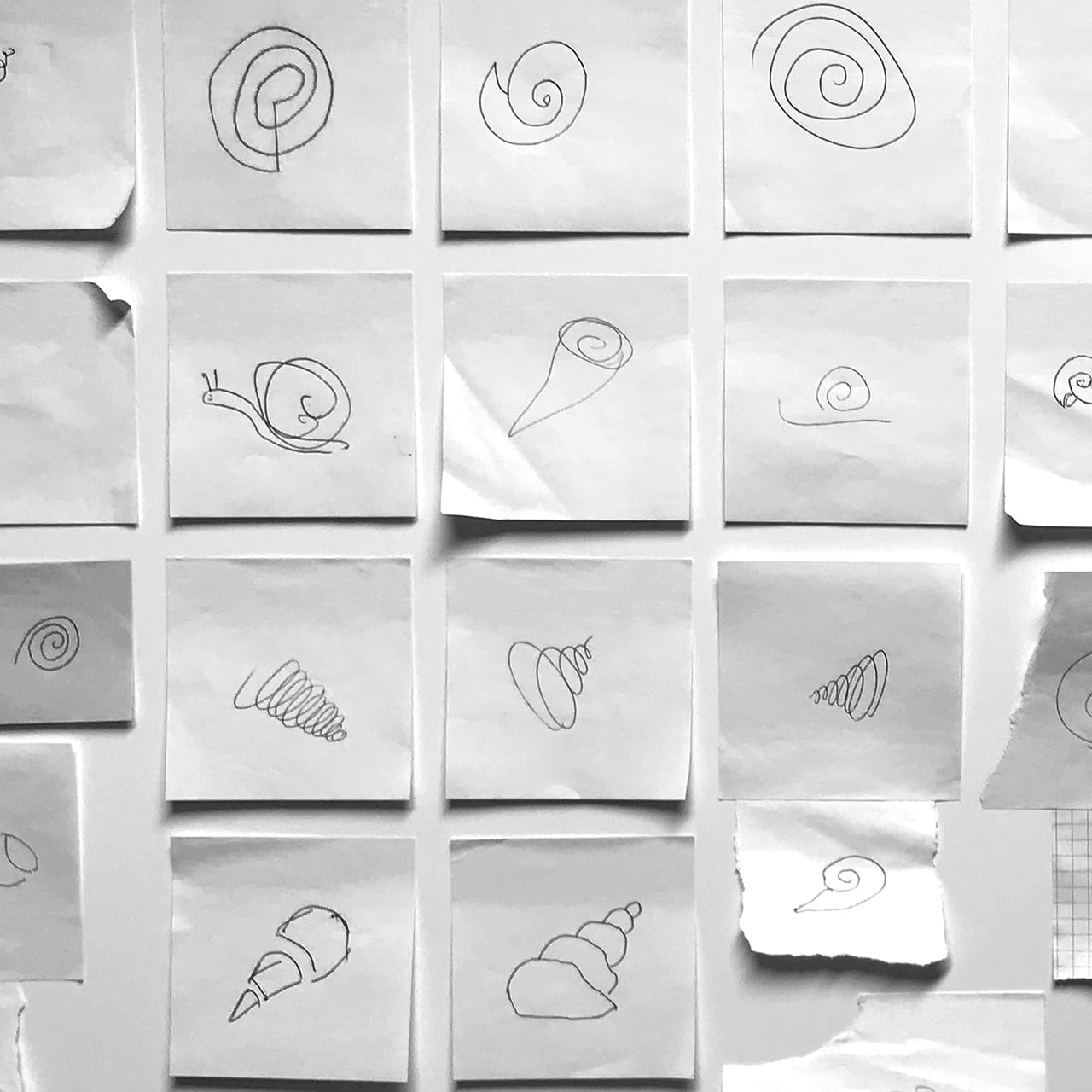
The key insight came from a simple internal exercise. People were asked to redraw the Nicequest logo from memory in under five seconds.
 
Most couldn't reproduce the actual symbol, a shell inherited from the original 2005 identity. But almost everyone drew the same thing: a spiral.
That wasn't inconsistency. It was recognition. The brand already understood itself. The system hadn't.
 
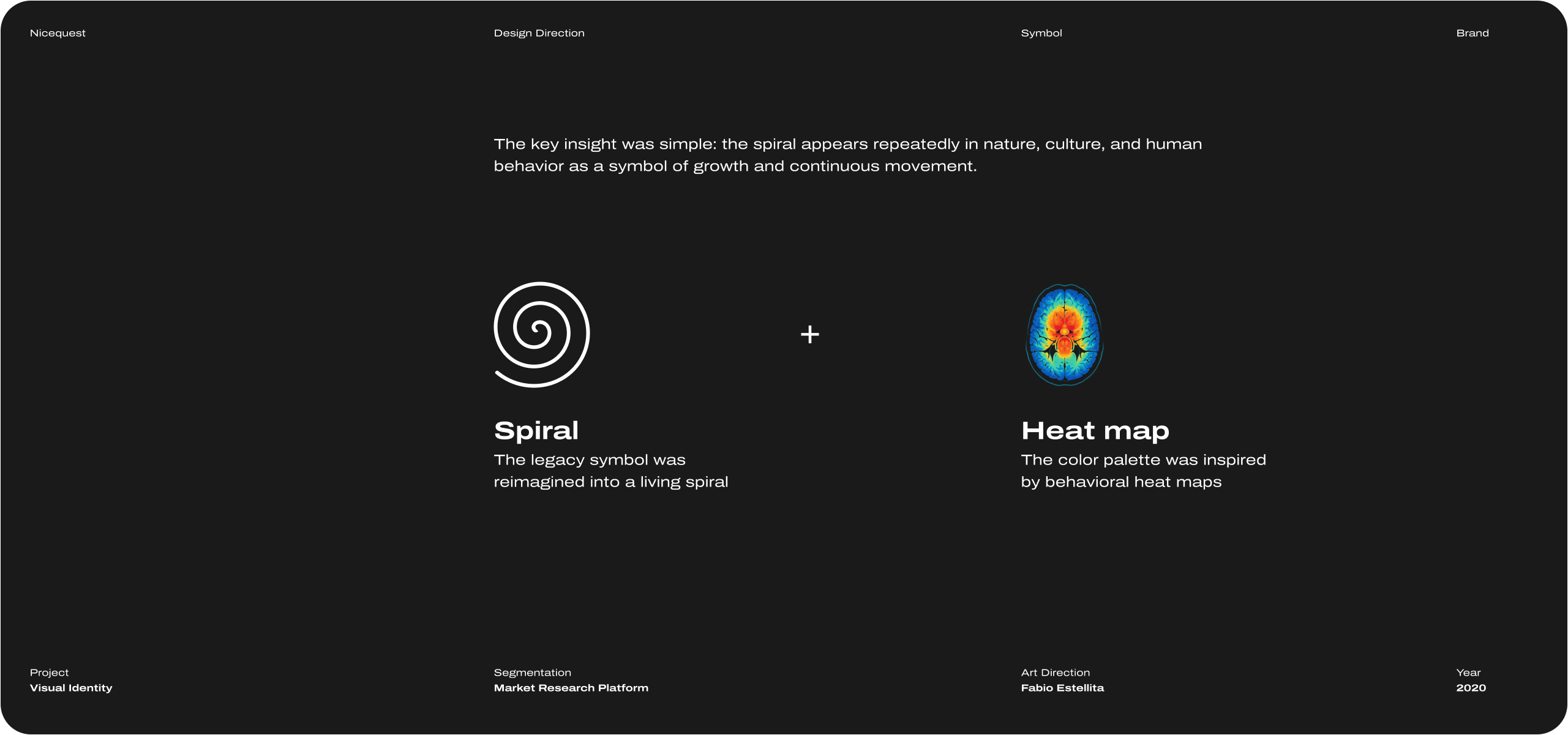
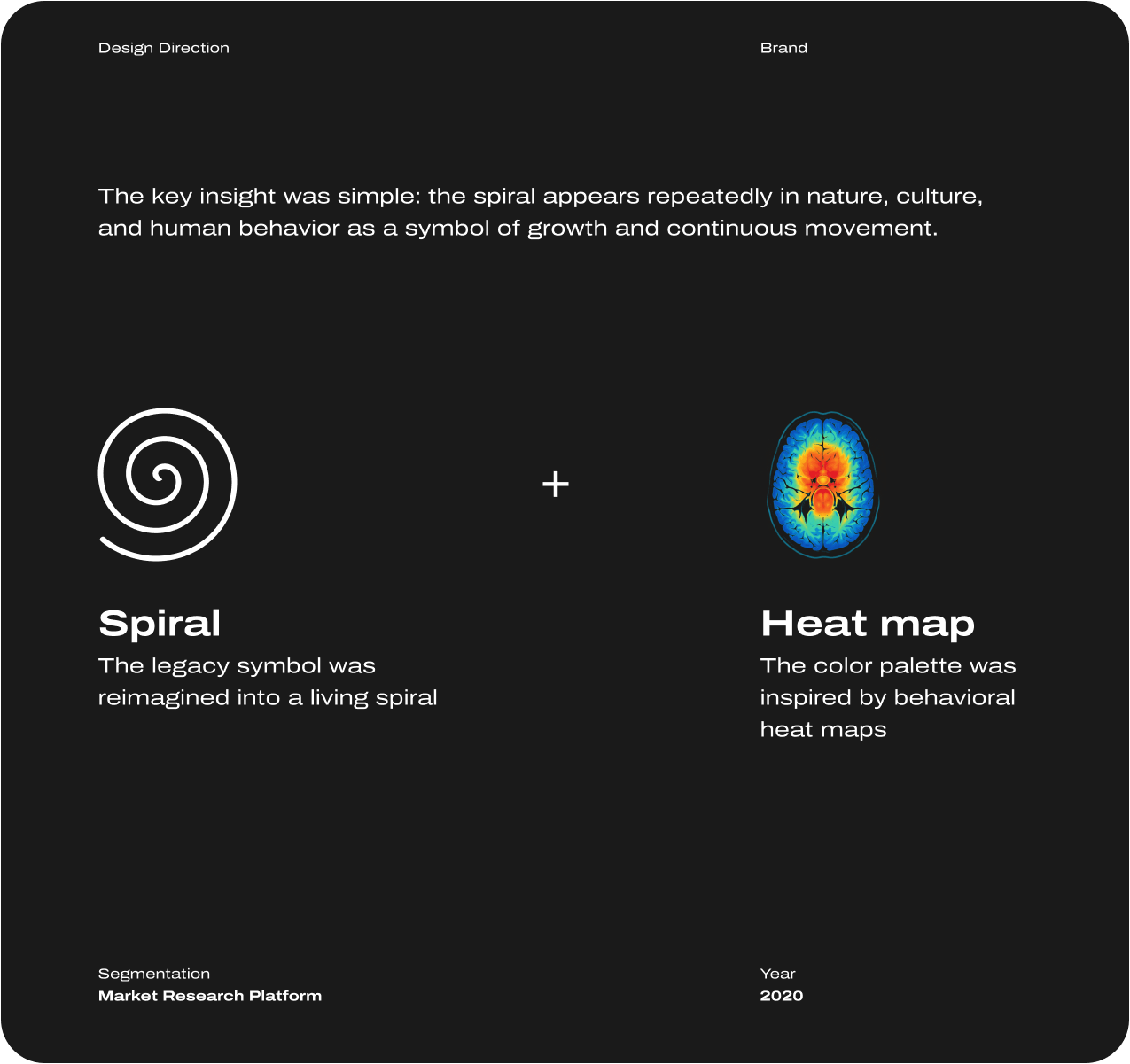
That became the foundation for the rebrand. Human behaviour is not static, and the identity shouldn't be either. The new system was built around movement, participation, and behavioural continuity over time.
 
By evolving the original mark into a spiral-based structure, the identity preserved familiarity while clearly signalling transformation. Existing users still recognised the brand. New users experienced it as contemporary, human, and digitally native. The goal wasn't novelty. It was recognisable evolution.
 
4. Building the system
 
Execution

A new logo is not a rebrand. The identity only matters if it survives across teams, countries, and platforms in production.
 
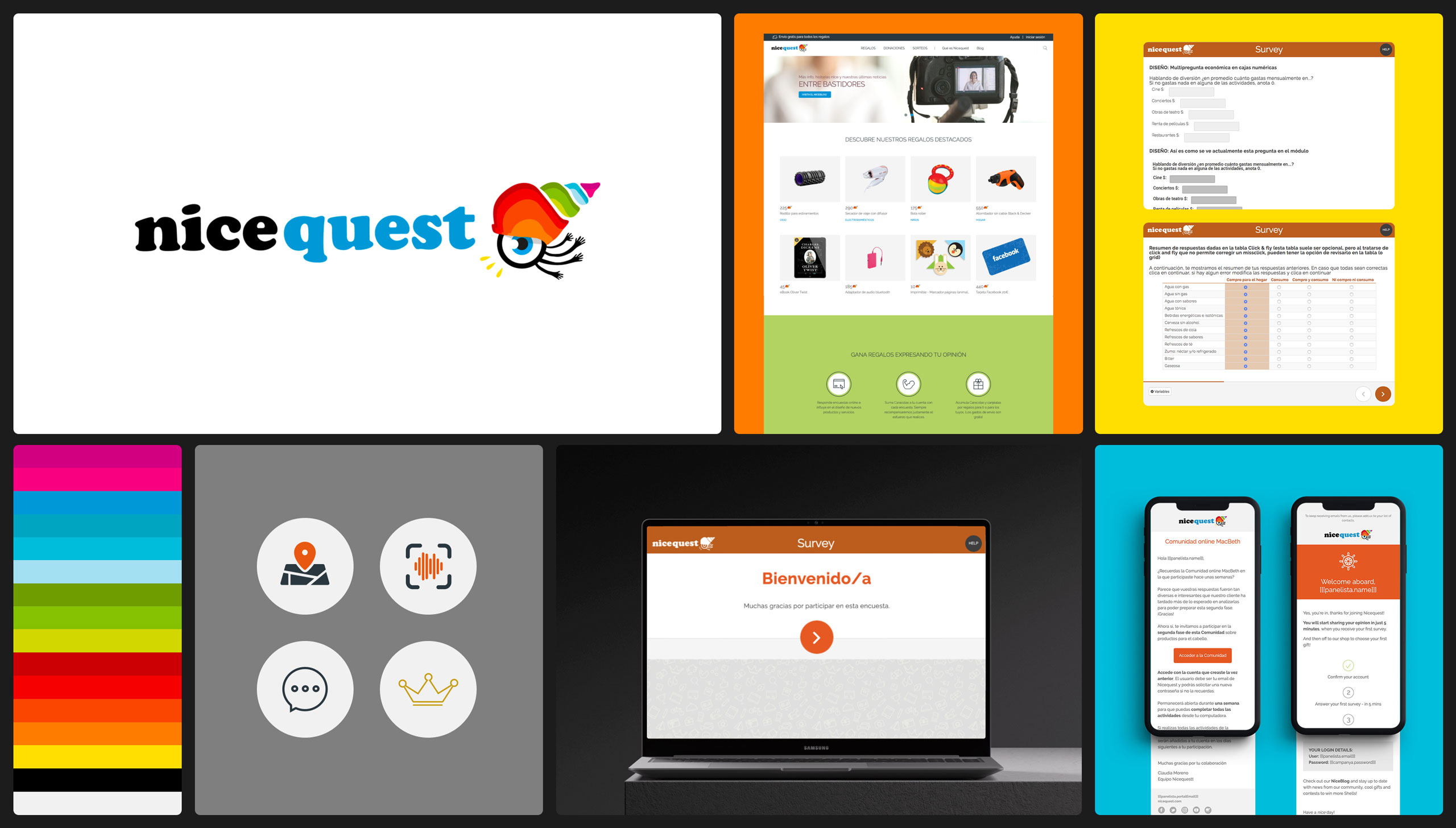
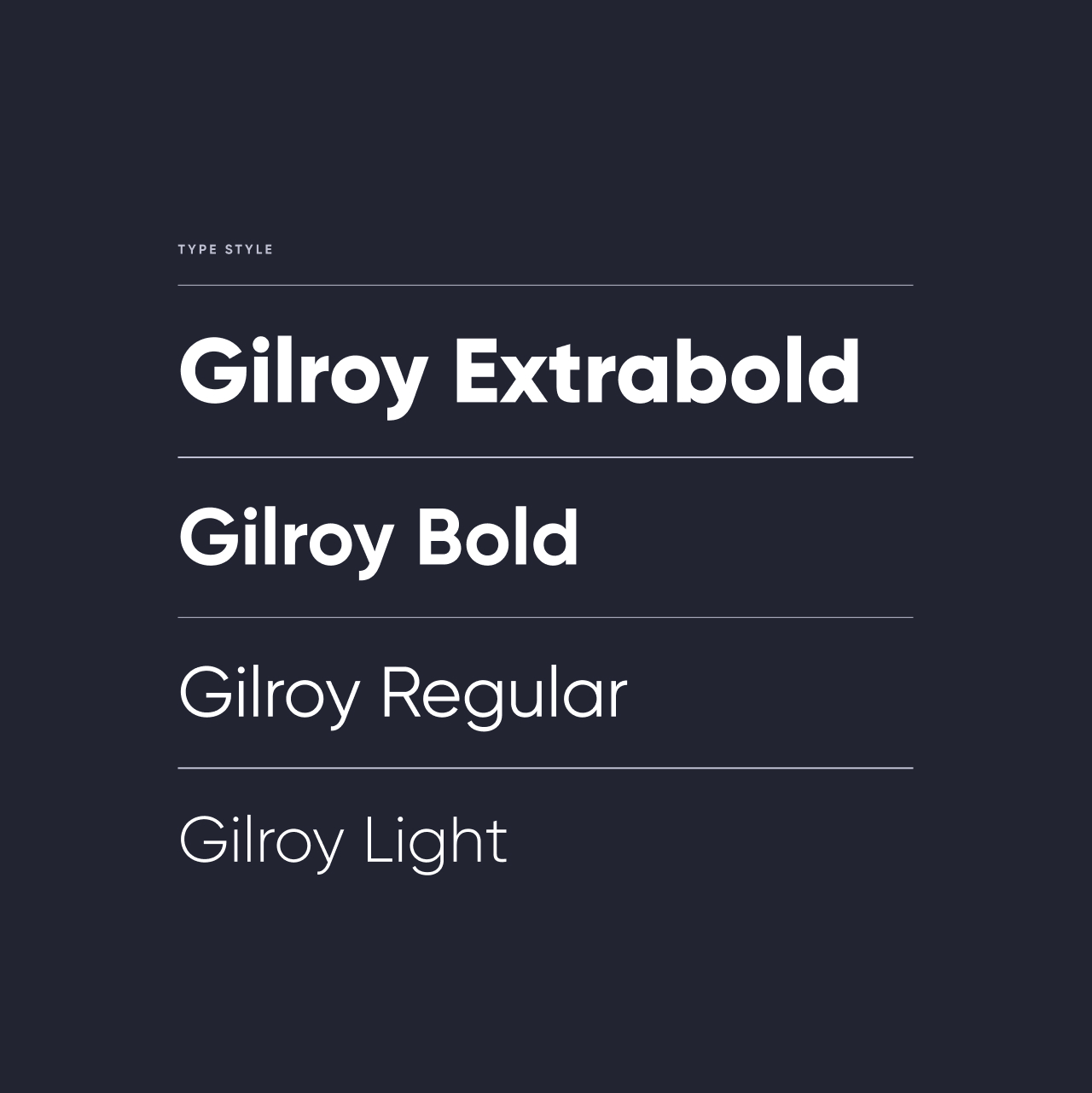
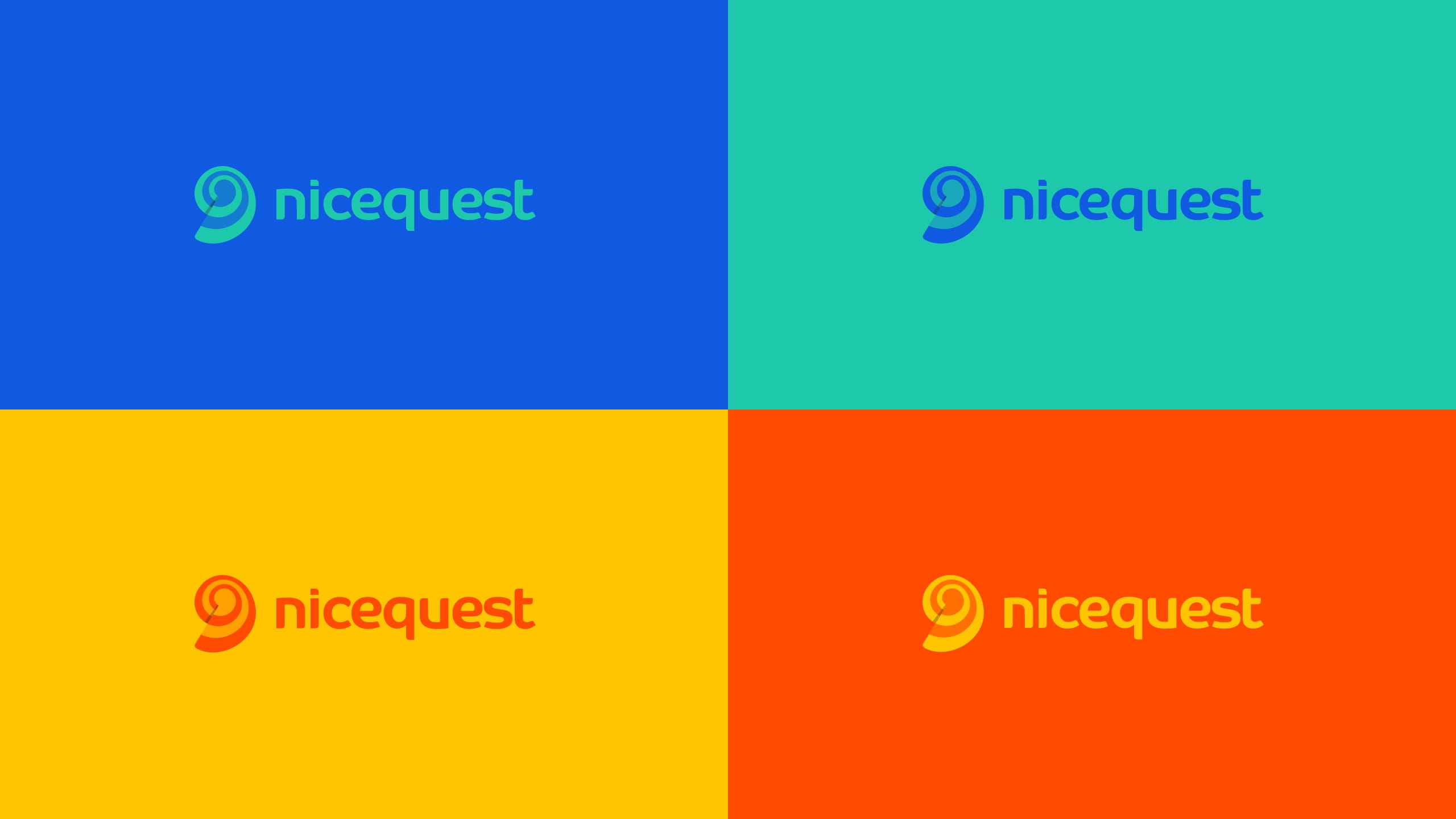
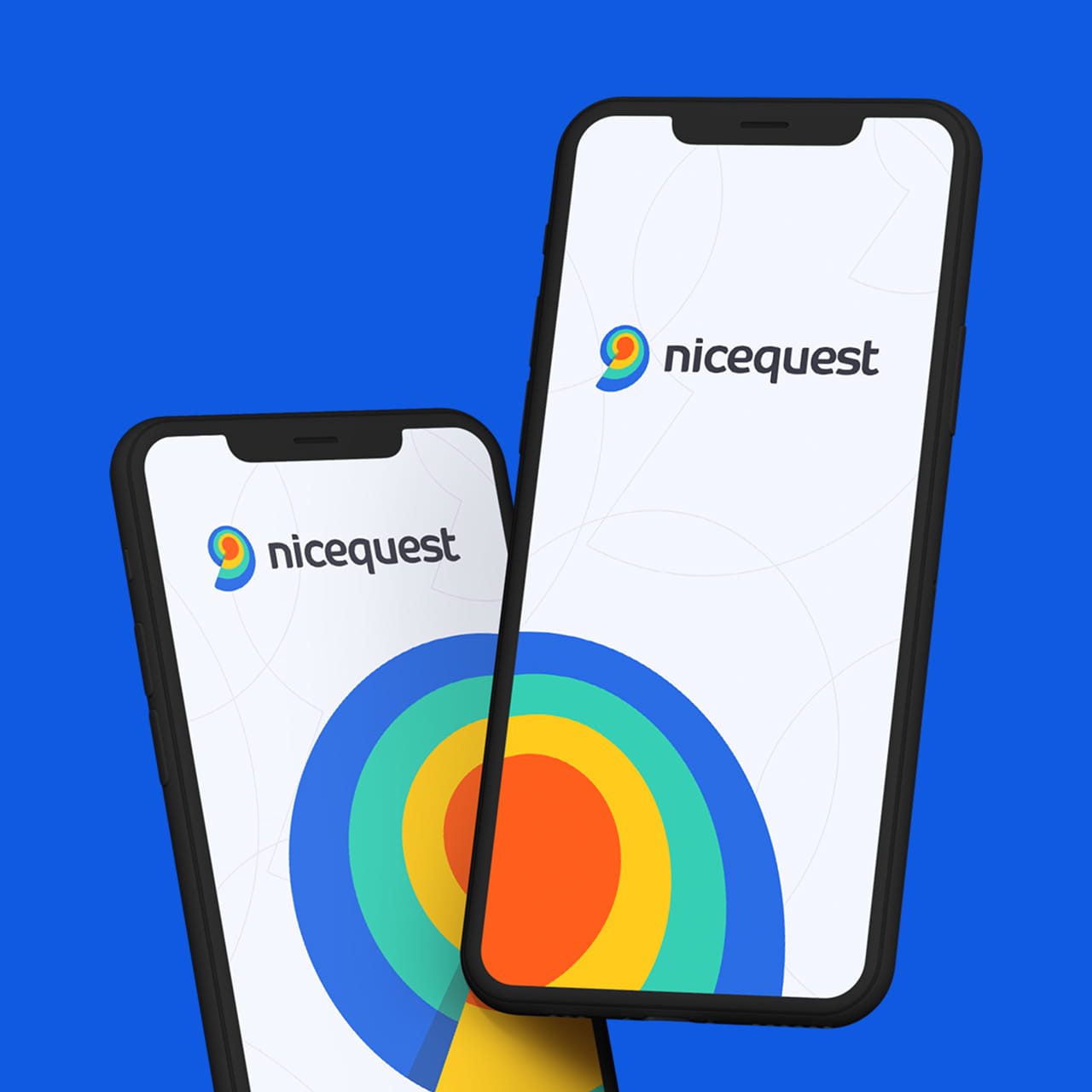
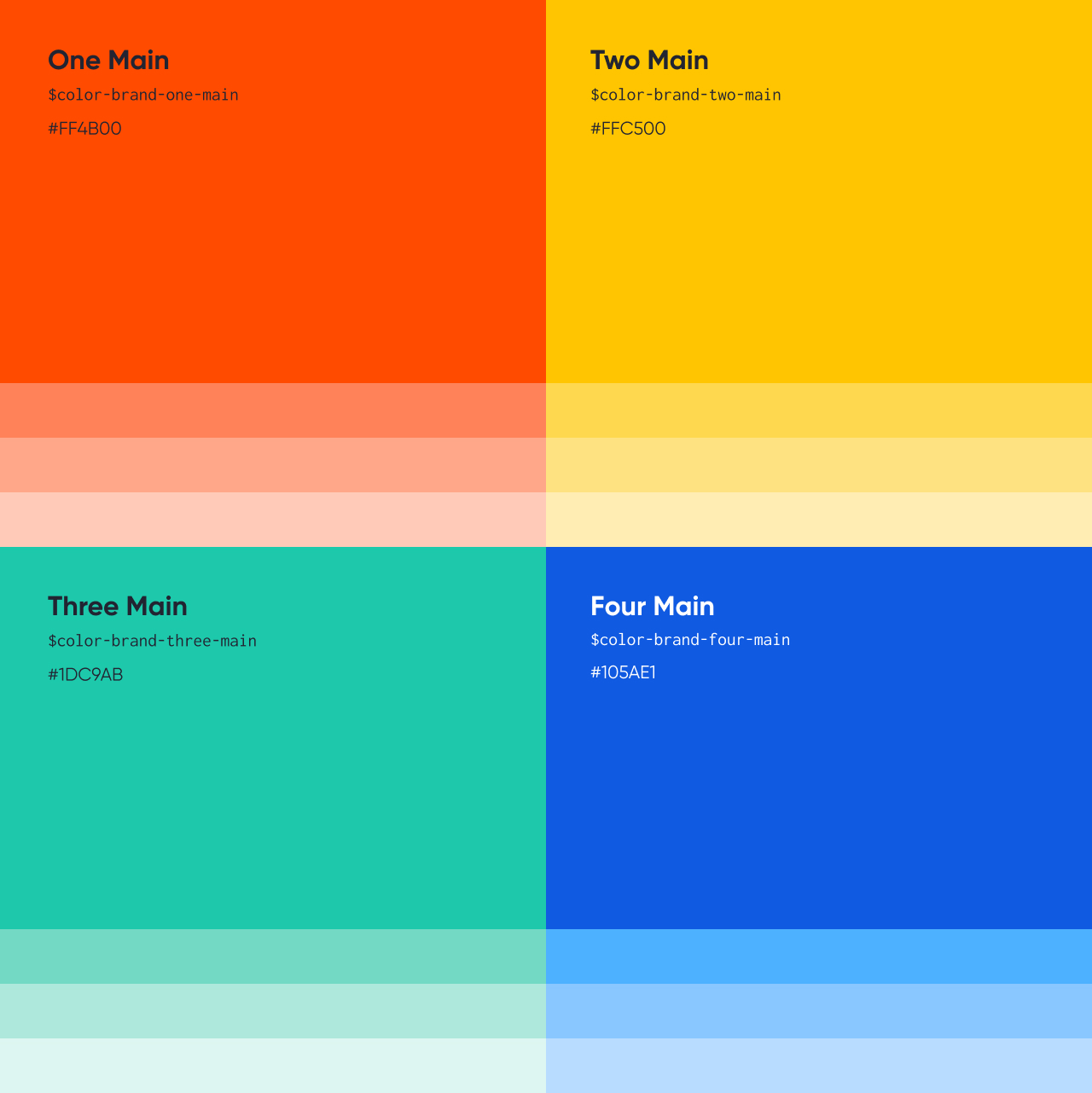
The mark was redesigned into a dynamic spiral system that behaves rather than just appears. At small sizes it works as a simple, recognisable symbol. At larger scales it becomes an expressive graphic language for movement and participation. The colour palette drew from behavioural heat maps and digital activity patterns, vibrant enough to create recognition, controlled enough to coexist with product UI without competing with it.
 
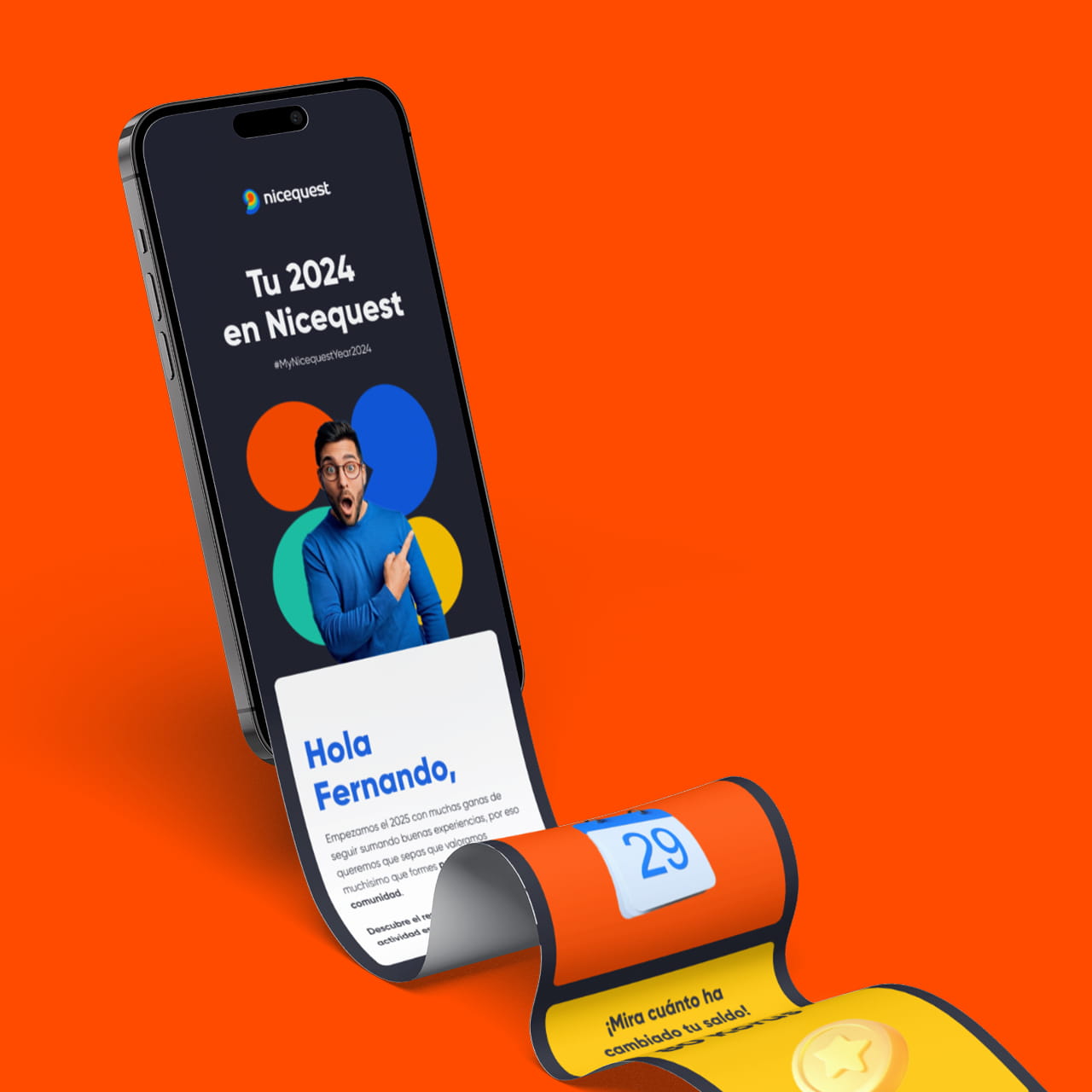
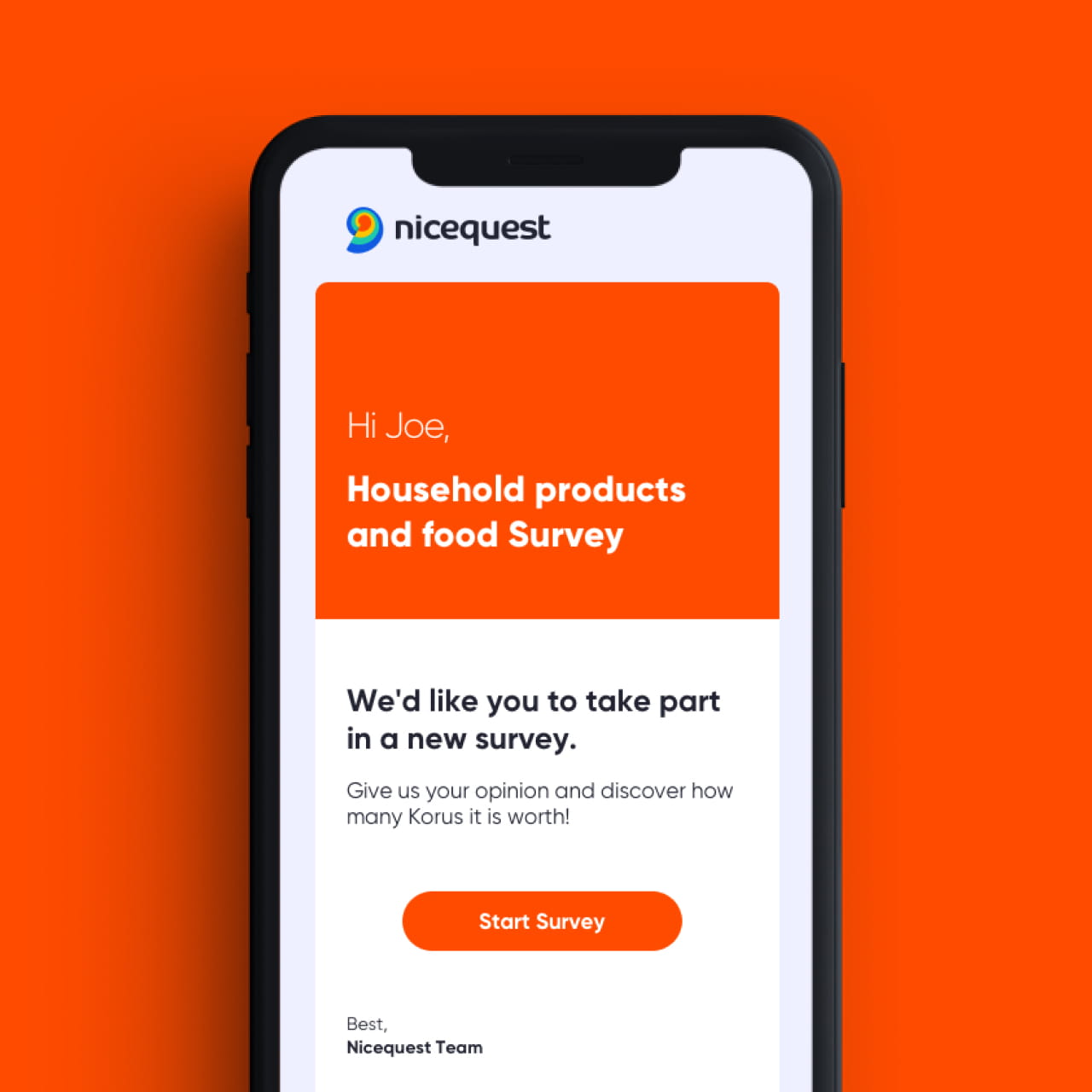
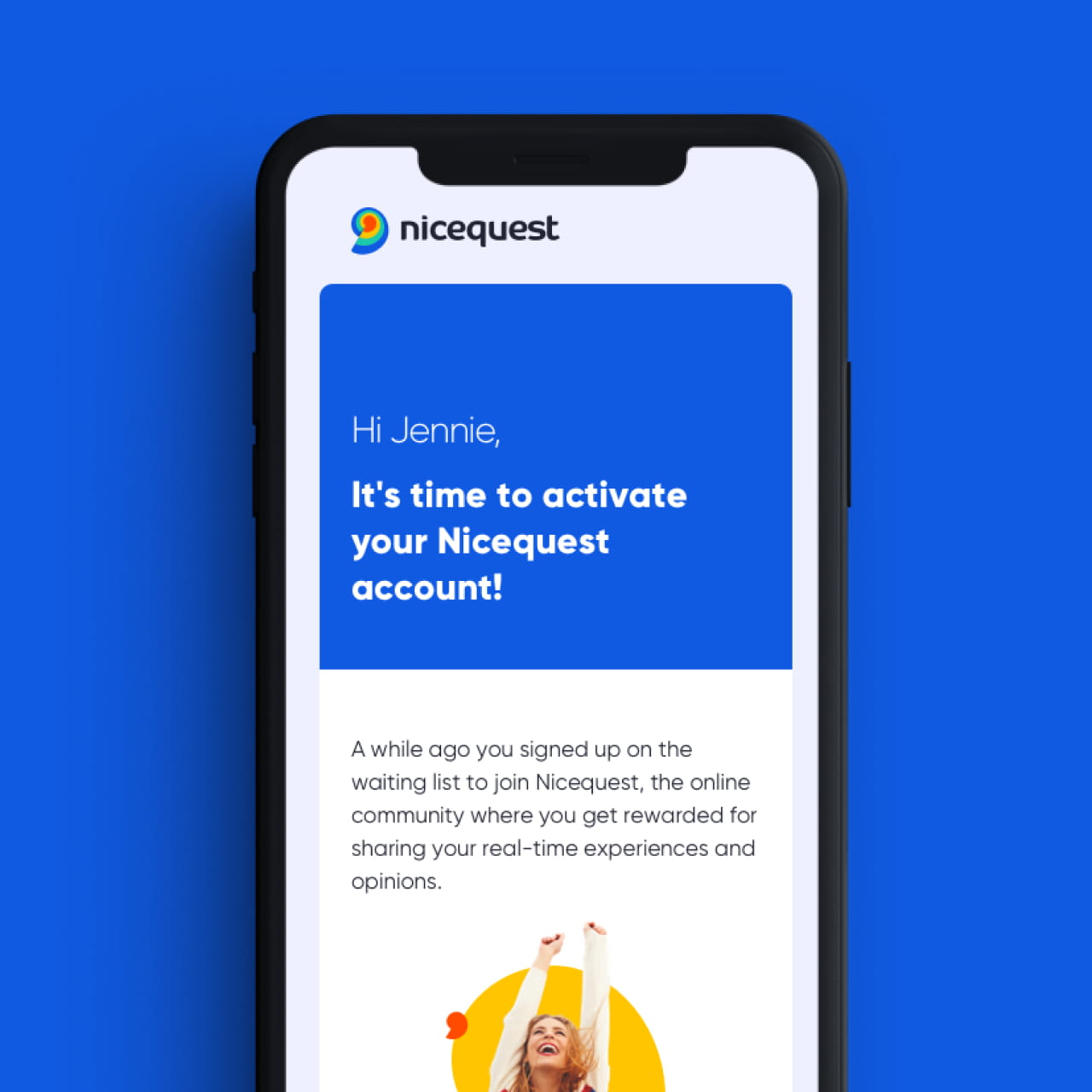
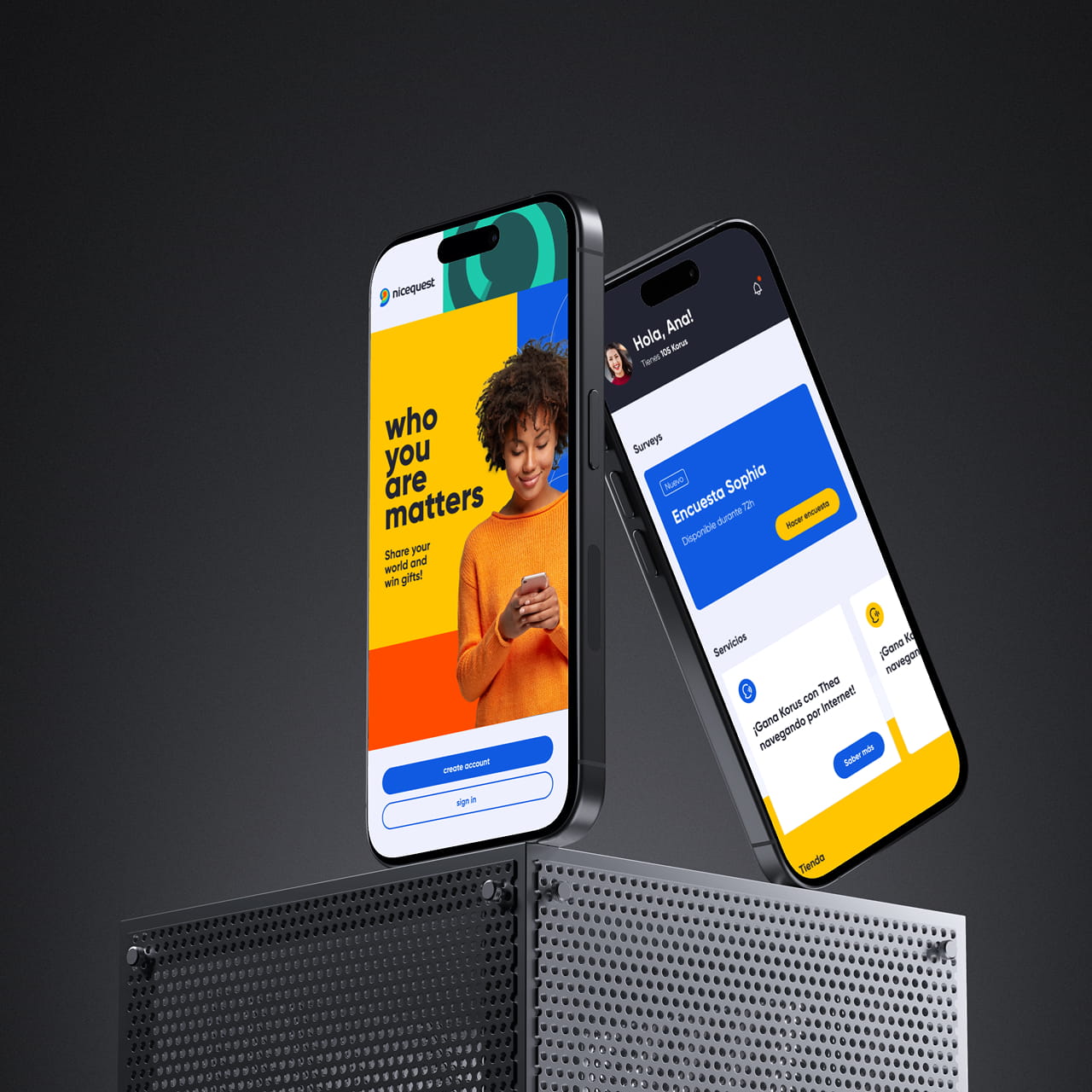
That visual language was translated into a structured UI Kit covering onboarding flows, surveys, CRM communication, web structures, iconography, and campaign infrastructure. Not a full design system yet, but a unified framework that embedded consistency into the components, so teams could work independently without fragmenting the brand.
 
Recruitment was a parallel workstream. Landing pages were redesigned with stronger CTAs, social proof, and form usability improvements. A/B testing refined copy and conversion flows continuously. The rebrand had to work where trust was earned: the moment a new panelist decided to sign up.
 
5. What changed

Outcomes / Key Insights
 
The rebrand launched across a platform with more than 850,000 panelists in 30 countries, and it did what it set out to do: it introduced change without breaking trust. Existing users still recognised the brand. New users met it as contemporary, human, and digitally native.
 
The work also outlived the project itself.

The Nicequest system became the visual and operational foundation for the One Panel / Evolv initiative, GfK's effort to unify its global panel ecosystem. The relationship became bidirectional: Nicequest's UI Kit informed One Panel's architecture, and One Panel's design system later fed improvements back into Nicequest. The rebrand had become infrastructure, not just a new identity.
 
The insight underneath the result: in a category defined by data, trust is the brand's real product. Every visual and verbal decision was measured against whether it made the platform feel more respectful, not just more modern.
 
6. What I learned
 
Learnings
 
The most important decision on this project wasn't visual. It was recognising that the brand had already evolved in users' minds before the company acknowledged it. The spiral wasn't invented. It was remembered.
 
That changed the role of the rebrand entirely. Instead of imposing a new identity onto the audience, the work became about articulating a pattern that already existed in the relationship between users and the platform.
 
Evolving a trusted brand is harder than building a new one. The constraints are tighter, the margin for error is smaller, and recognition matters more than novelty.
 
Brand evolution isn't about changing everything. It's about knowing exactly what to protect.
 
7. Impact
 
Three measurable outcomes post-rebrand, across identification, trust, and brand perception.
 
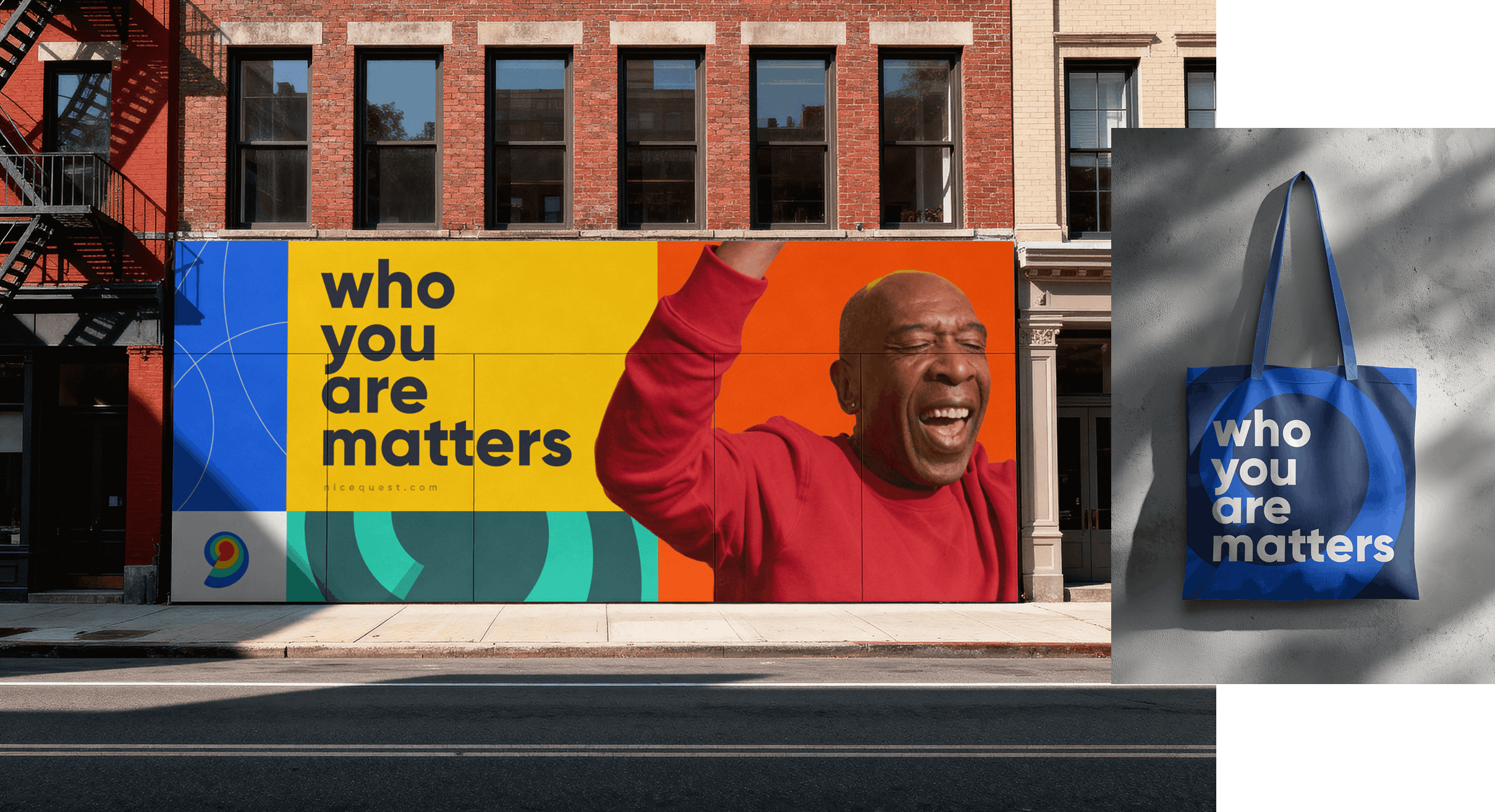
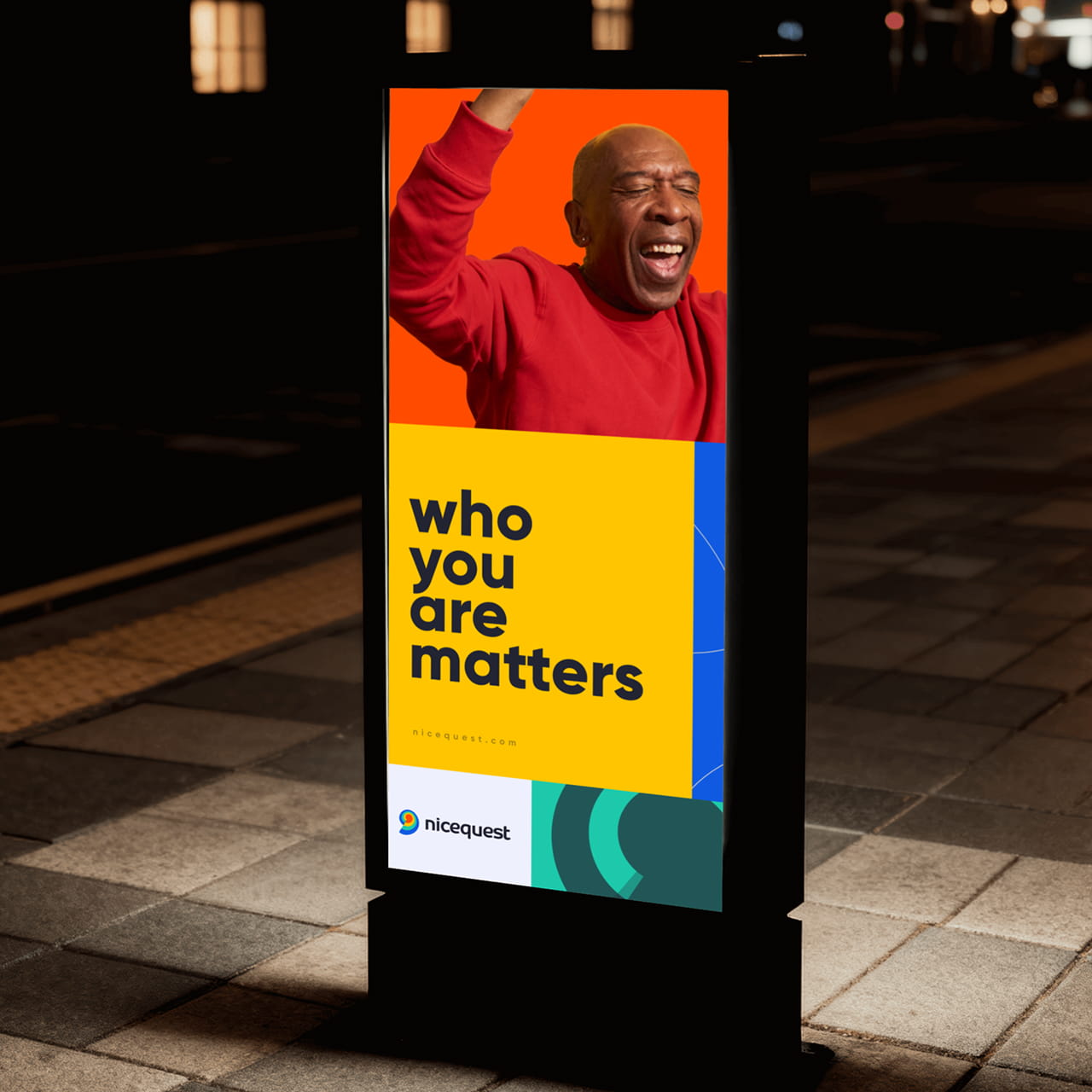
82% Identified with the new claim "Who you are matters"
N=4,000 panelists, 500 per country across 8 countries (ES, DE, MX, BR, CL, AR, CO, PE), satisfaction survey March 2021. Lowest: Germany 57%. Highest: Mexico and Brazil, 91%.
 
Driver: Rebrand articulating Nicequest's behavioural positioning around the claim "Who you are matters" and the spiral symbol system.
 
90%+ Feel their data is protected 
Same survey base, 8 countries, March 2021. Consistent across all 8 markets surveyed.

Driver: identity system built for trust-first communication, with colour, type, and tone integrated across panelist-facing touchpoints.
 
7/10 Average score across five brand attributes
Same survey base. Approachable, Trustworthy, Serious, Transparent, Honest, measured on a 0 to 10 scale. Best scores in Mexico.
 
Driver: Visual and verbal identity reframing the brand from generic data-panel aesthetics to a behavioural-first language.
 
nicequest-depois-b nicequest-antes-b

Overview

From mark to colour to product surfaces to the infrastructure behind them. A complete identity system designed to preserve trust at scale, across 20+ countries and every surface panelists touch.
ncq-03

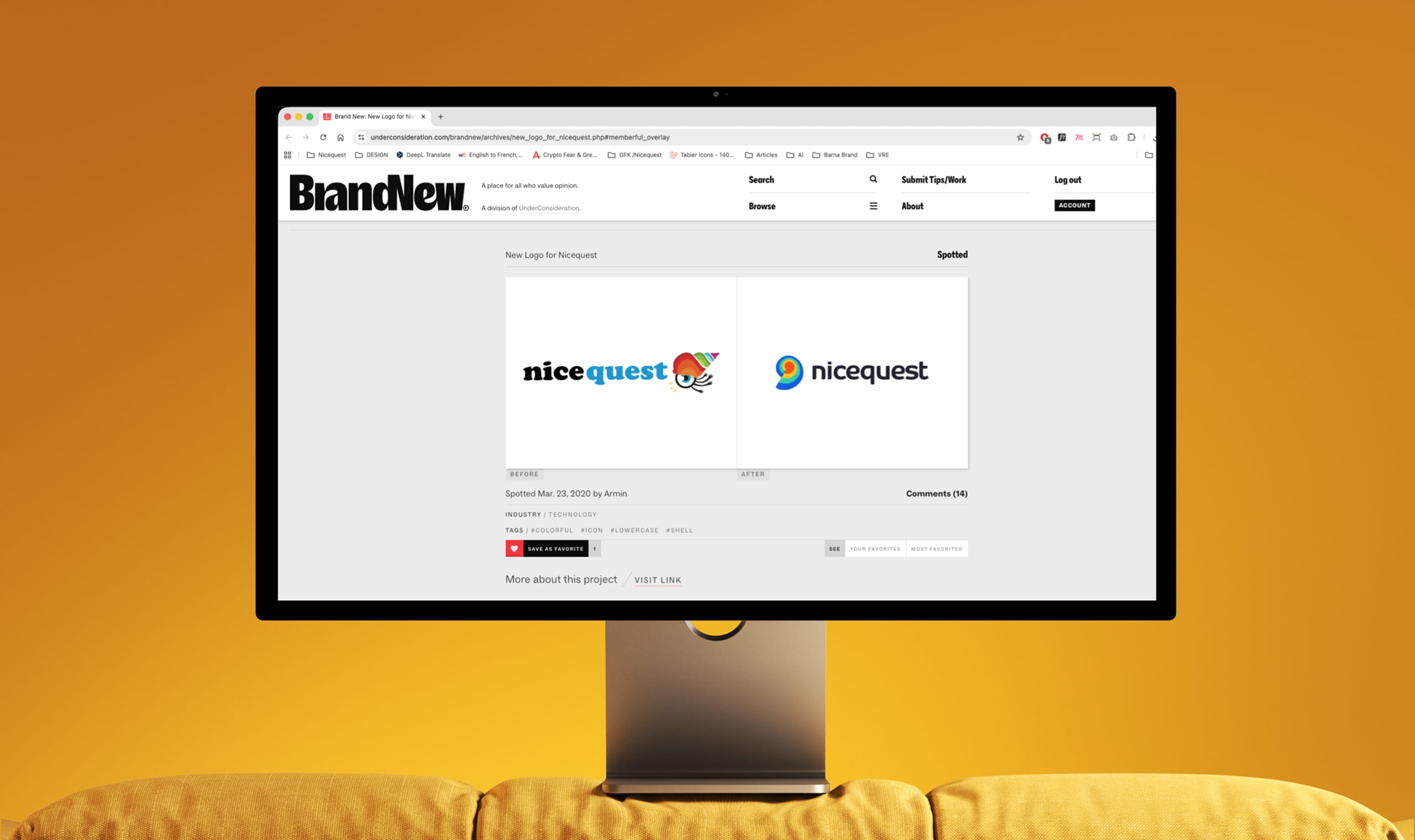
The Nicequest project was featured on Brand New site that showcases noteworthy logo and identity work.
ncq-01
ncq-02a
ncq-20
ncq-22
old-logo-final
rabiscos

5 seconds

People were asked to draw the Nicequest logo from memory in five seconds. Most couldn't reproduce the actual symbol. Almost everyone drew the same thing: a spiral.
ncq-08f
ncq-08-mobile

Brand

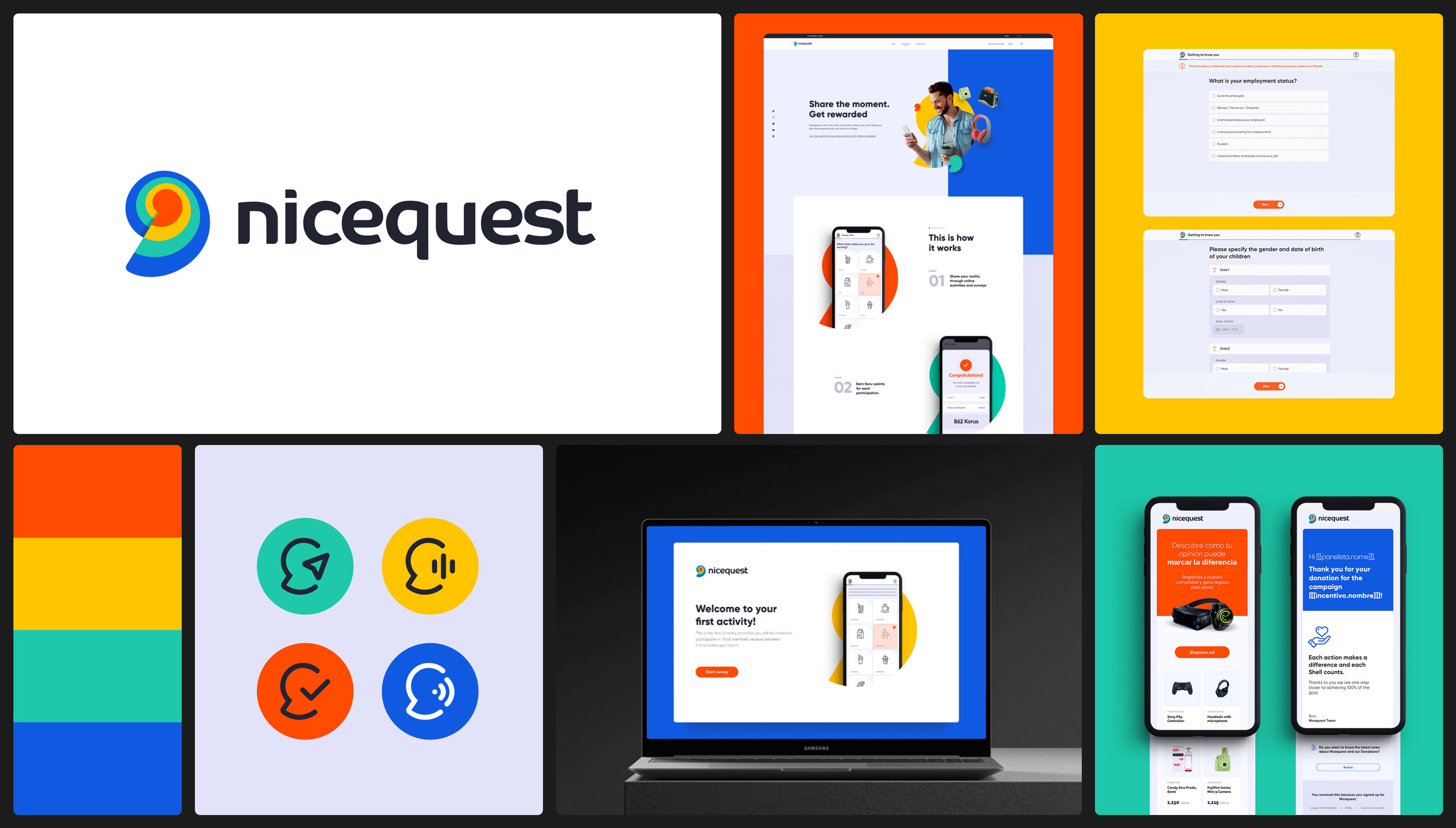
The original shell became a spiral. The mark evolved, it wasn't replaced. At small sizes it reads as a clean, recognisable symbol. At larger scales it opens into an expressive graphic language for movement and participation.

logo-animation
ncq-05b
ncq-06b
ncq-logo-color

Color pallete

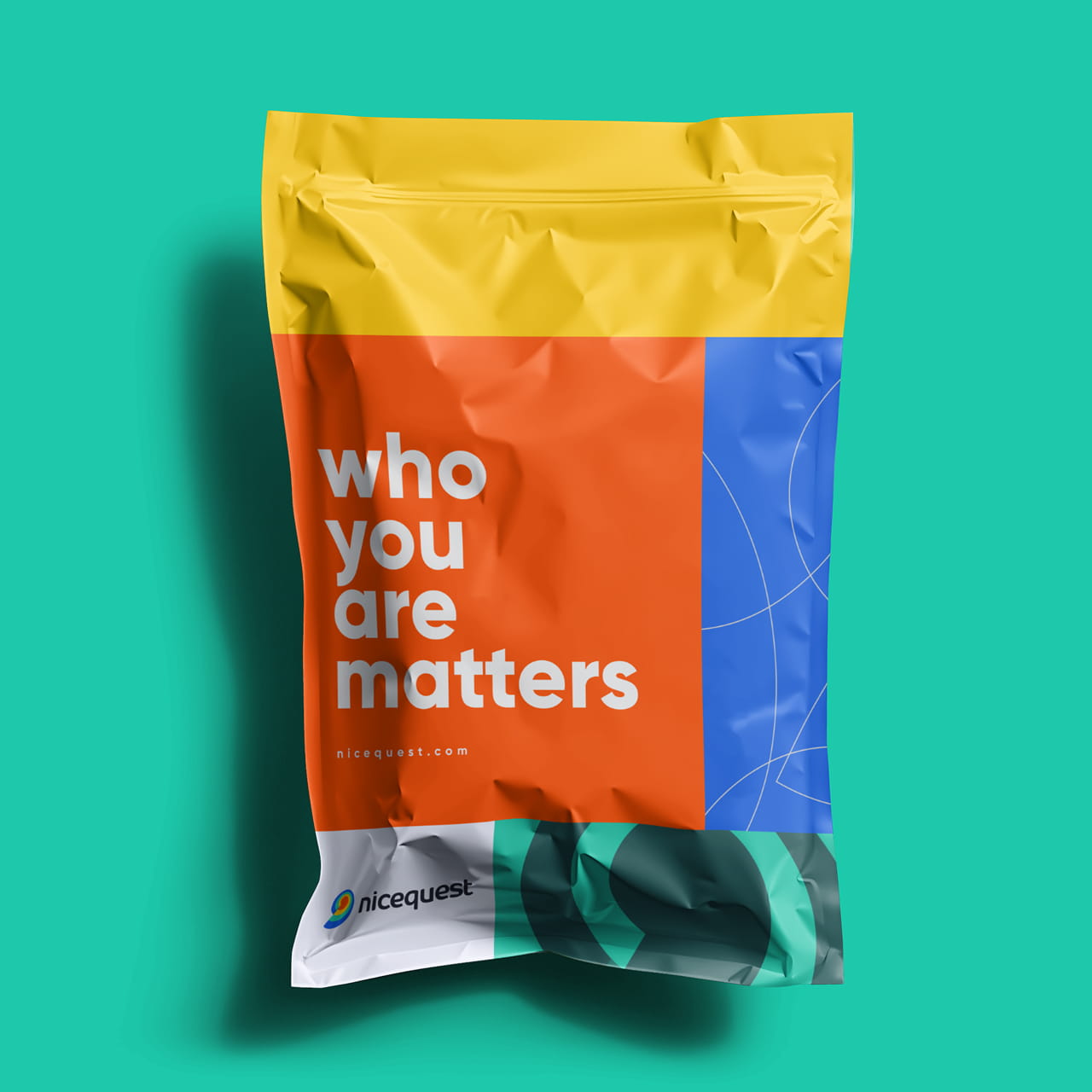
The colour system drew from behavioural heat maps and digital activity patterns. Vibrant enough to build recognition across surfaces, controlled enough to coexist with product UI without competing with it.
ncq-07
ncq-12
ncq-13 (1)
ncq-24
ncq-016
ncq-26
ncq-27

Applications 

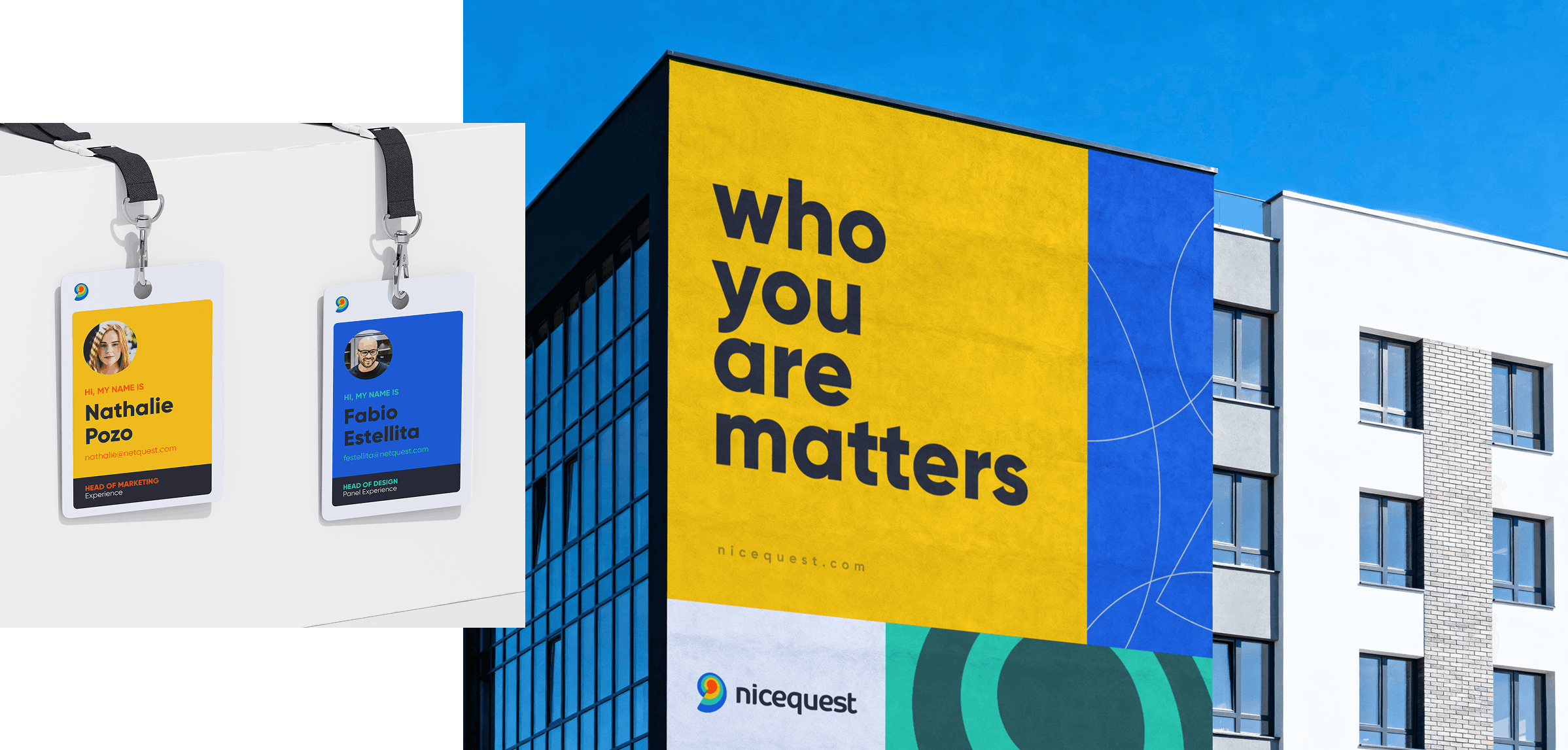
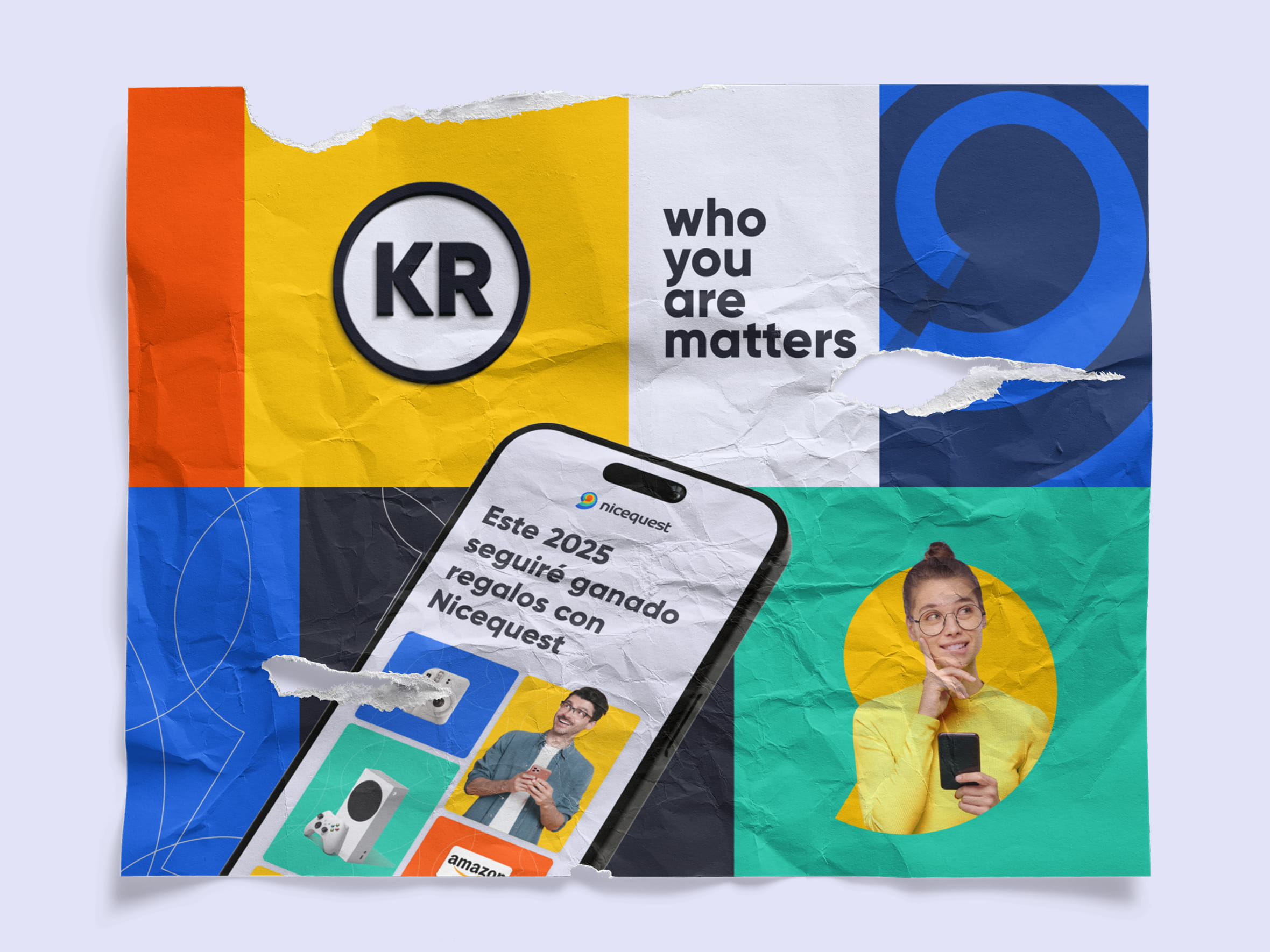
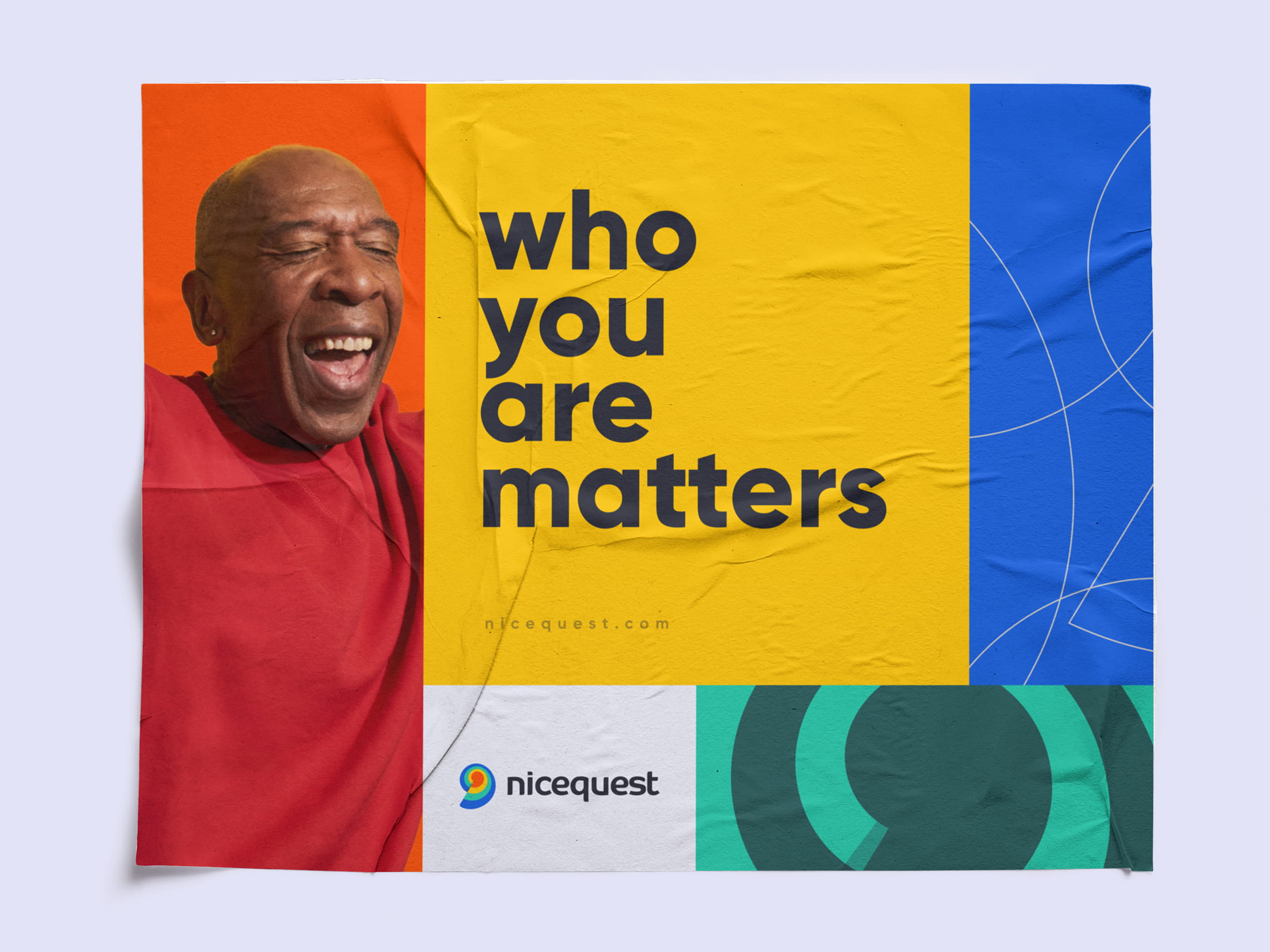
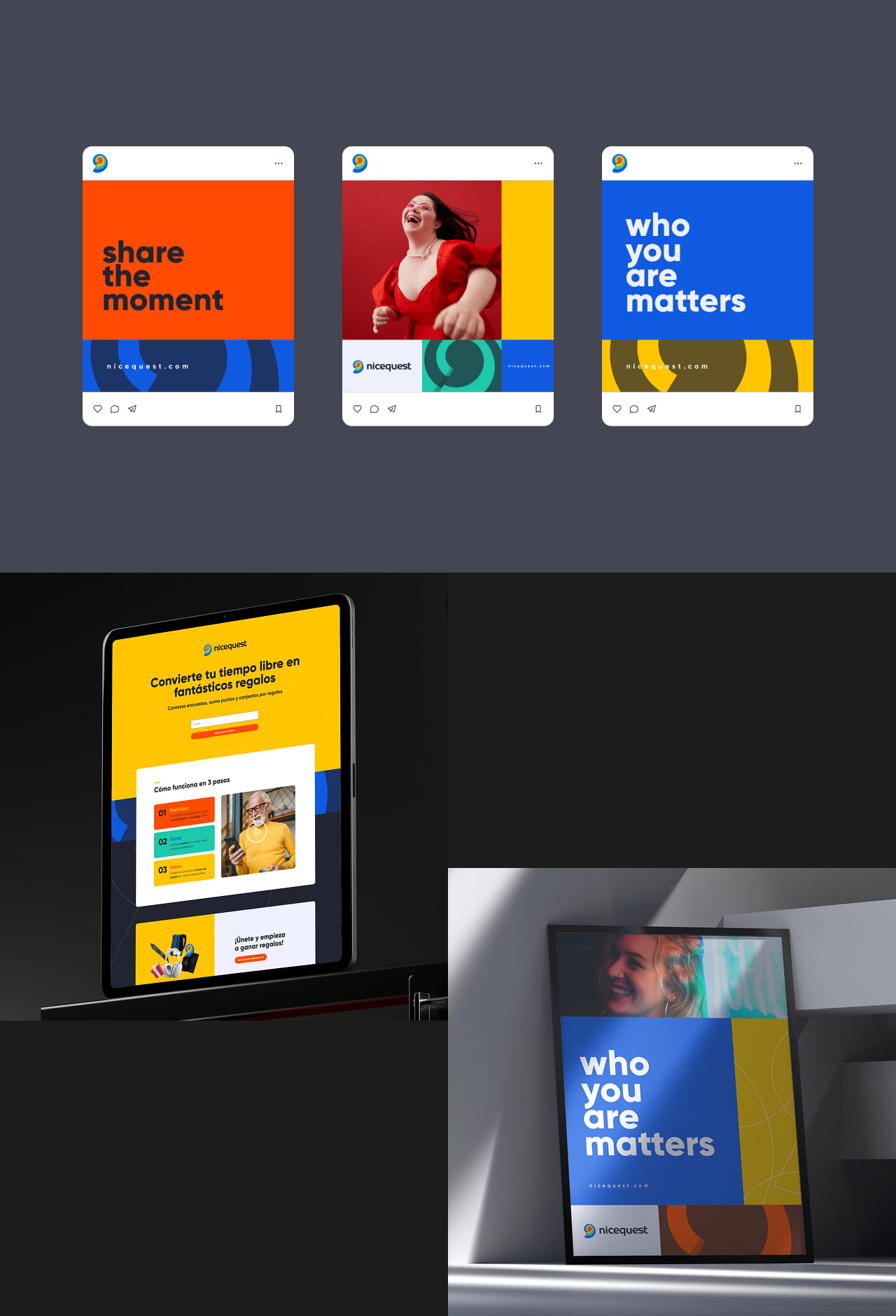
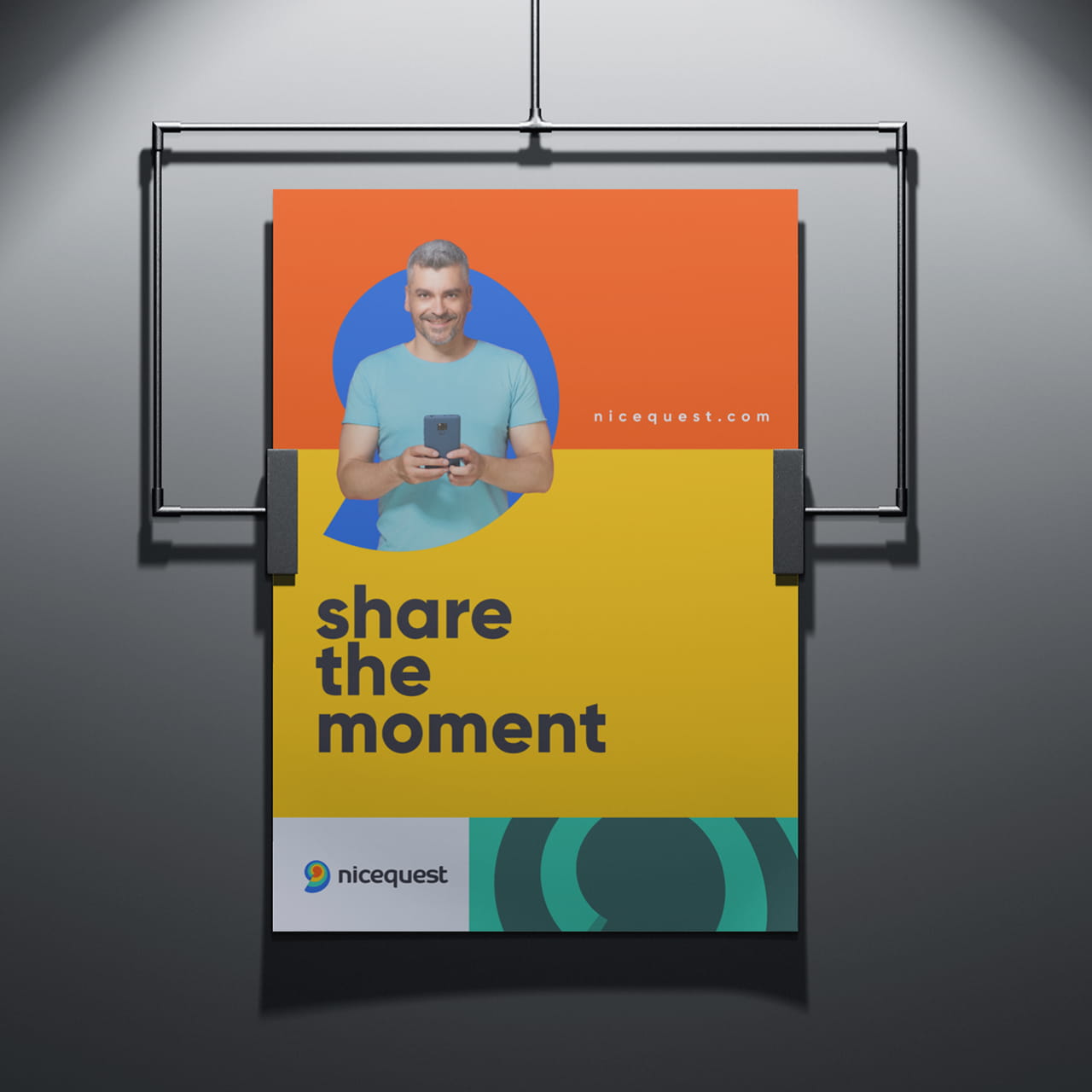
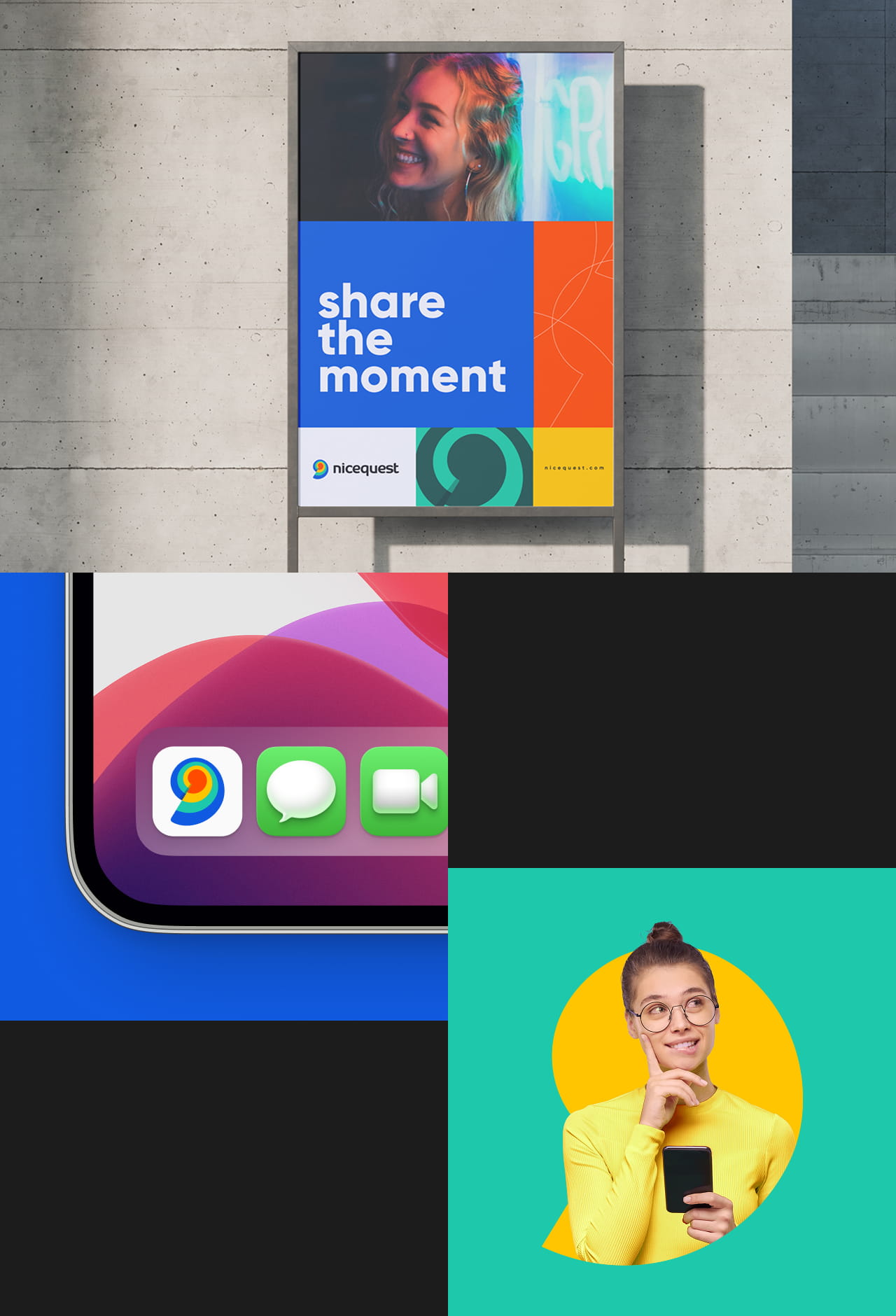
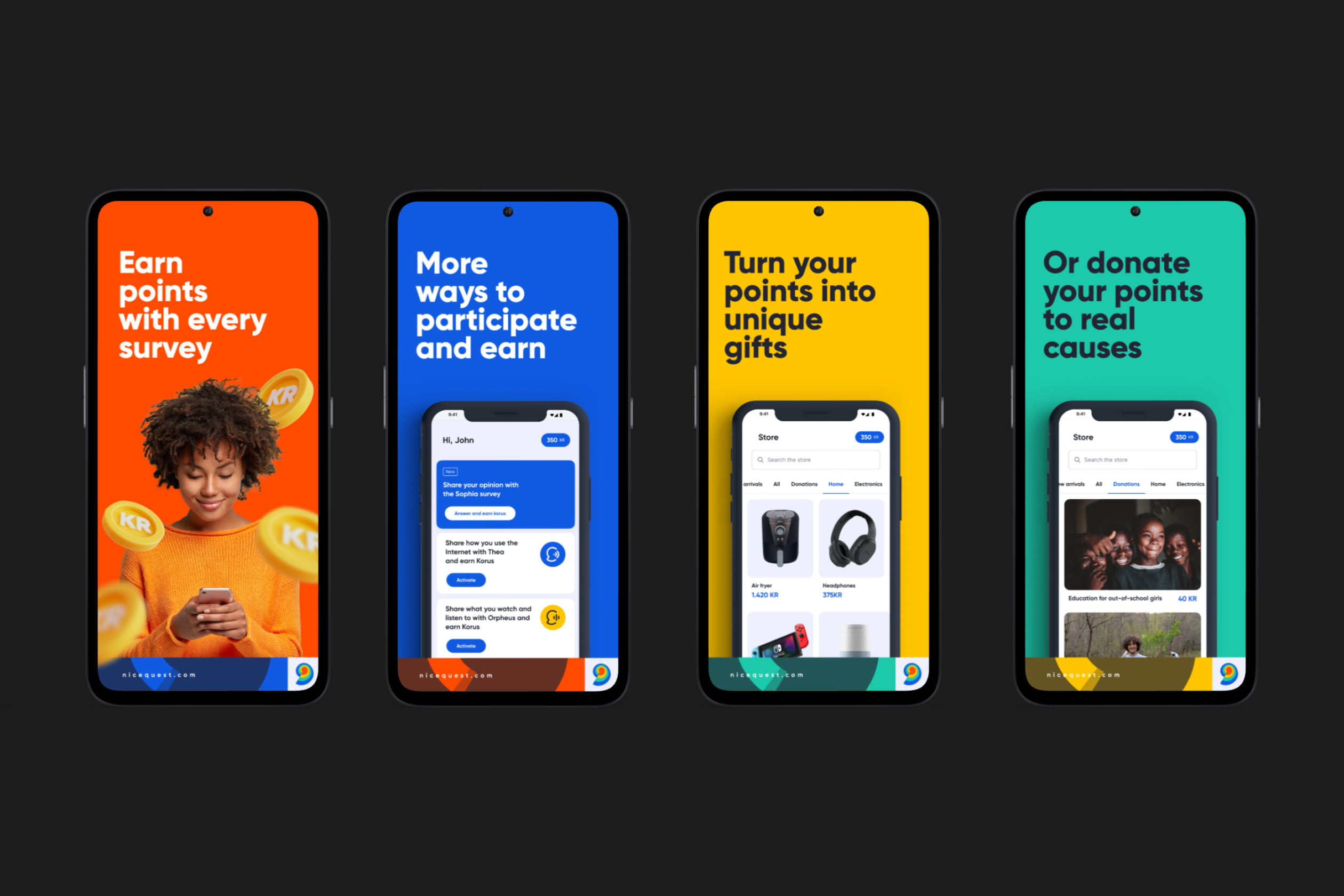
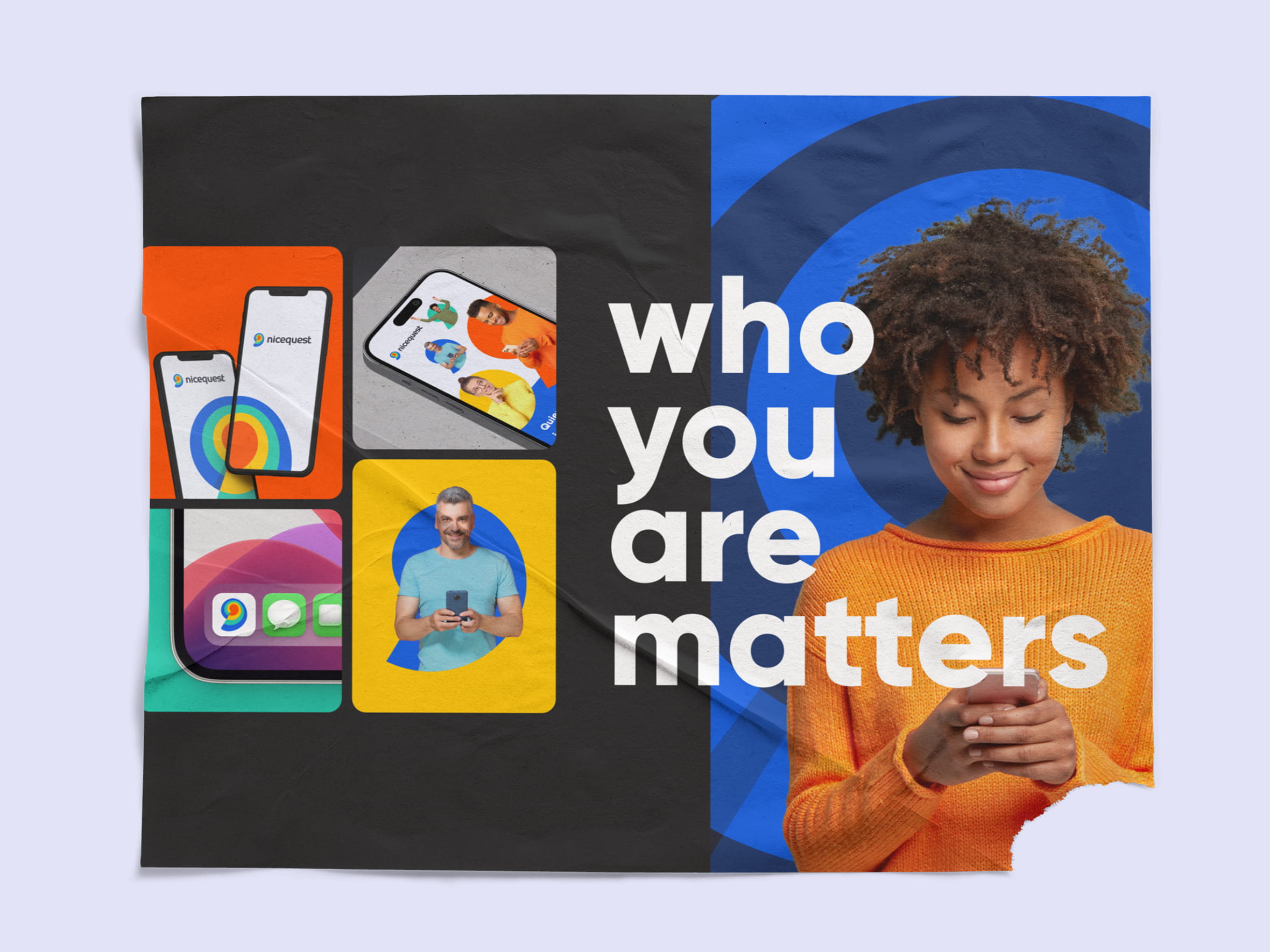
The identity carries across physical and digital touchpoints without being rigid. The spiral anchors each piece while the colour and type system handle the variation.
ncq-28b
ncq-29a

Product

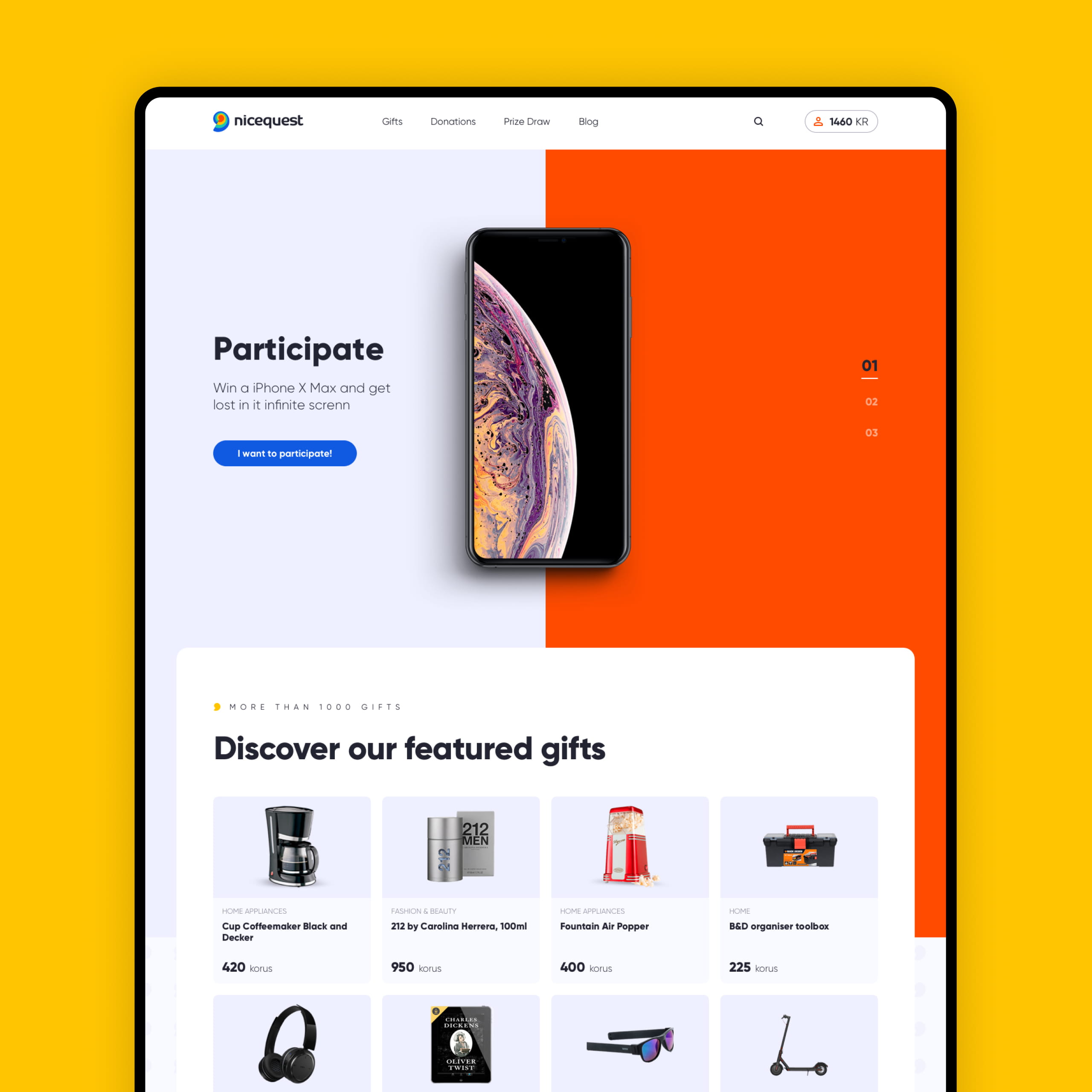
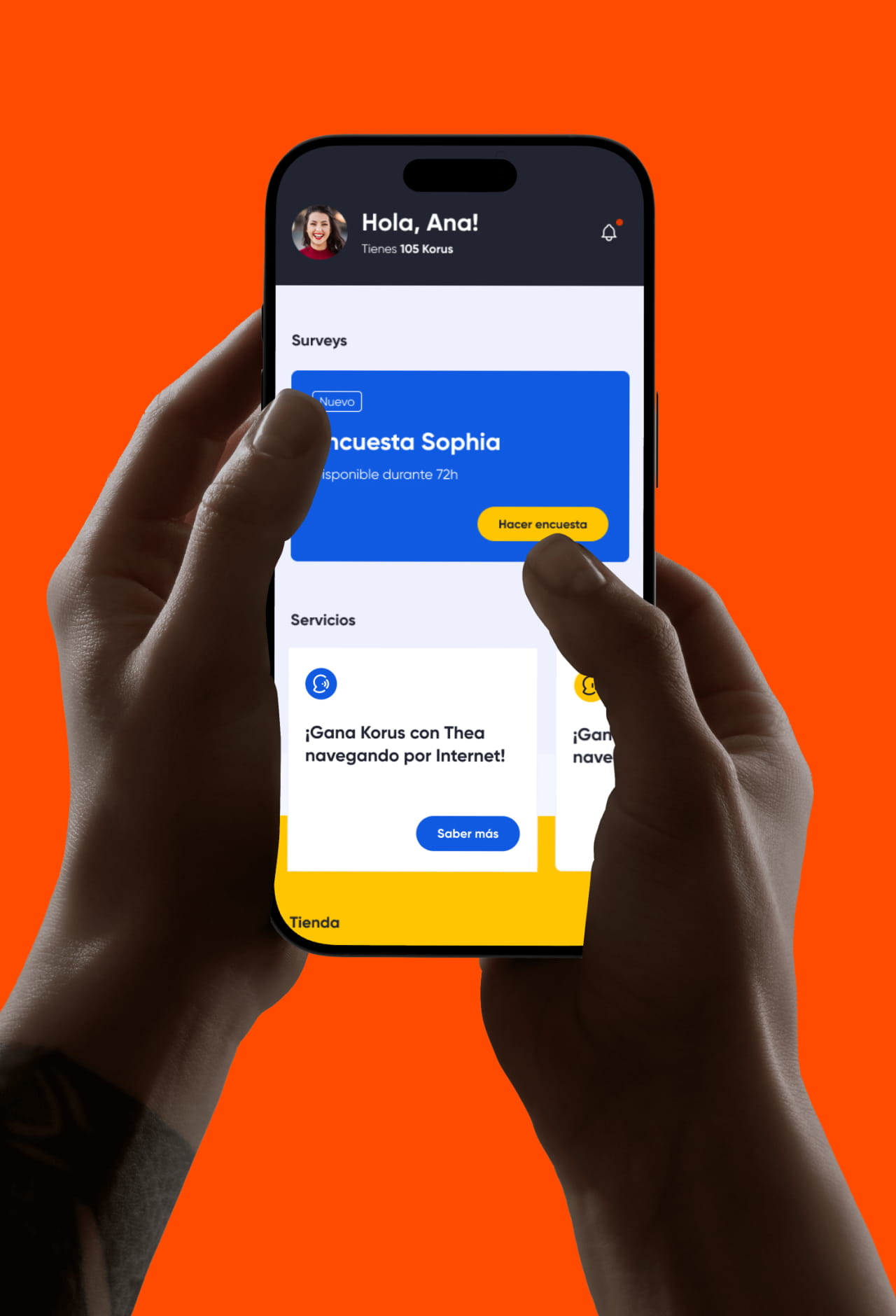
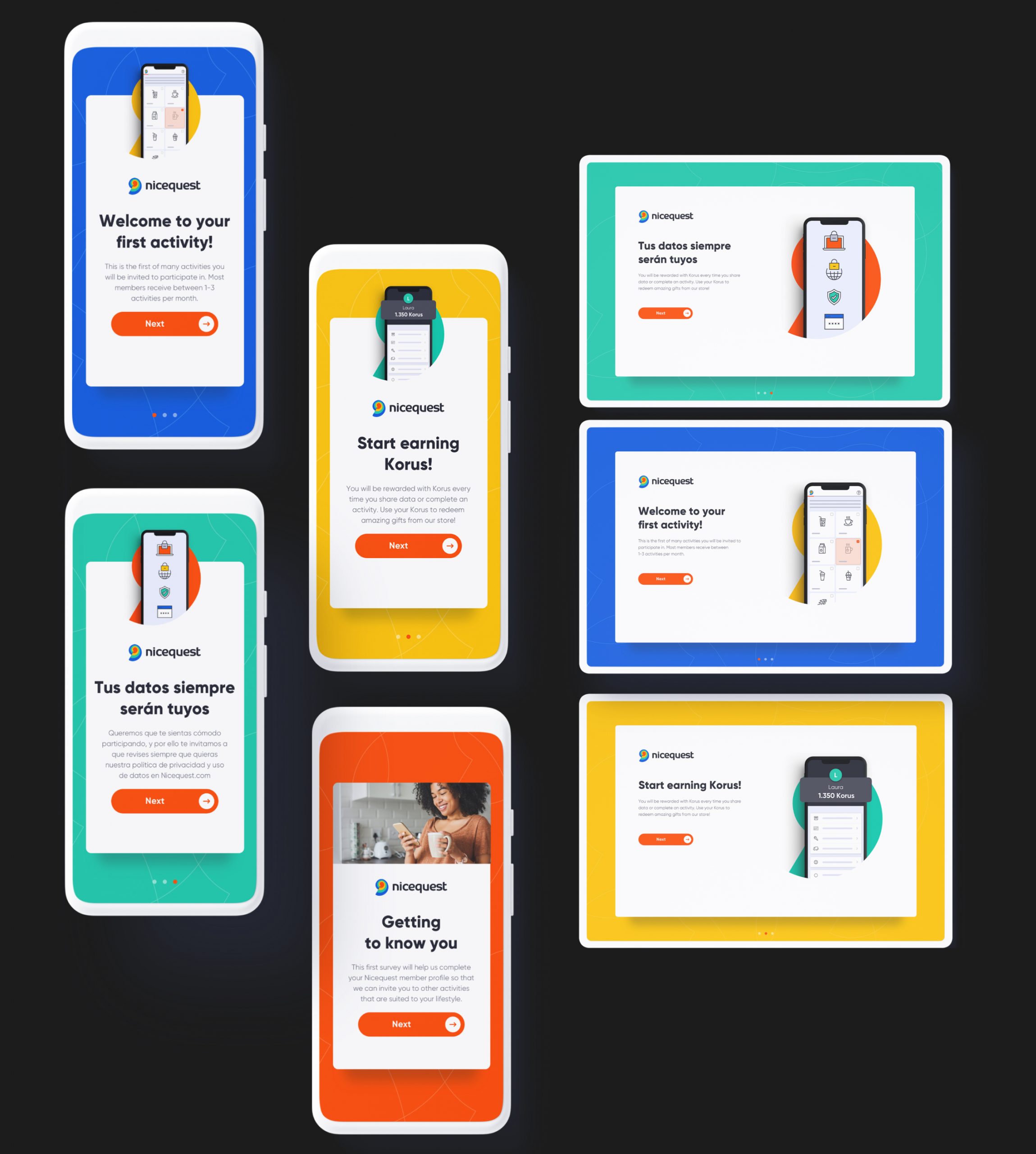
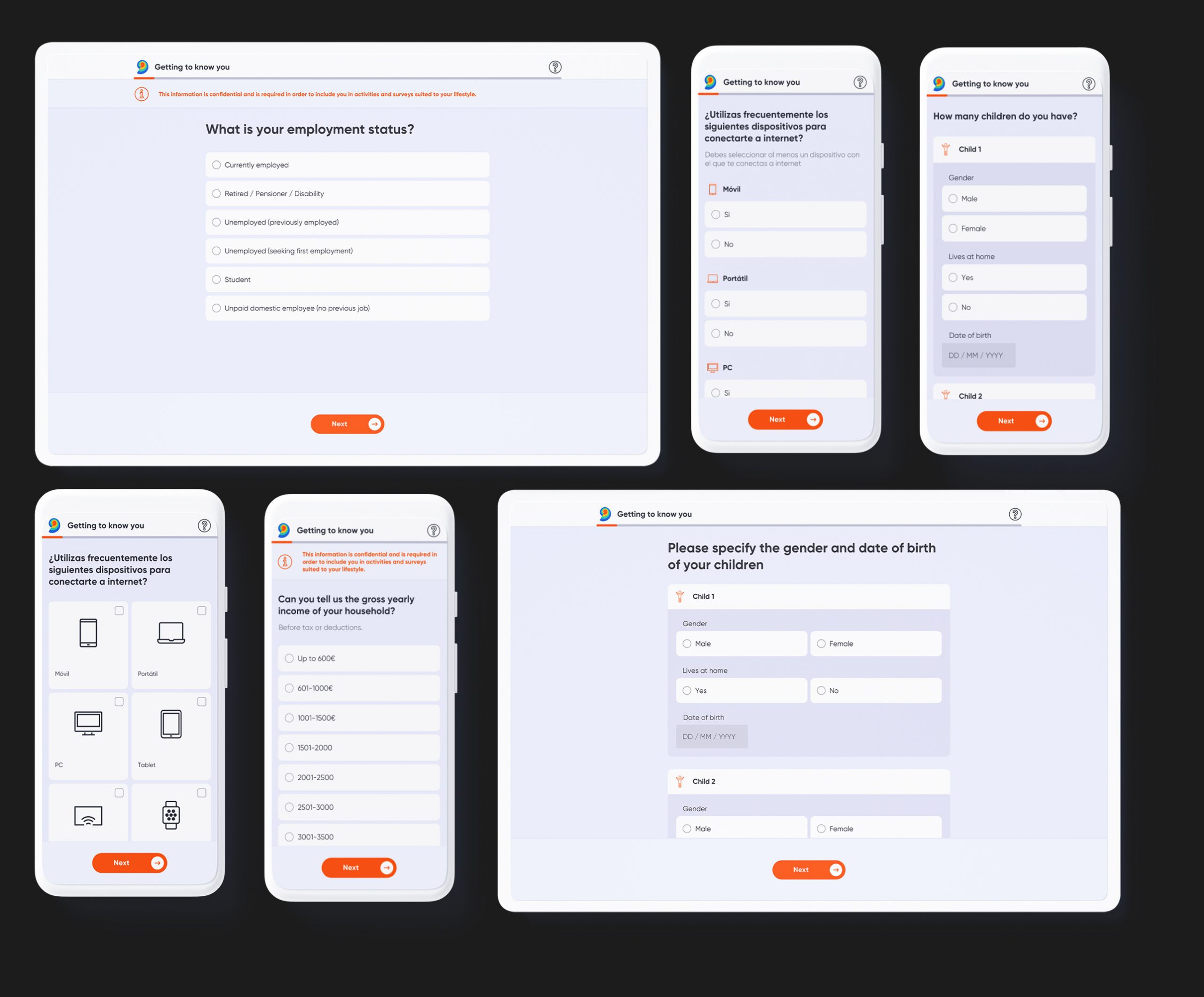
The identity reaches panelists through every surface they touch: onboarding flows, survey interfaces, profile screens, and web structures. Each context adapts the visual language without losing coherence.
ncq-40
ncq-31
ncq-32
ncq-43
ncq-34
ncq-35

Website

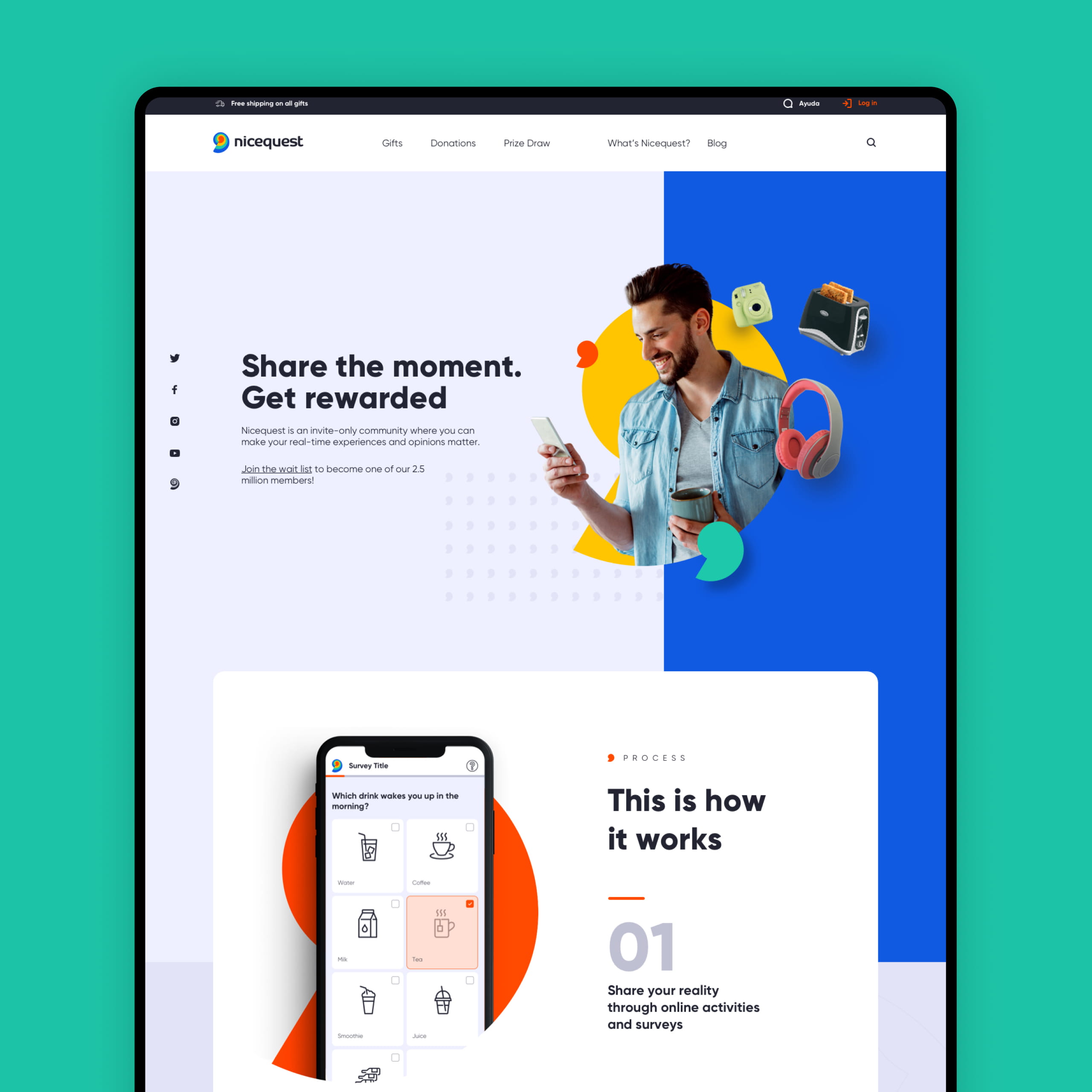
The identity reaches panelists before they open the app. The website carries the same visual language across acquisition, rewards, and community, adapting tone without breaking consistency.

DESIGN-DEPT.

Barcelona, Spain
Phone: +34 622 712 521
Email: fabioestellita@gmail.com
Linkedin: /in/fabioestellita/

Copyright © 2026 DESIGN DEPT. 

All rights reserved.