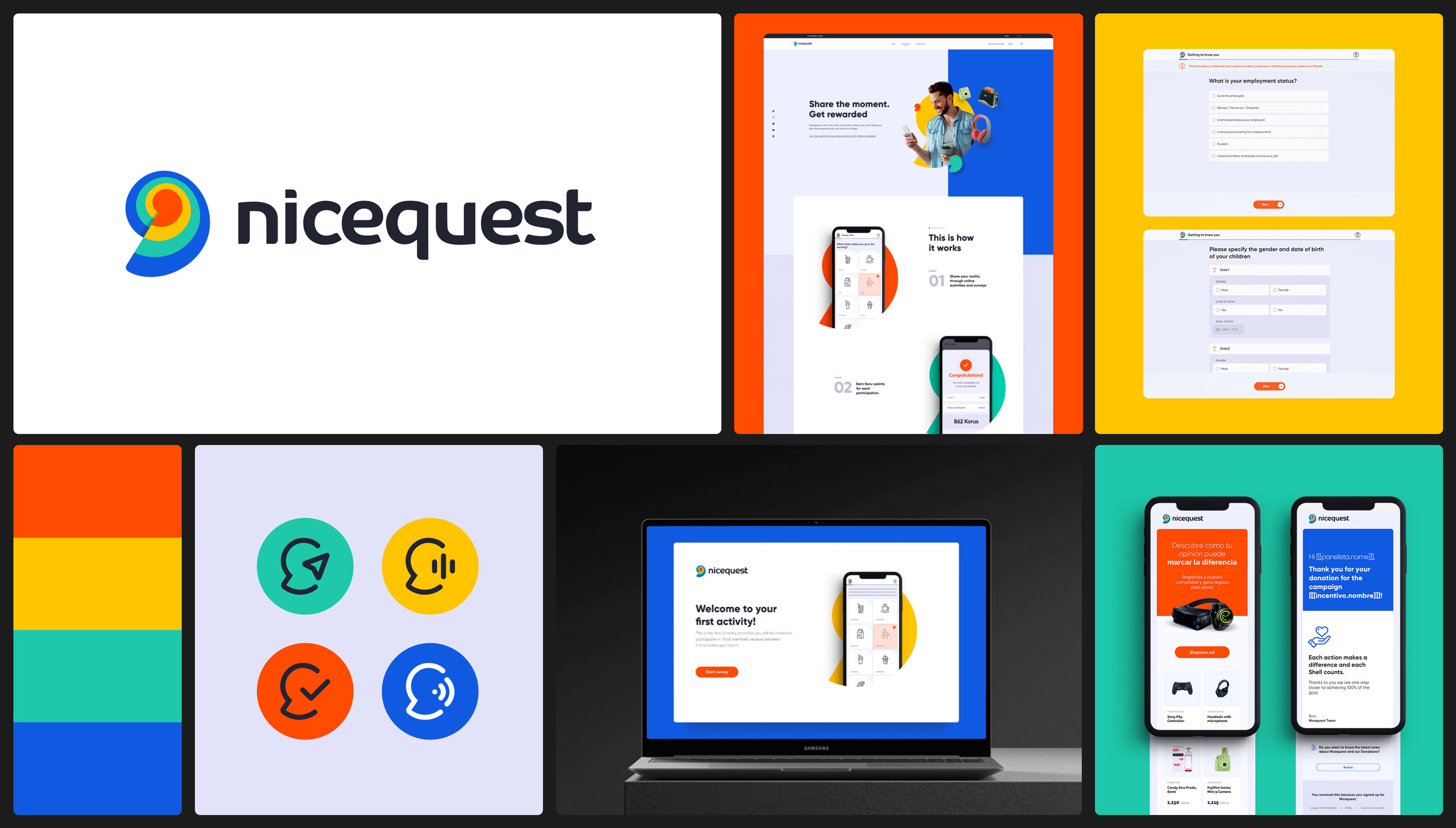
Reimagined a legacy brand into a human, digital-first identity that set the foundation for future GfK panels

Evolving a brand people trusted without breaking what they trusted it for.

Context

Nicequest is a global consumer panel with over 850,000 members across 20+ countries, used by people to share opinions and behavioural data in exchange for rewards. Over the years it built genuine scale and real user trust — becoming one of the most recognised panels in the GfK ecosystem. 

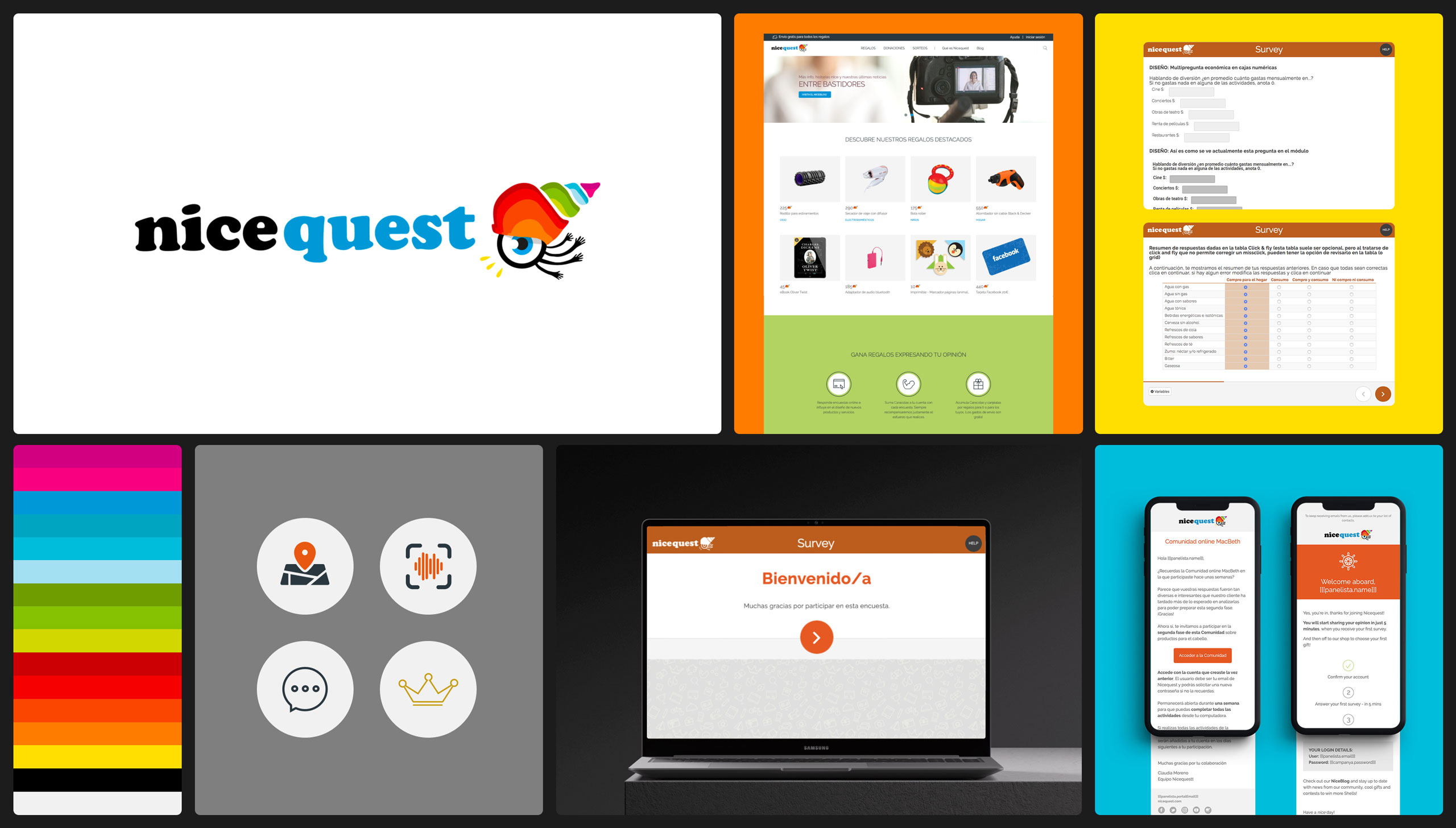
By 2018 the brand hadn’t meaningfully evolved in over a decade. The visual identity felt static and increasingly disconnected from a new generation of users who were more informed — and more cautious — about how their data was being collected and used. At the same time, Nicequest was expanding into more advanced and sensitive data methodologies: passive tracking, geolocation, behavioural signals.

The gap between what the product was becoming and how the brand presented itself was becoming a real problem.

after-ncq before-ncq-01

My role

Brand Lead
I led the rebrand from a brand and visual identity perspective — defining the strategic direction, designing the new identity, and building the UI system that translated it into real product and marketing experiences across eight markets

Working across 
Product, Engineering, Marketing, and GfK Global 

ncq-03

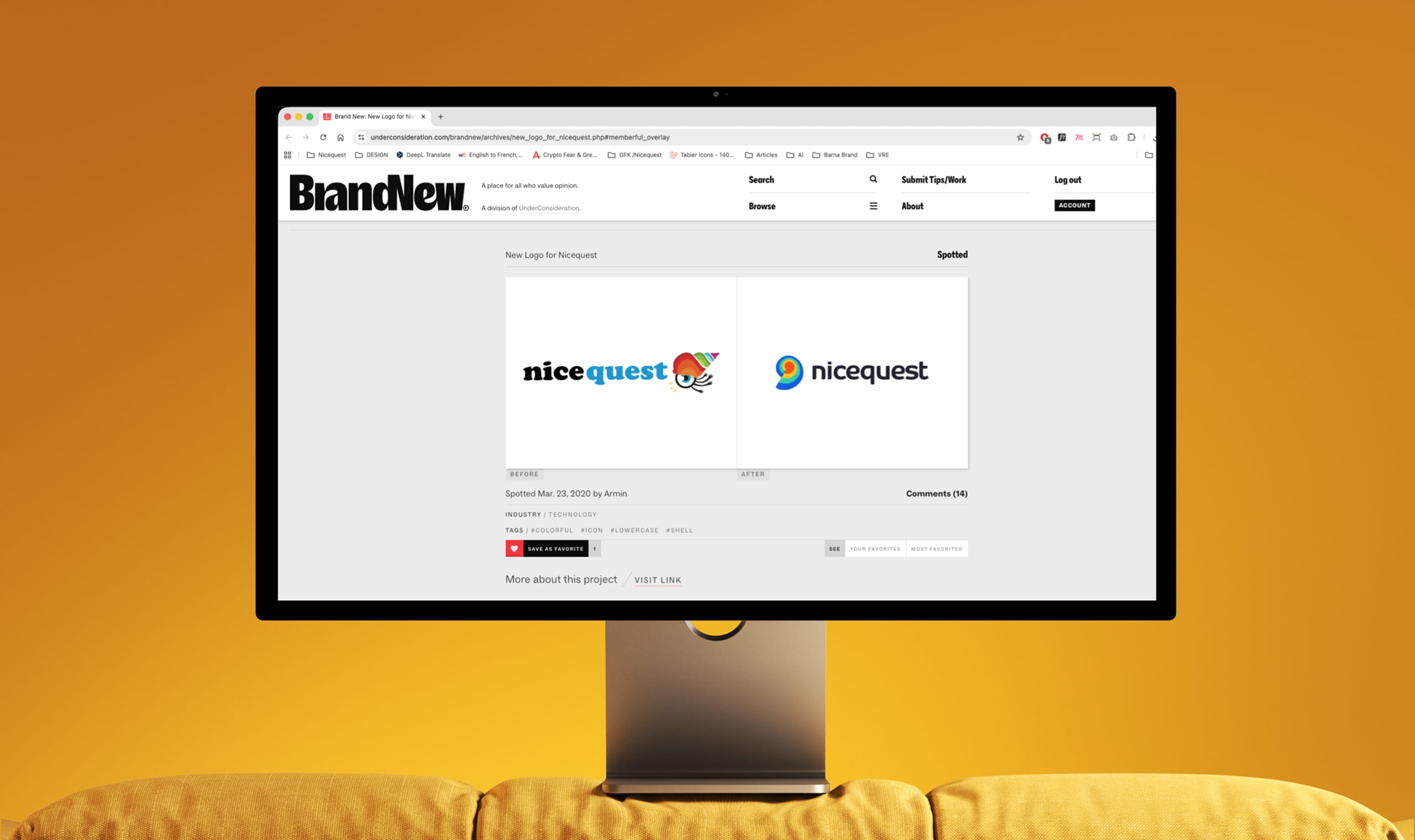
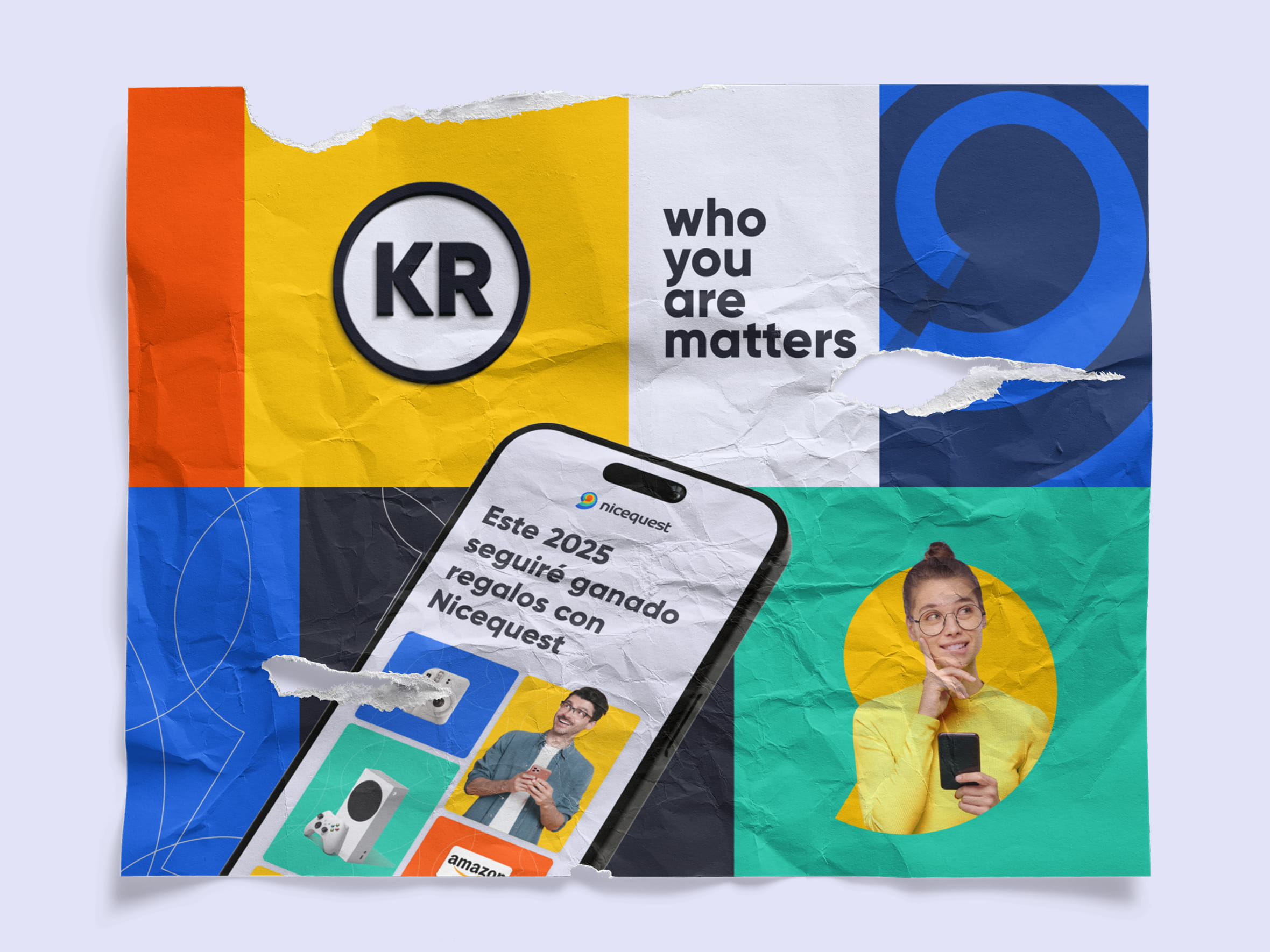
The Nicequest project was featured on Brand New site that showcases noteworthy logo and identity work.
The challenge

The brand hadn’t meaningfully evolved in over a decade — but it had accumulated real trust with millions of users across eight markets. The challenge wasn’t starting from scratch. It was knowing what to keep, what to discard, and how to signal change without triggering the anxiety that comes with it.

Rebuilding trust with increasingly privacy-aware users meant the identity had to communicate transparency and reassurance before a single word was read. Modernising without losing recognition meant the new system had to feel familiar enough to retain existing users while being distinctive enough to attract new ones. And whatever we built had to scale across app, web, social, CRM, and future data products that didn’t exist yet.

The central question became:

How do you evolve a brand people already recognize without breaking what they trust?

ncq-01
ncq-02a

Understanding the Problem

Before defining any visual direction, the work started with understanding what both users and the business actually needed from the brand.

Users need
A brand they could trust with personal and behavioural data. They needed clear, transparent communication about what was being collected and why. And they needed an experience that felt rewarding rather than extractive — something that respected their participation rather than just extracting value from it.

Nicequest needed
A renewed relevance in a crowded panel ecosystem, a flexible identity ready for new methodologies and products, and a visual system consistent enough to apply across every market and touchpoint without requiring constant design intervention.

This dual understanding shaped every design decision that followed.


ncq-20
ncq-22

The Insight

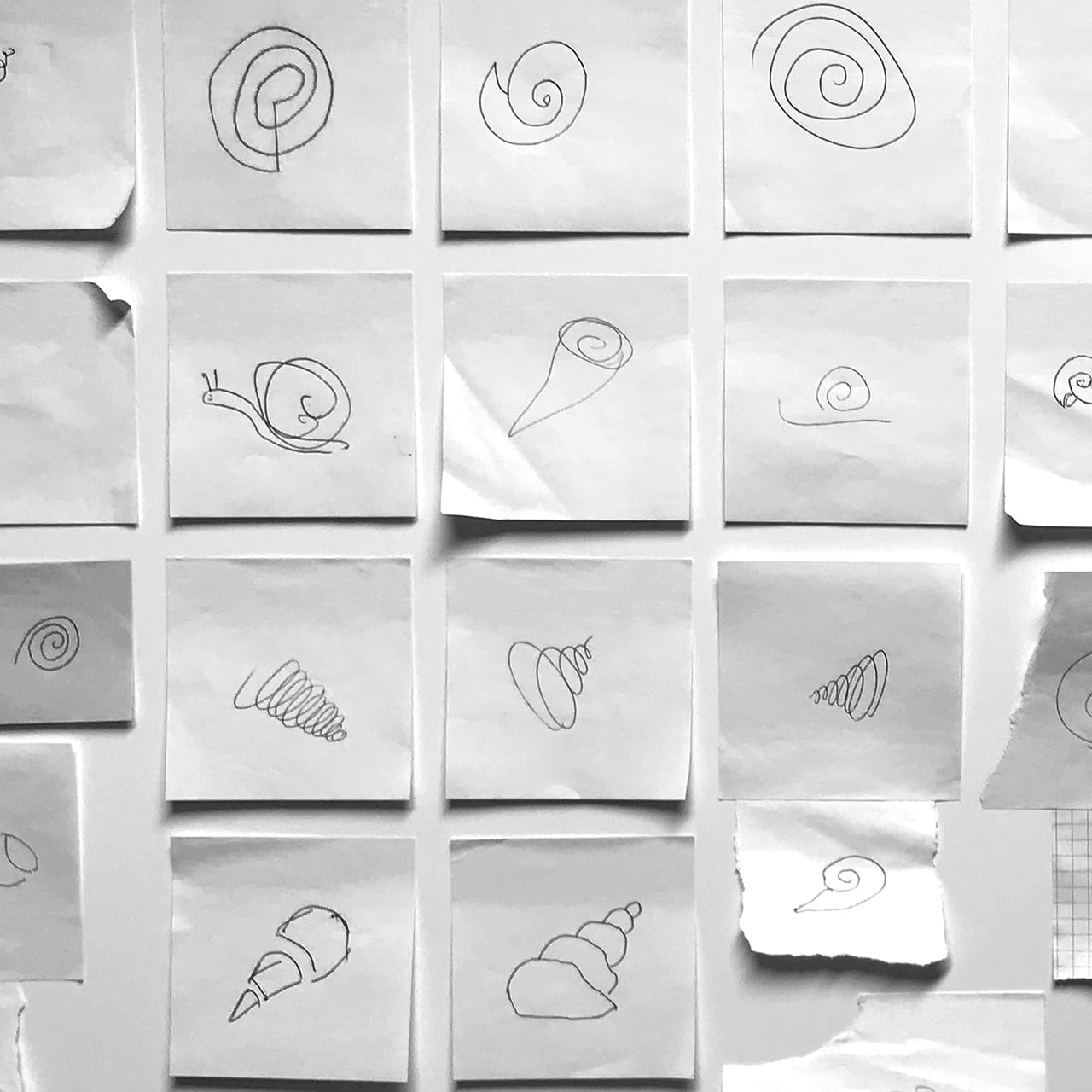
The key insight came from an unexpected place. A fast internal 5-second drawing exercise — asking colleagues to sketch the Nicequest logo from memory without looking at it — showed that most people instinctively drew a spiral. Not the actual logo, but a spiral. That wasn’t a mistake. It revealed a shared mental model already associated with the brand, one that the existing identity wasn’t expressing clearly enough.

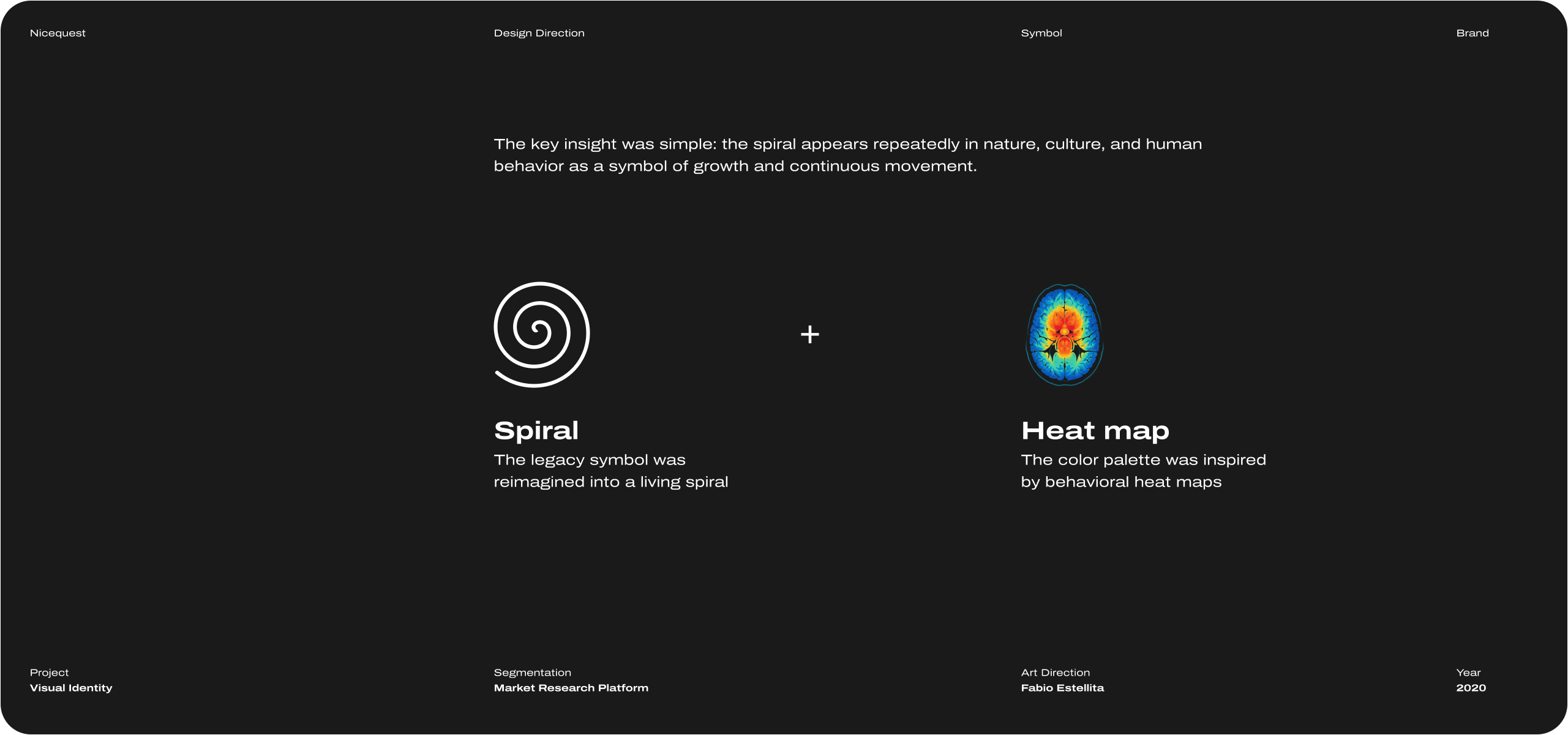
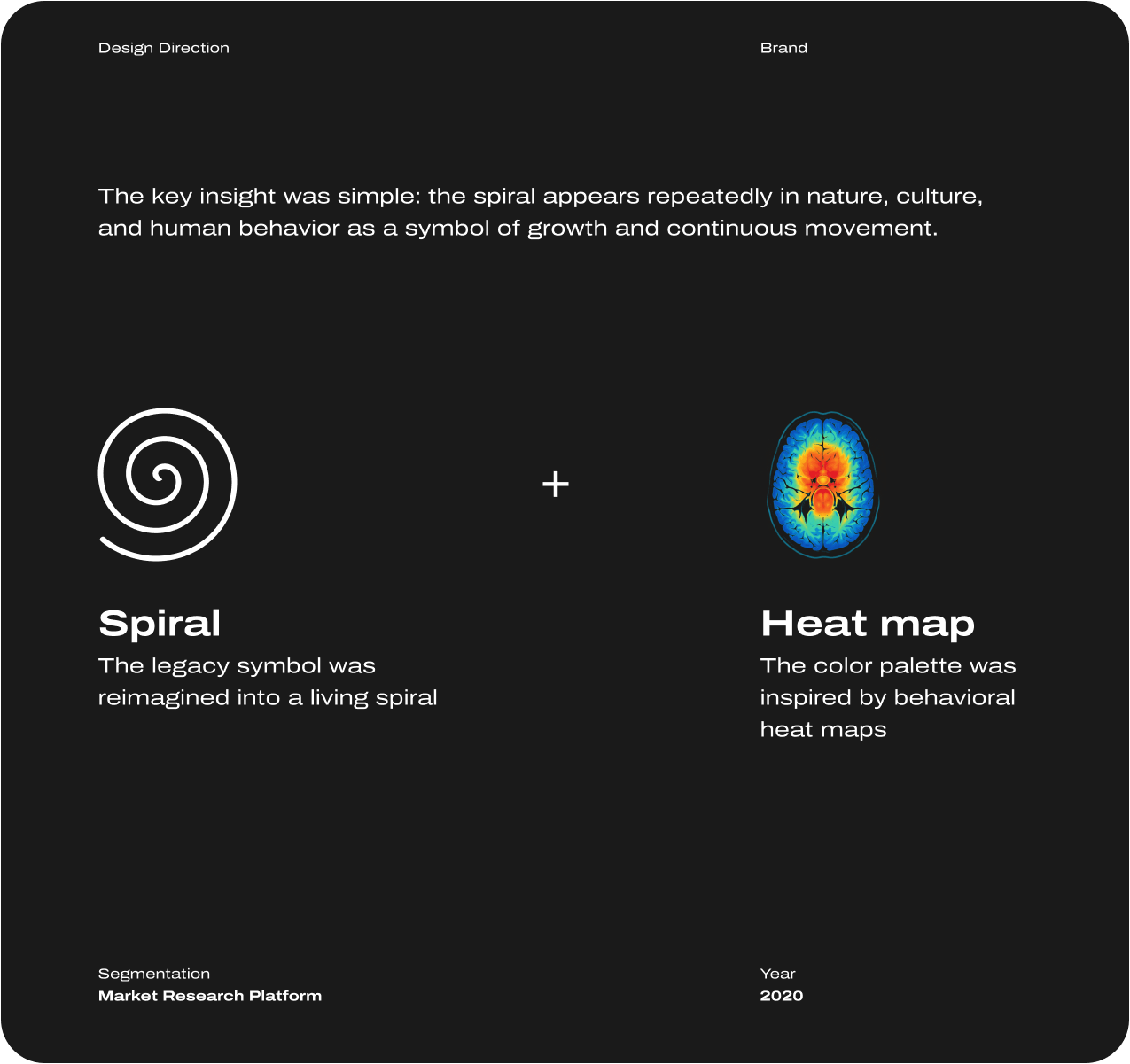
The spiral appears repeatedly in nature, culture, and human behaviour as a symbol of growth and continuous movement. It was already there in how people perceived Nicequest. The rebrand just needed to make it visible.

This insight became the conceptual foundation of everything that followed.

old-logo-final
rabiscos

A fast internal 5‑second drawing exercise showed that most peers instinctively redrew the legacy logo as a spiral.

The Idea: Human Behavior in Motion

The new identity was built around a single principle: human behaviour is dynamic, personal, and constantly evolving.

Instead of positioning people as static data points, the brand began to reflect participation as something human, voluntary, and meaningful. By evolving the original symbol into a spiral-based form, the identity preserved continuity while clearly signalling transformation and growth. The logo felt familiar to existing users and fresh to new ones — which was exactly the tension it needed to resolve.

ncq-08f
ncq-08-mobile
logo-animation
ncq-logo-color

Design Direction

A new symbol
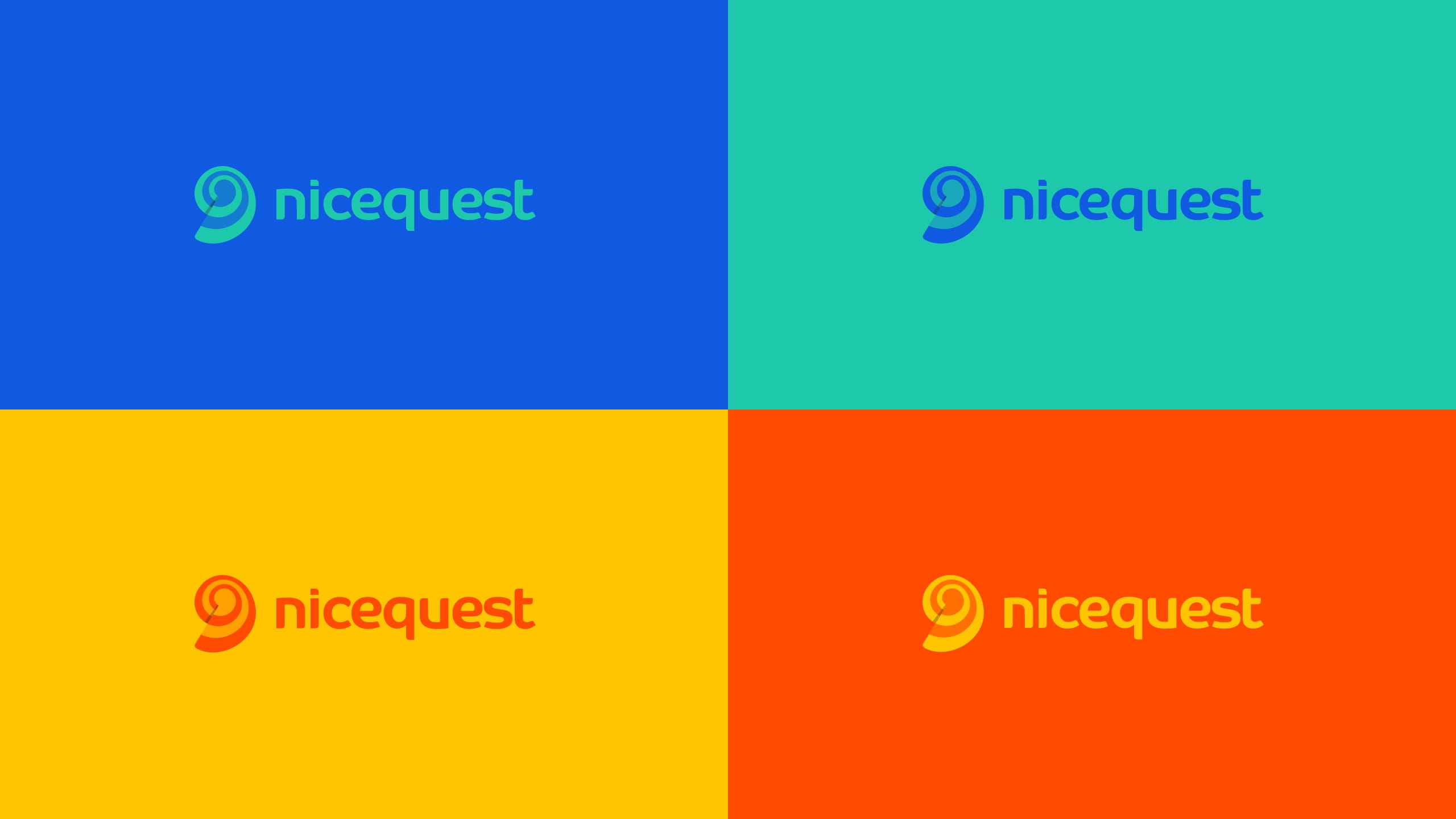
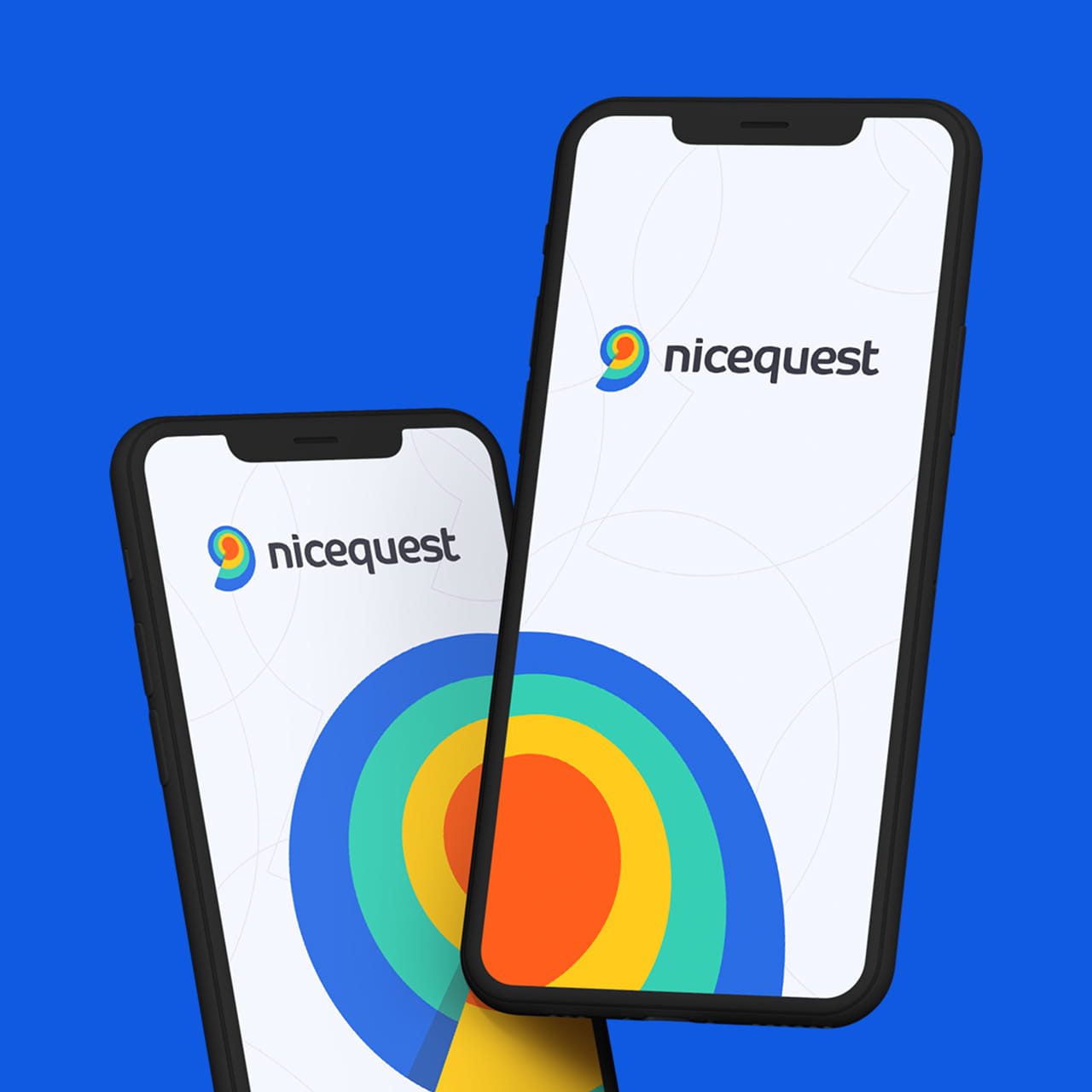
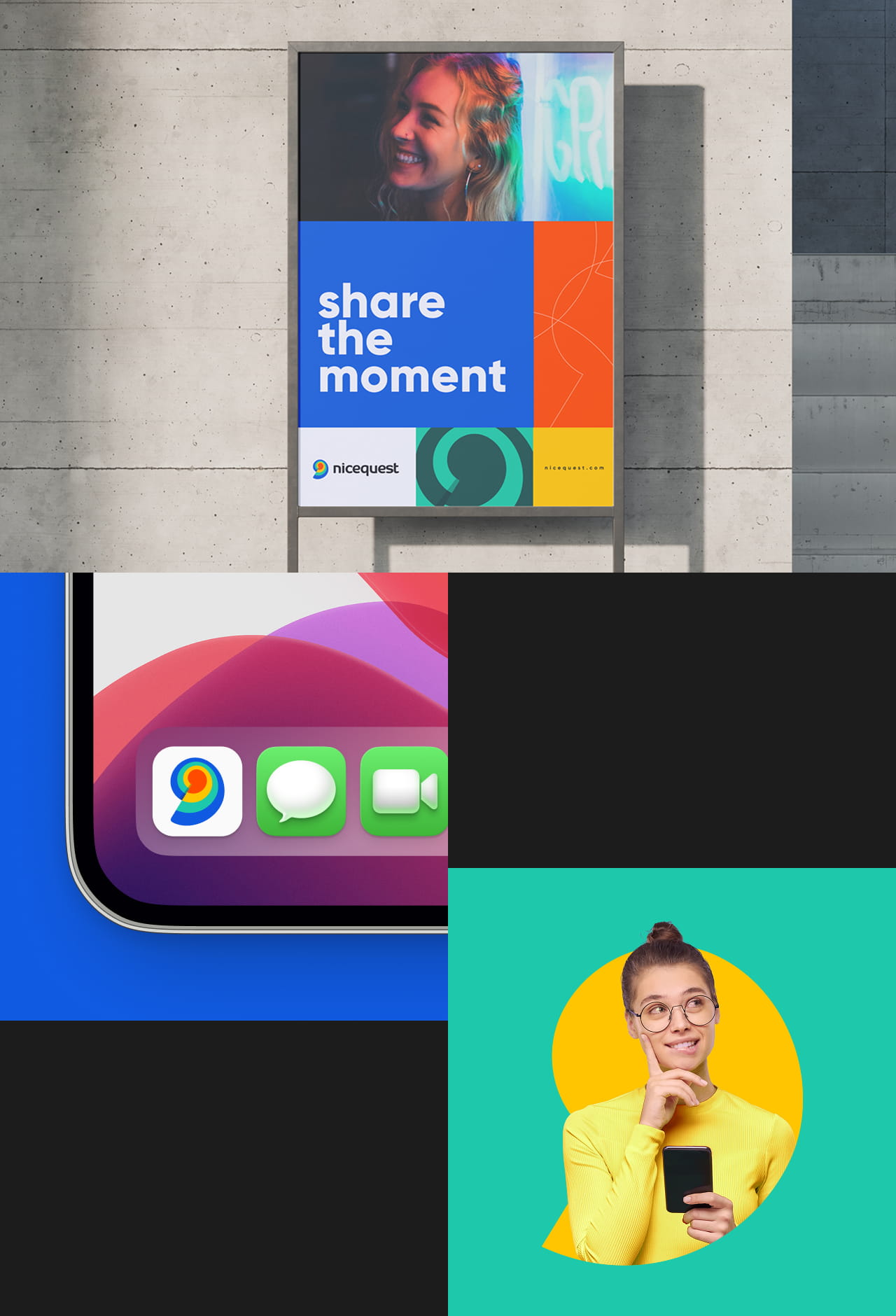
The legacy symbol was reimagined into a living spiral — fluid, scalable, and expressive across digital environments. It represents evolution, behaviour over time, and continuous participation. At small sizes it reads as a simple, friendly mark. At display scale it becomes an expressive graphic element. Both modes were designed intentionally.

A living color system
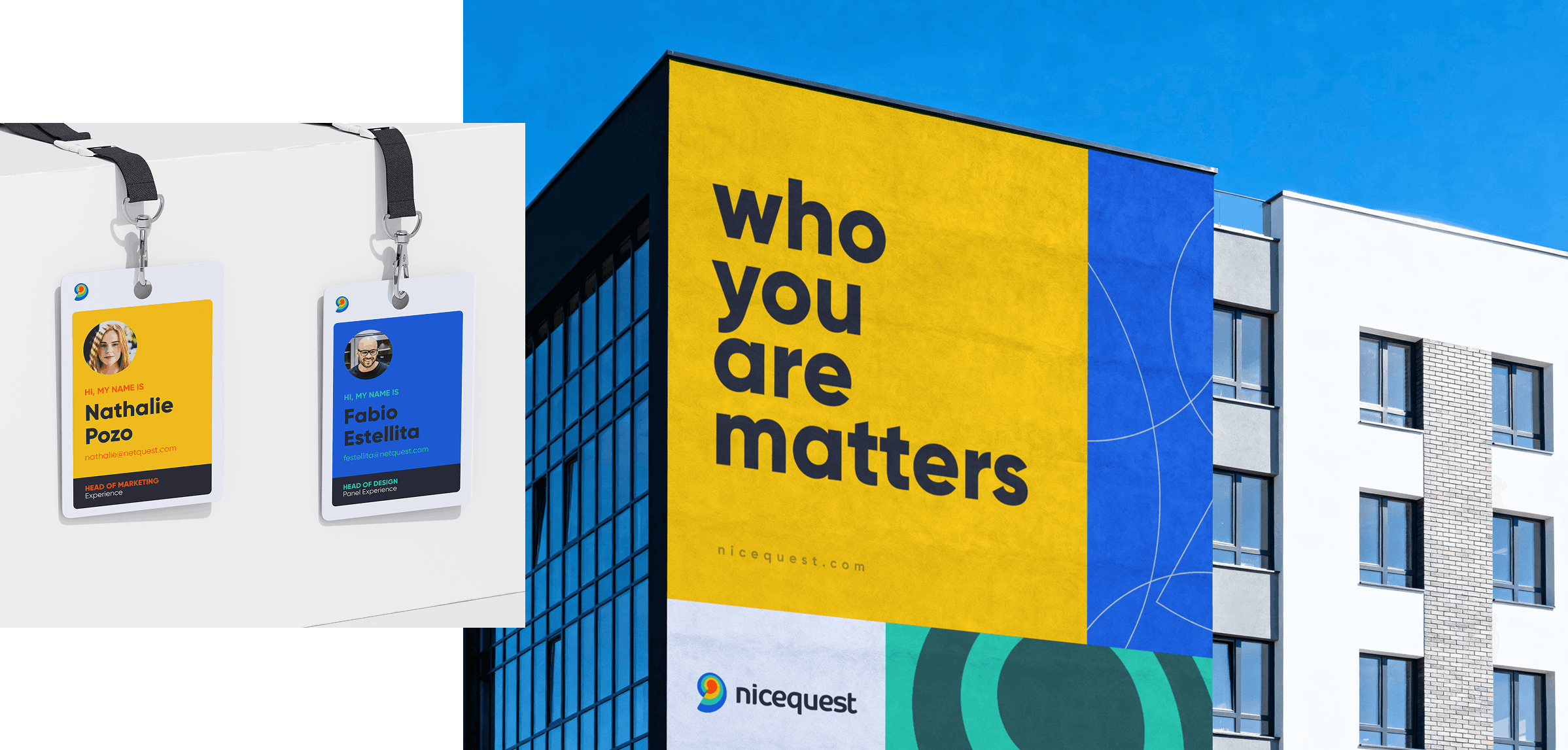
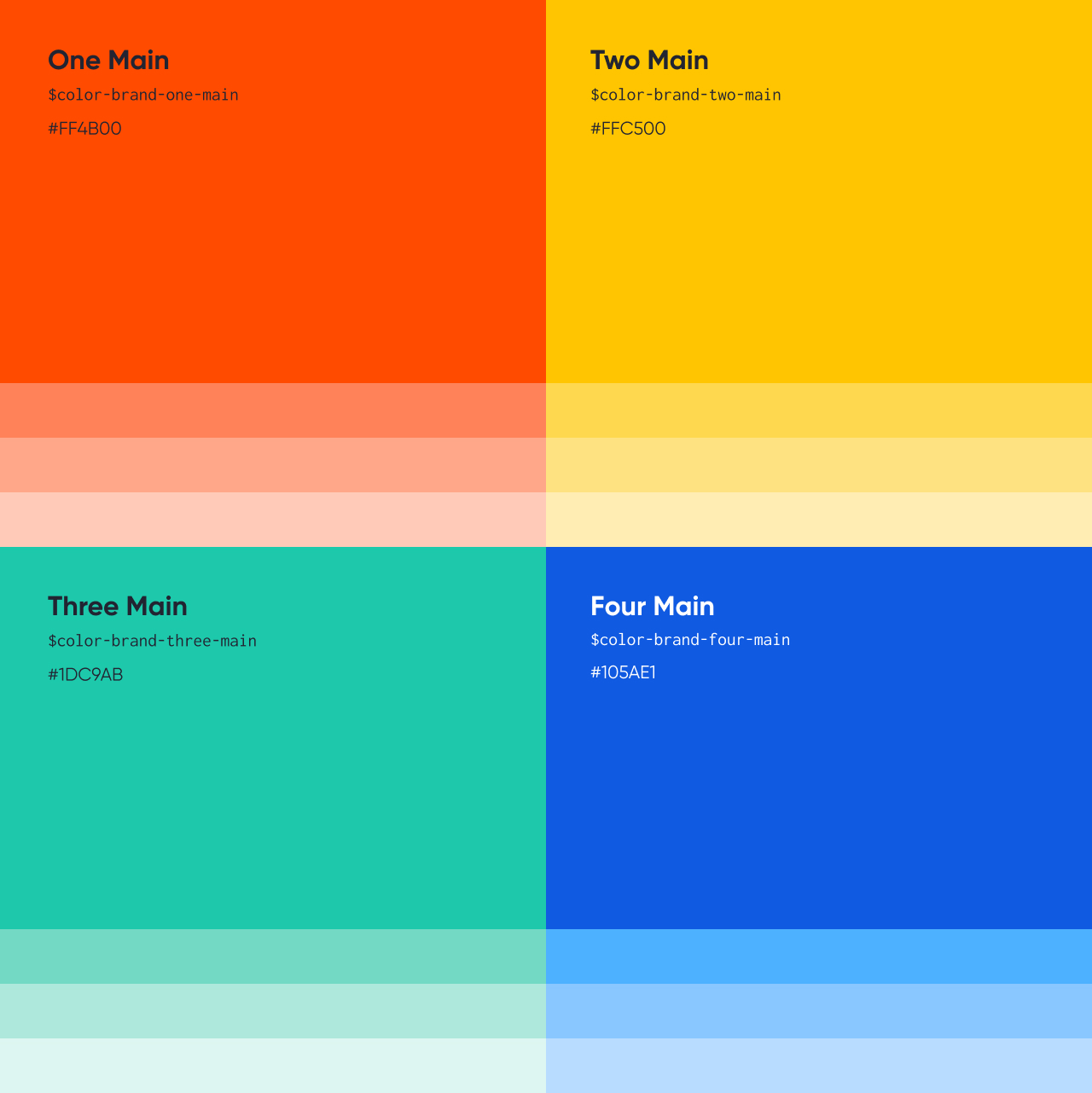
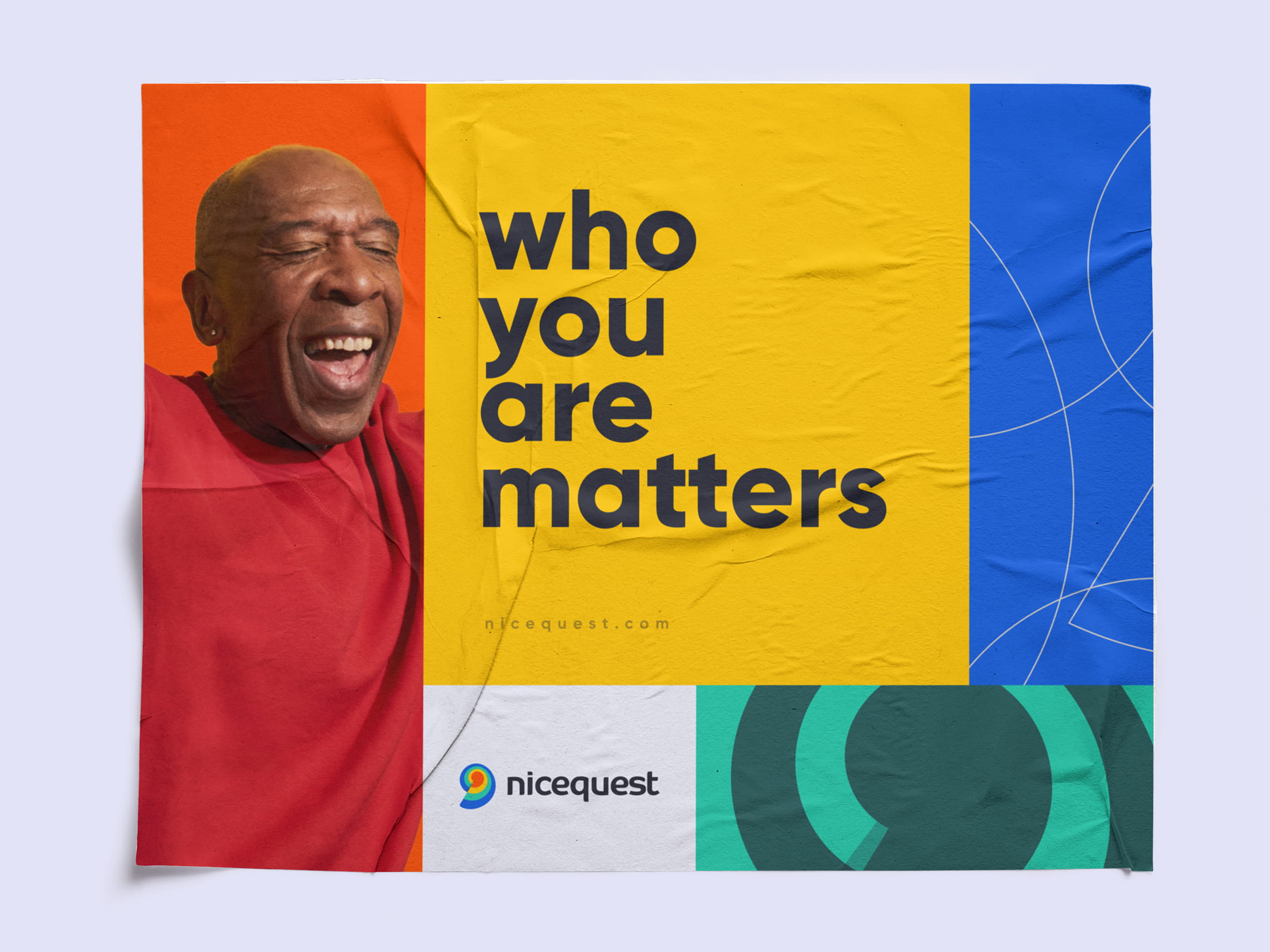
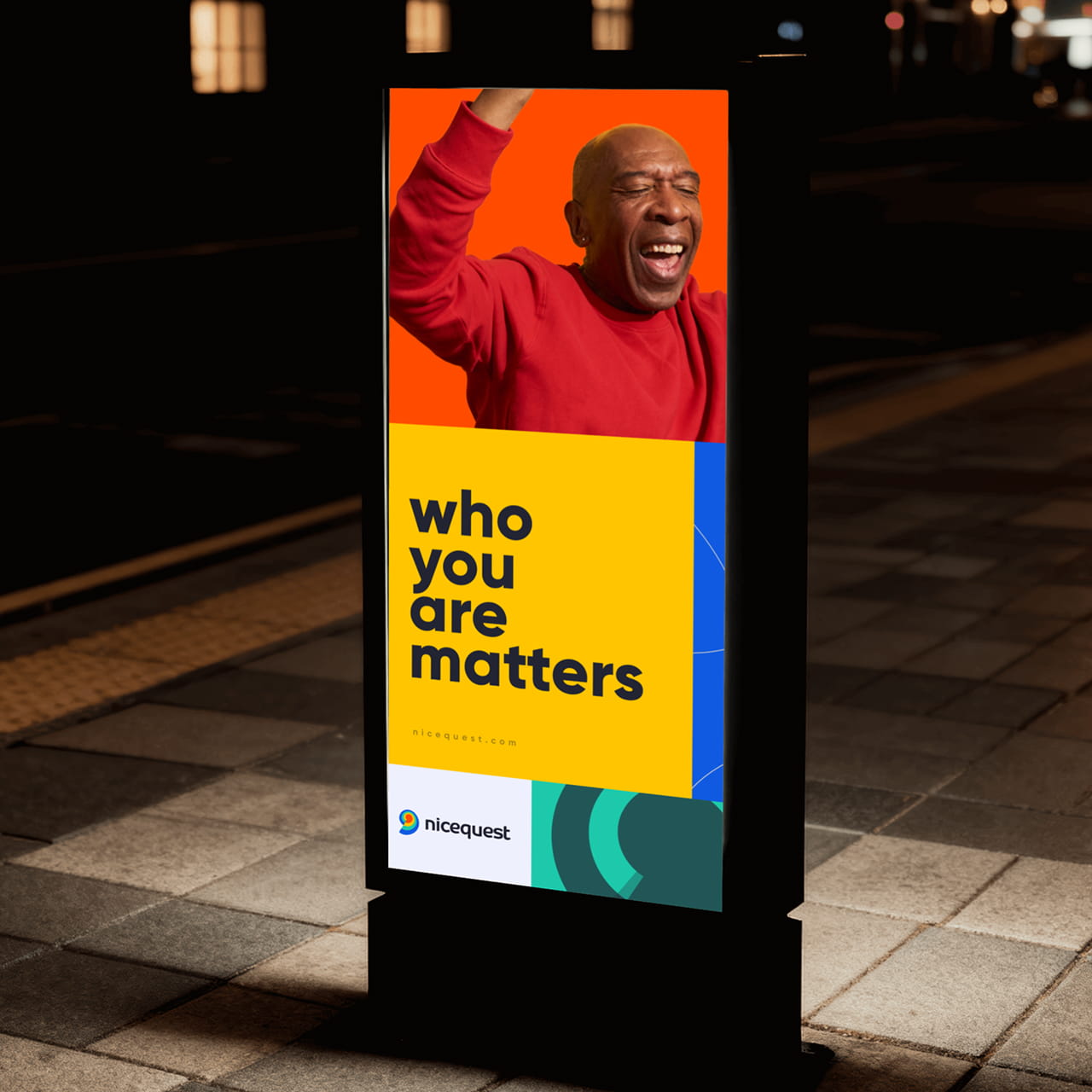
The colour palette was inspired by behavioural heat maps — visual representations of how people move, act, and engage in digital environments. The result was a vibrant but controlled system: human and expressive at the brand level, grounded enough to work alongside product UI without competing with it.
ncq-05b
ncq-06b
ncq-07

Typography & visual language
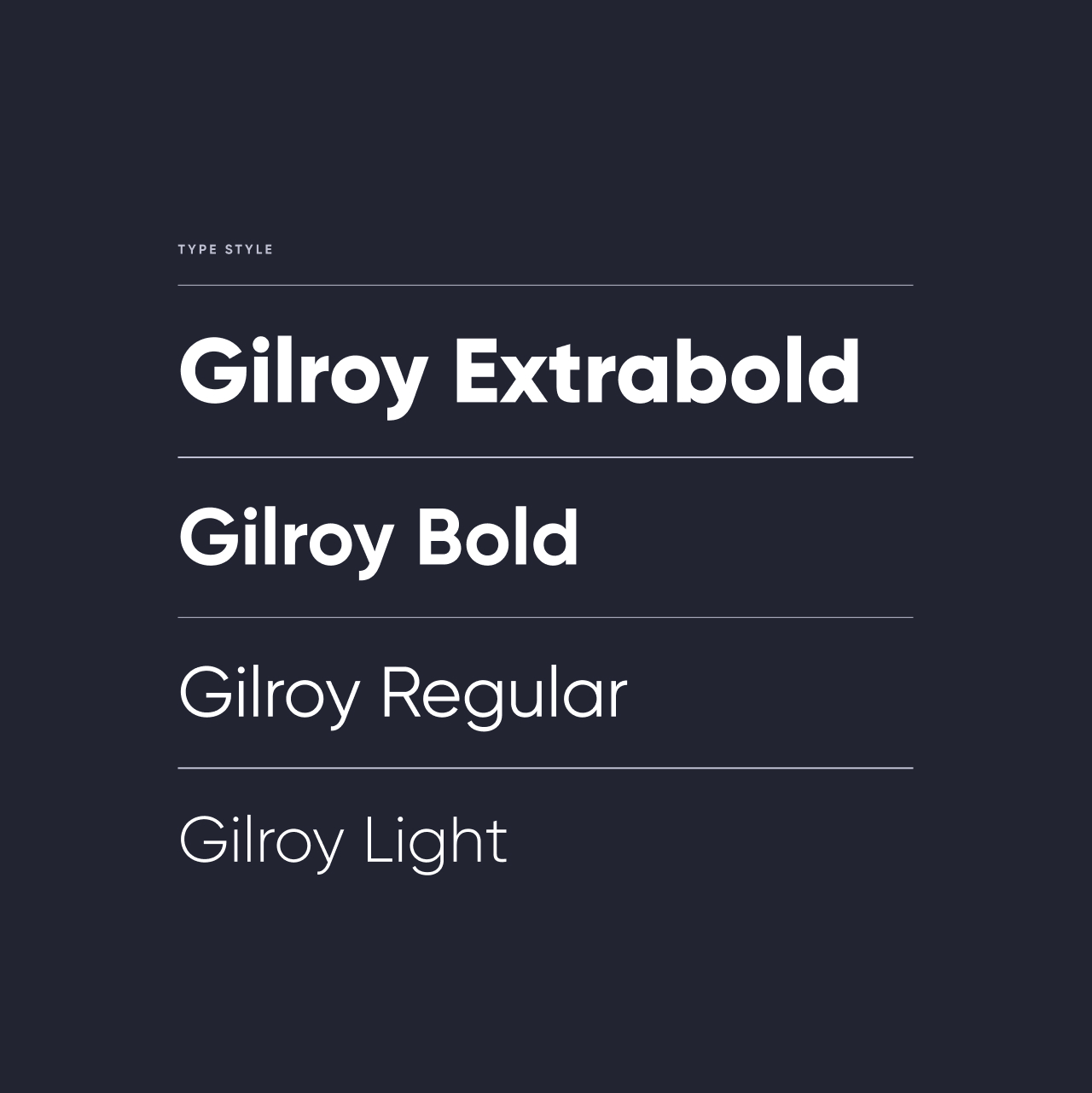
The typeface was chosen to feel warm at small sizes and structured at display scale — approachable in the product, authoritative in the brand. Together with the colour system and the spiral motif, it formed a visual language that felt alive in a way the previous identity never had.

ncq-12
ncq-13 (1)
ncq-24
ncq-016
ncq-26
ncq-27

From Brand to System

A new logo is not a rebrand. The identity only works if it scales into real experiences — and real experiences are built by teams across multiple countries, working across multiple platforms, under real time and resource pressure.

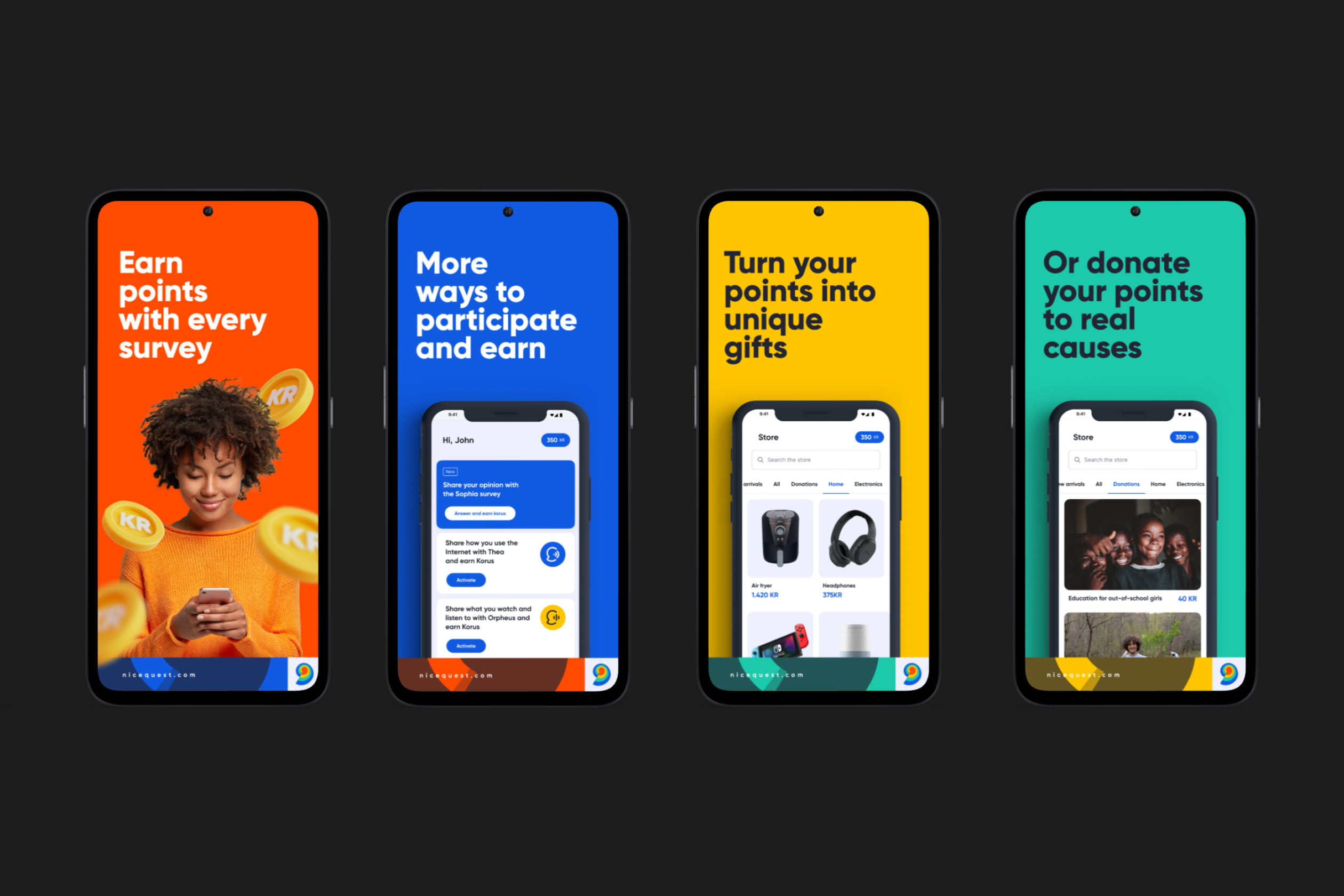
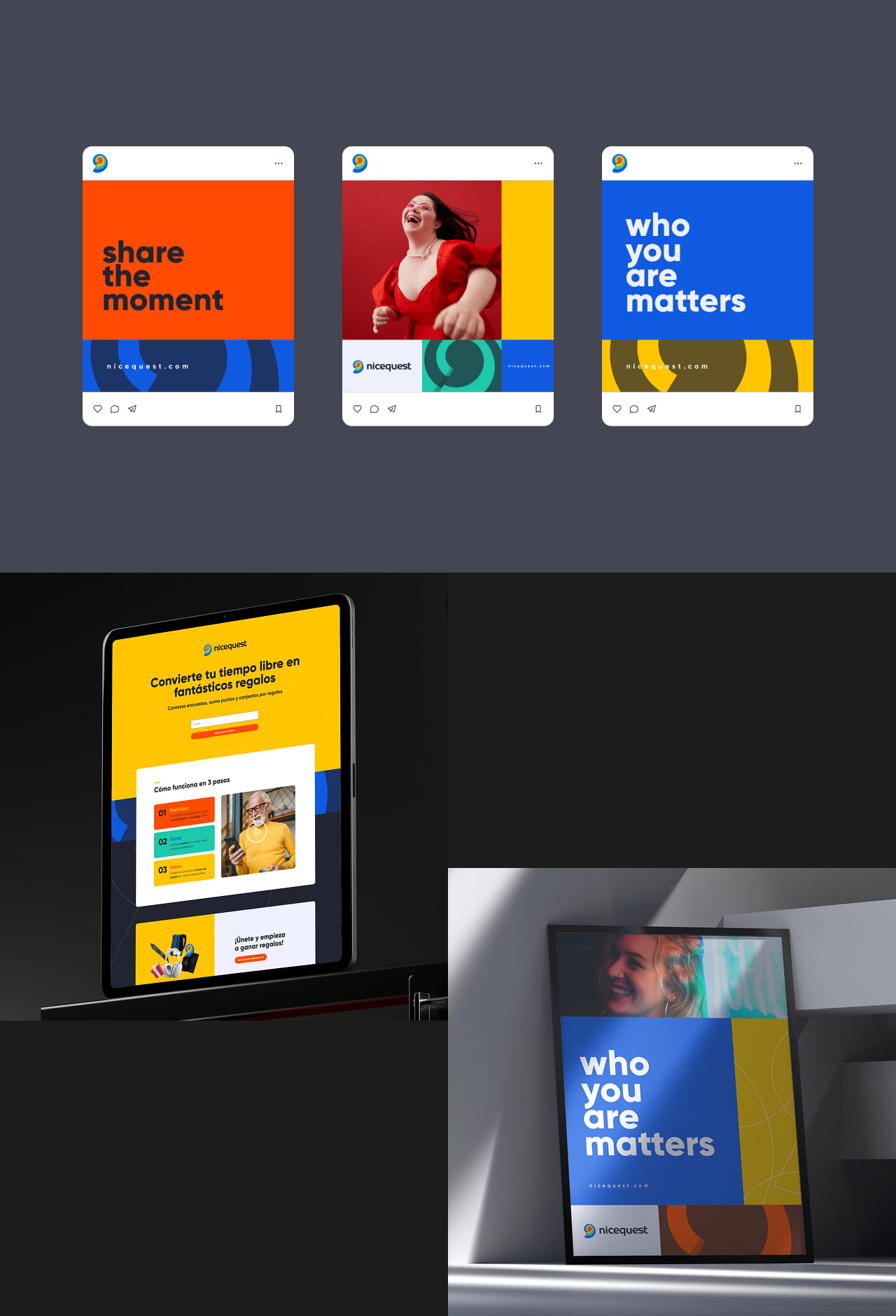
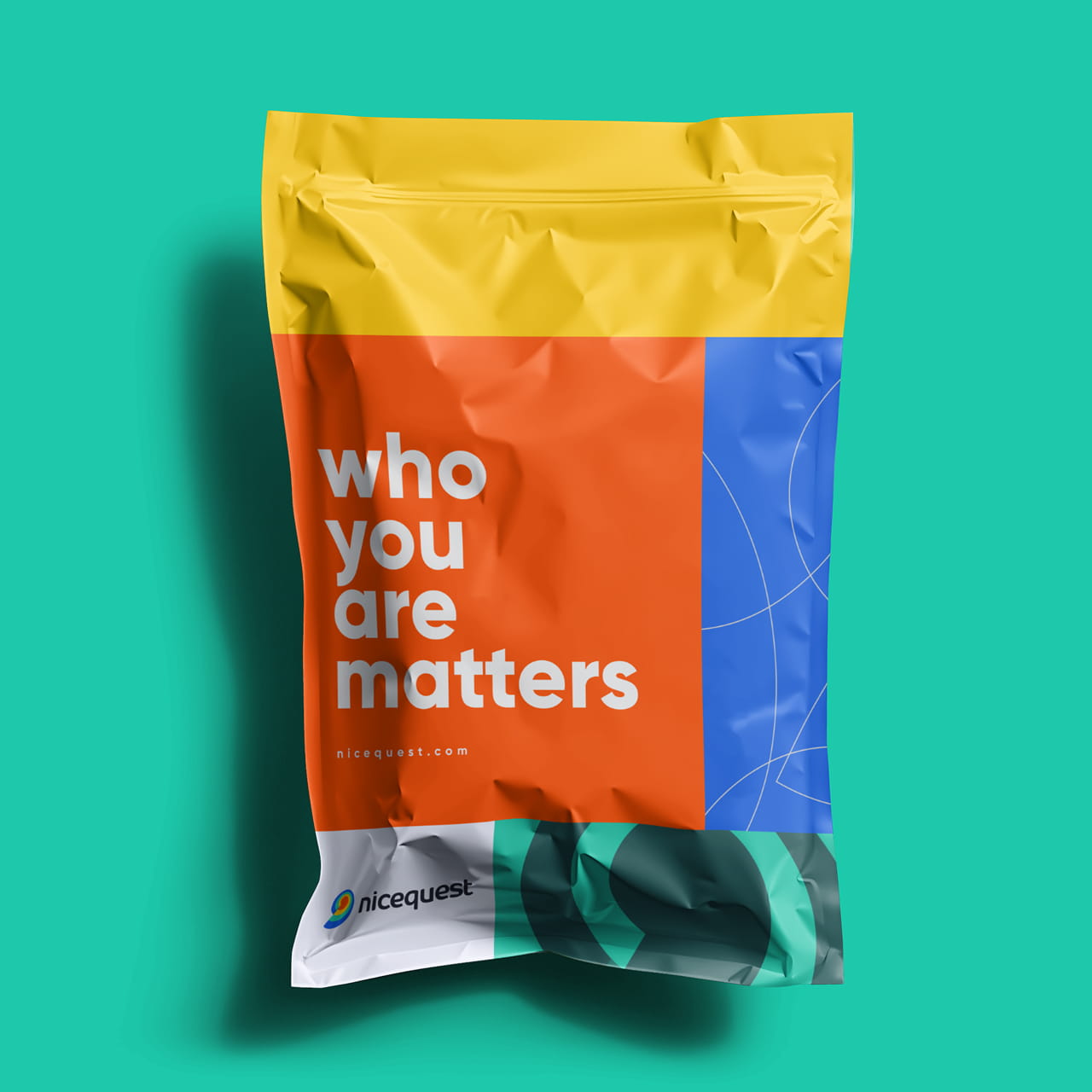
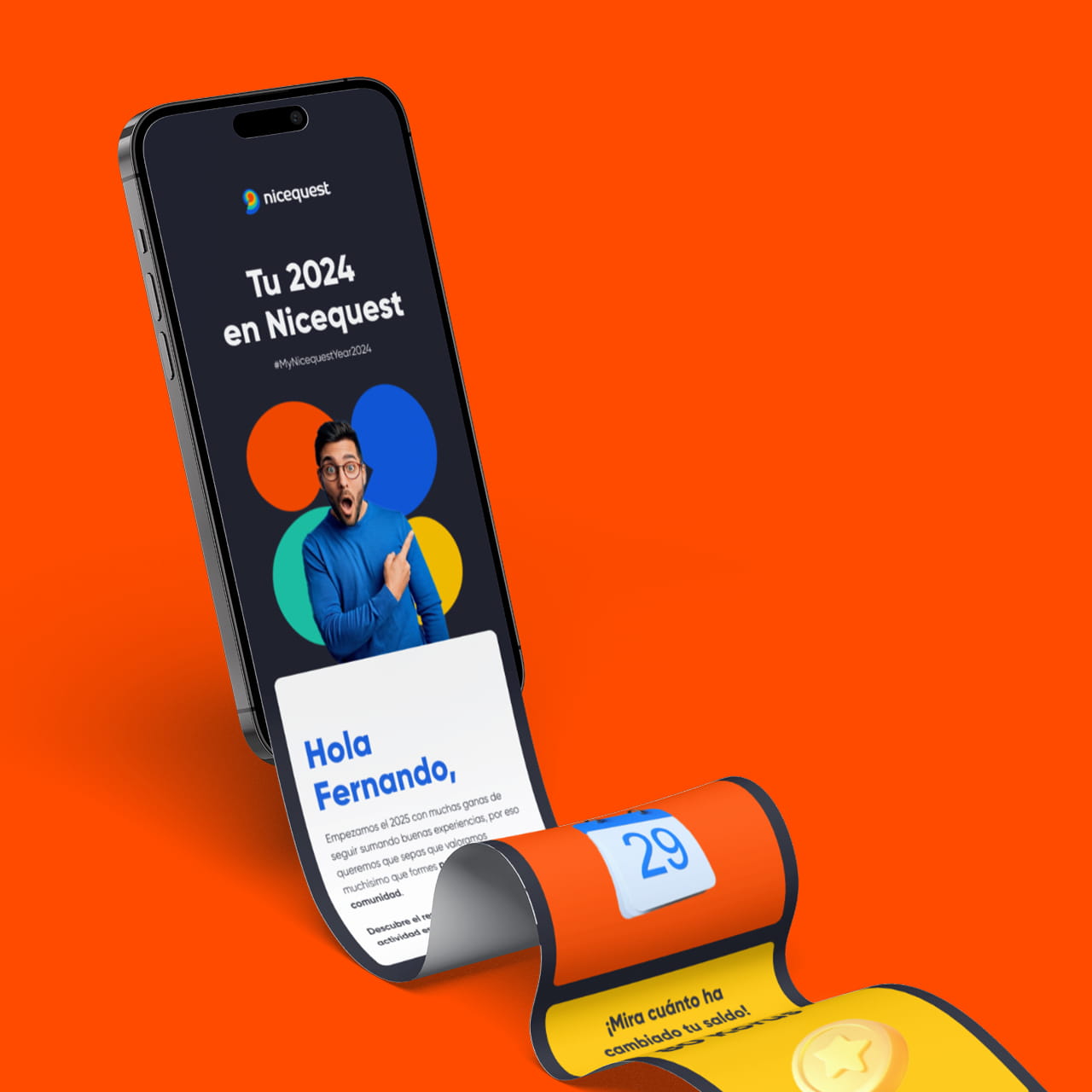
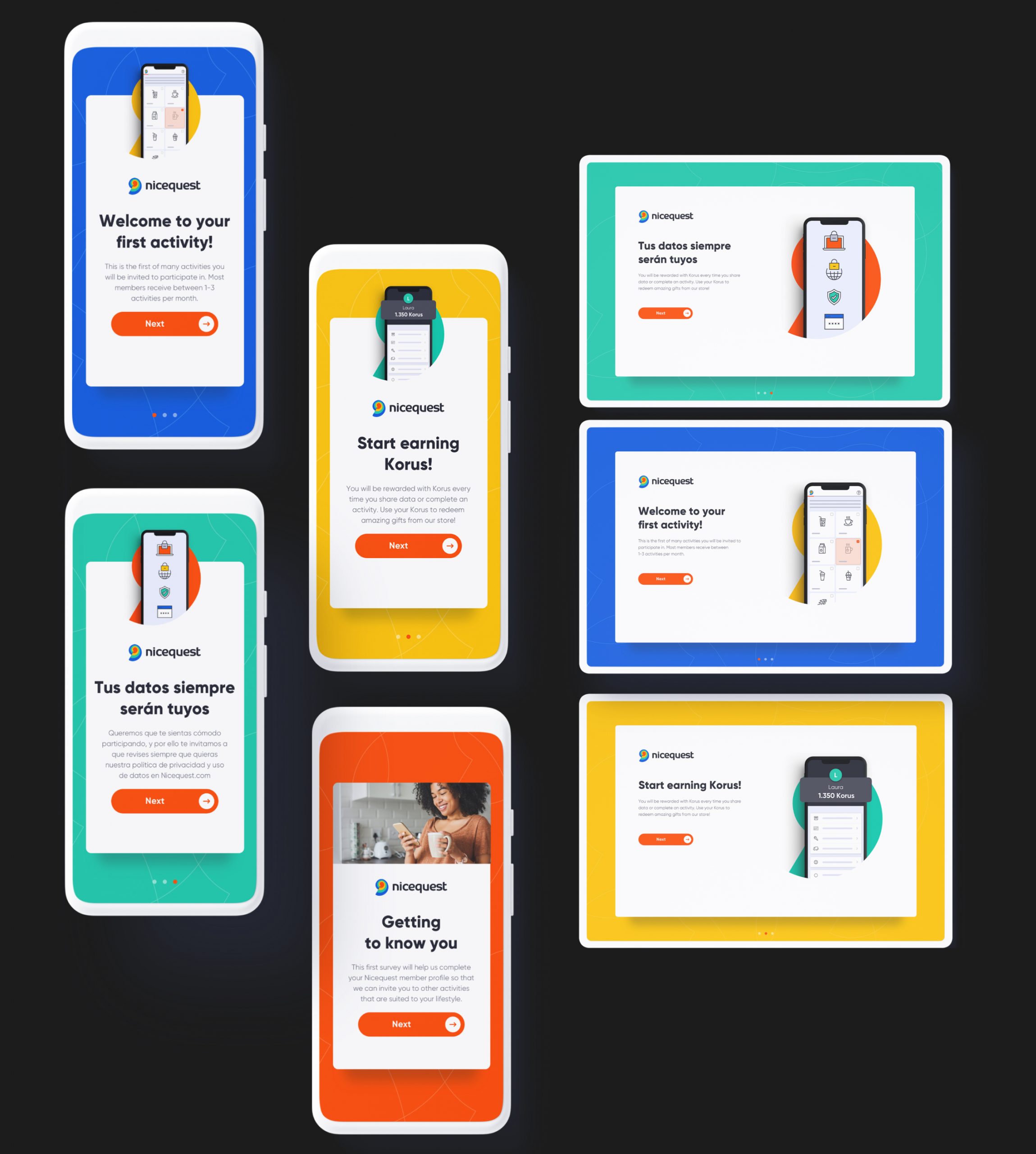
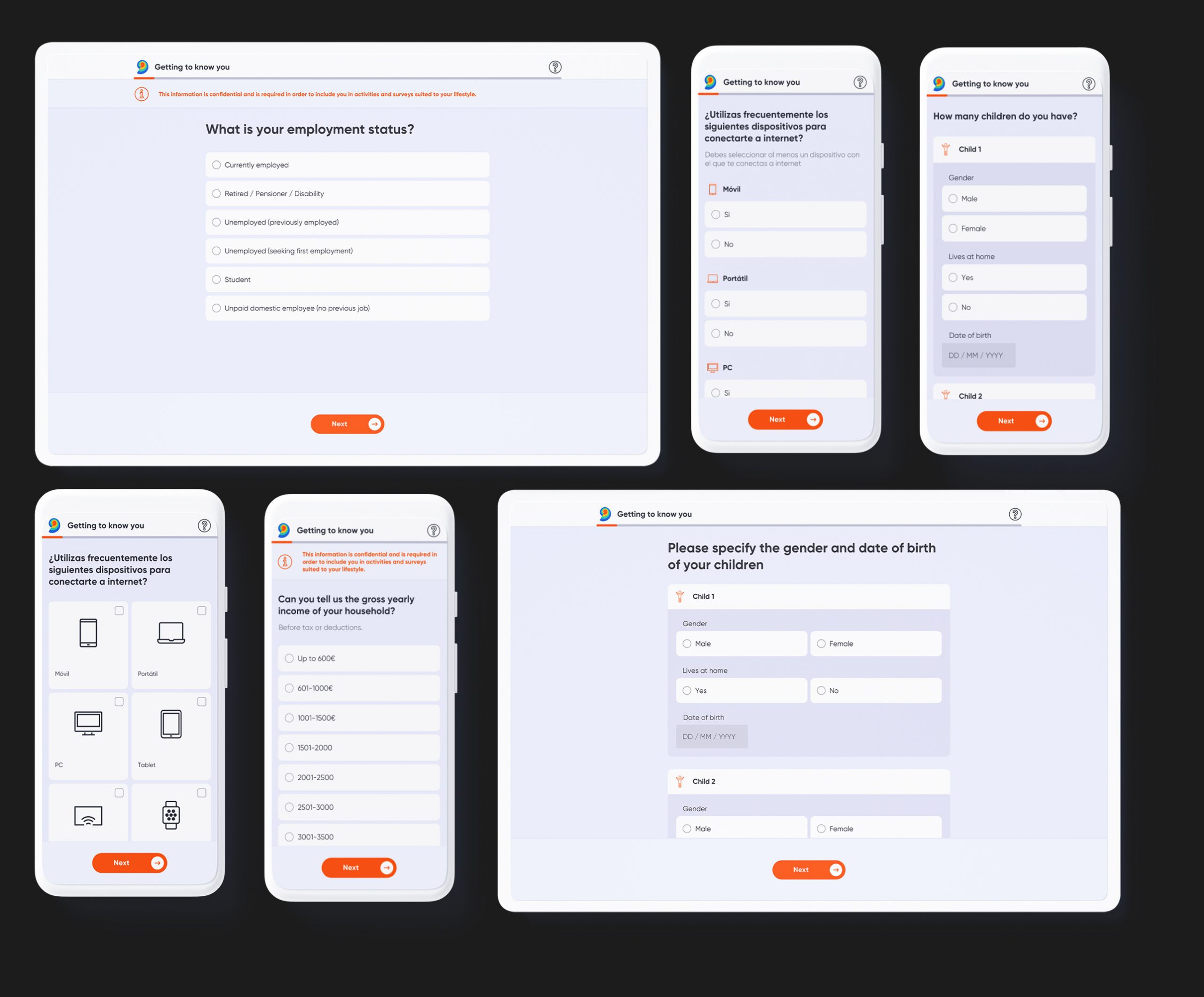
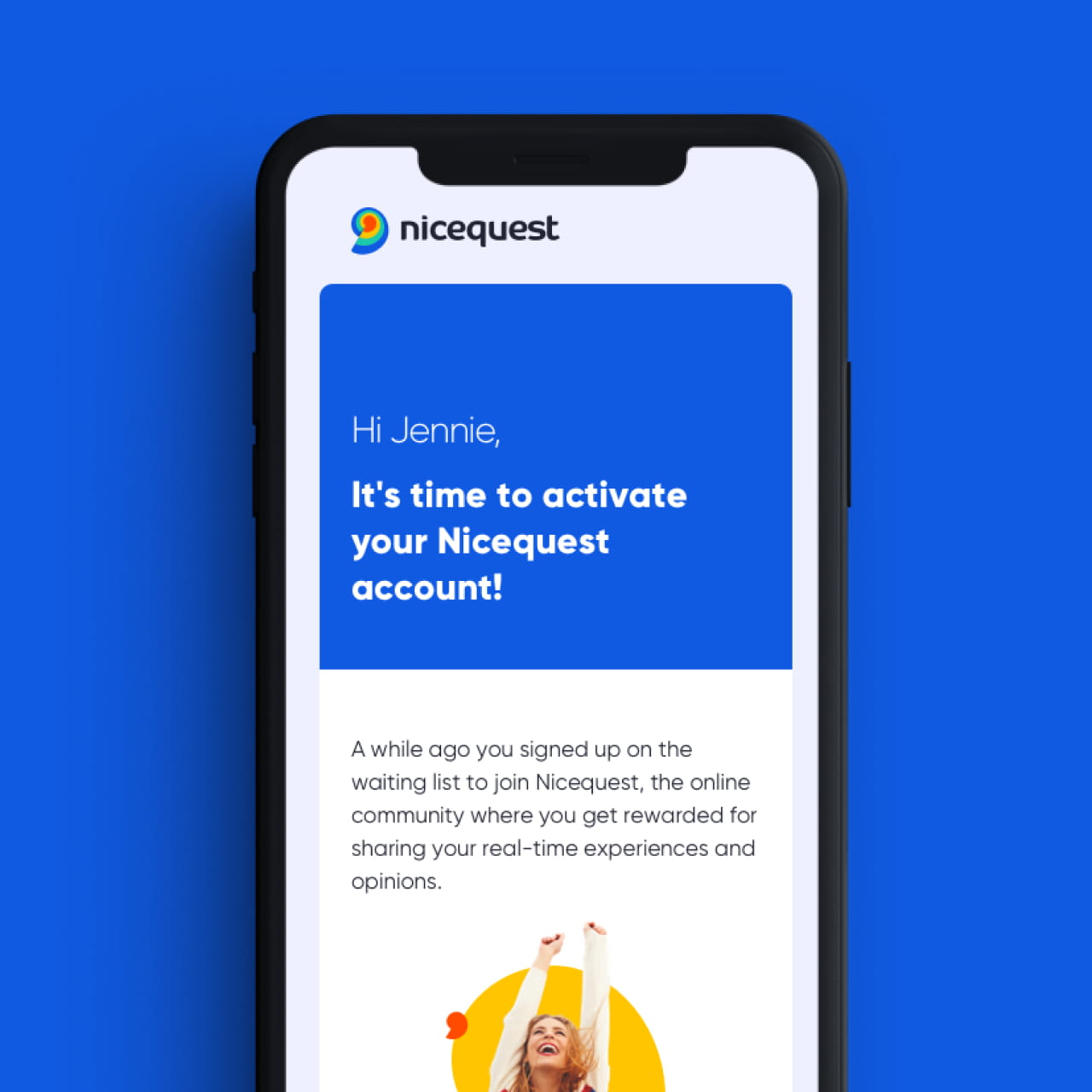
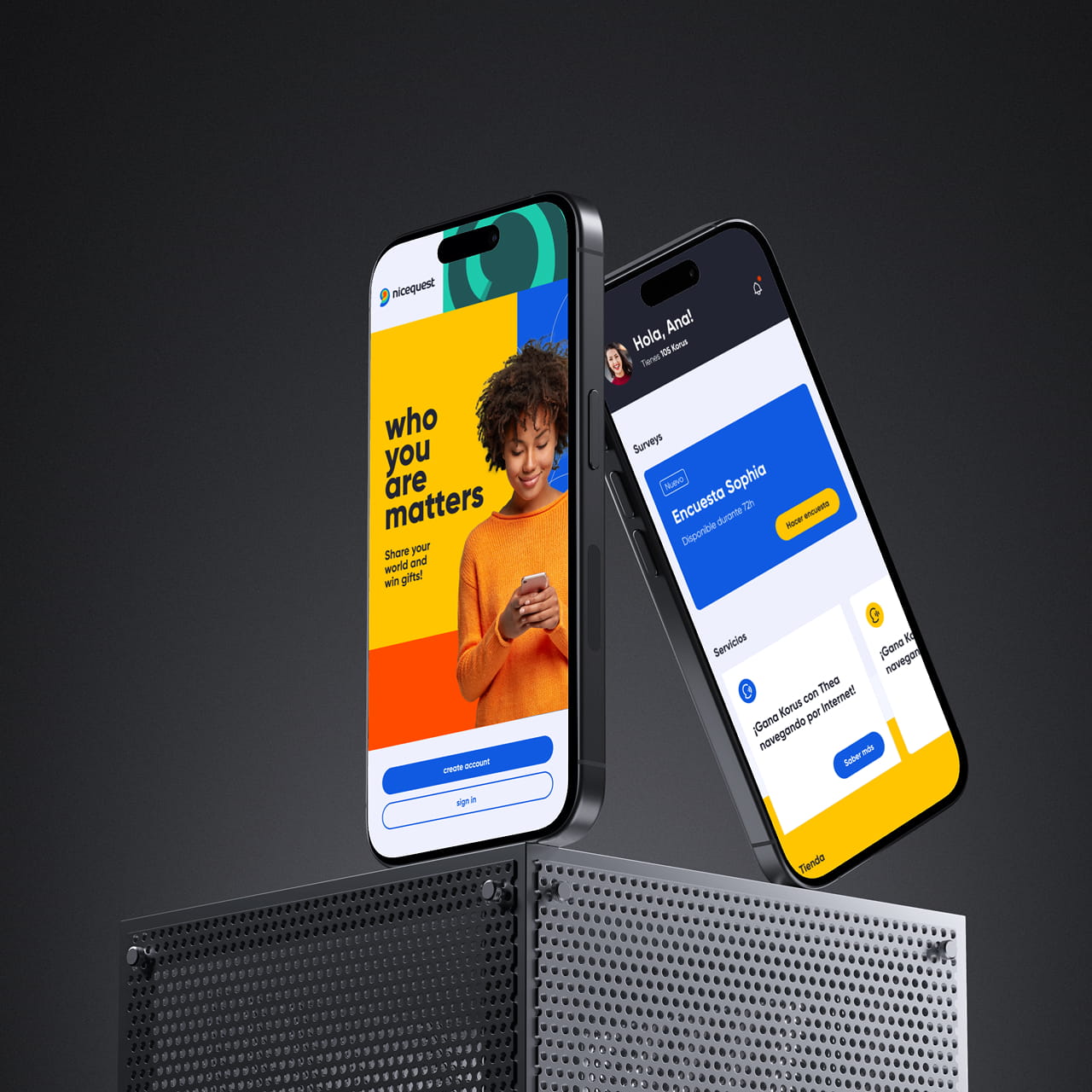
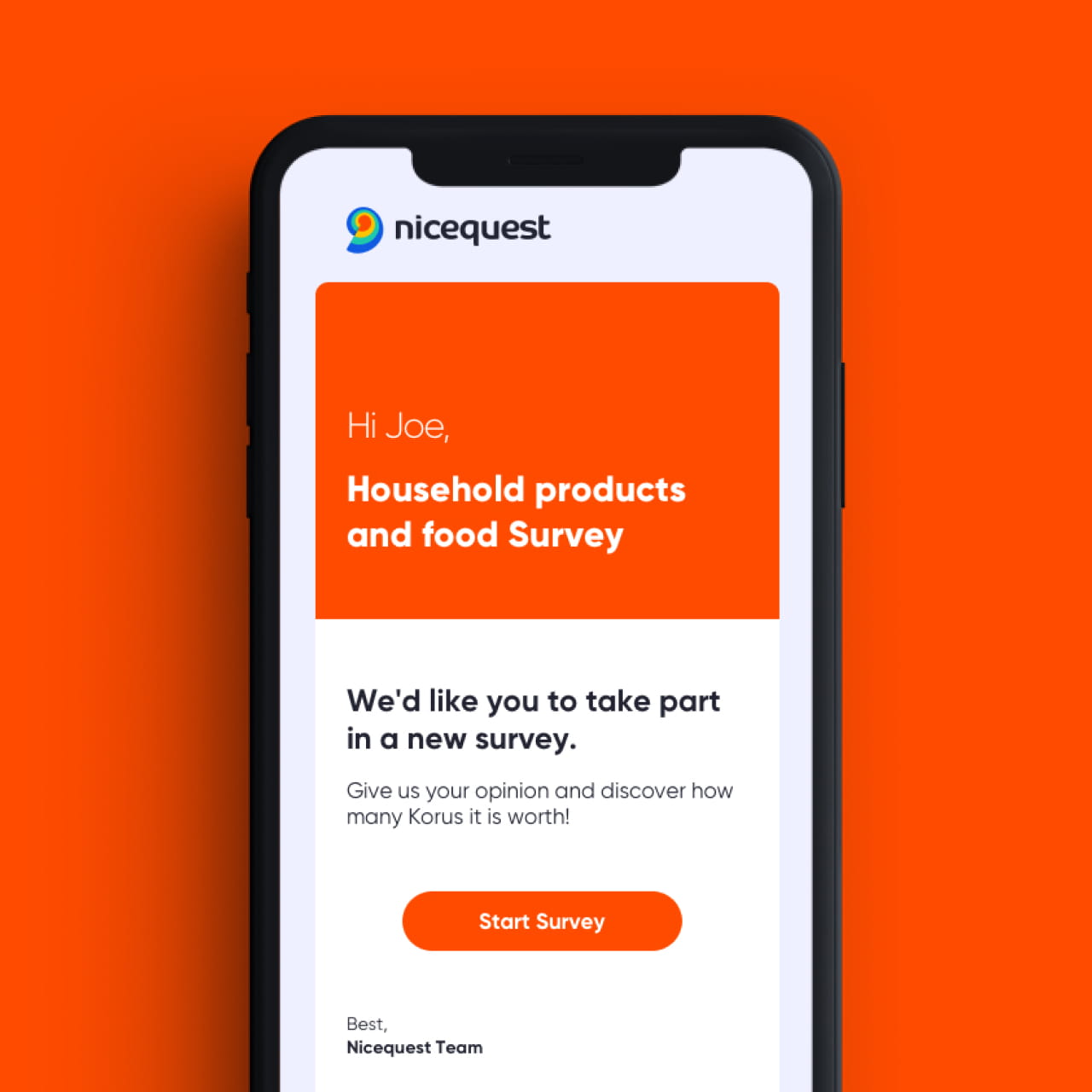
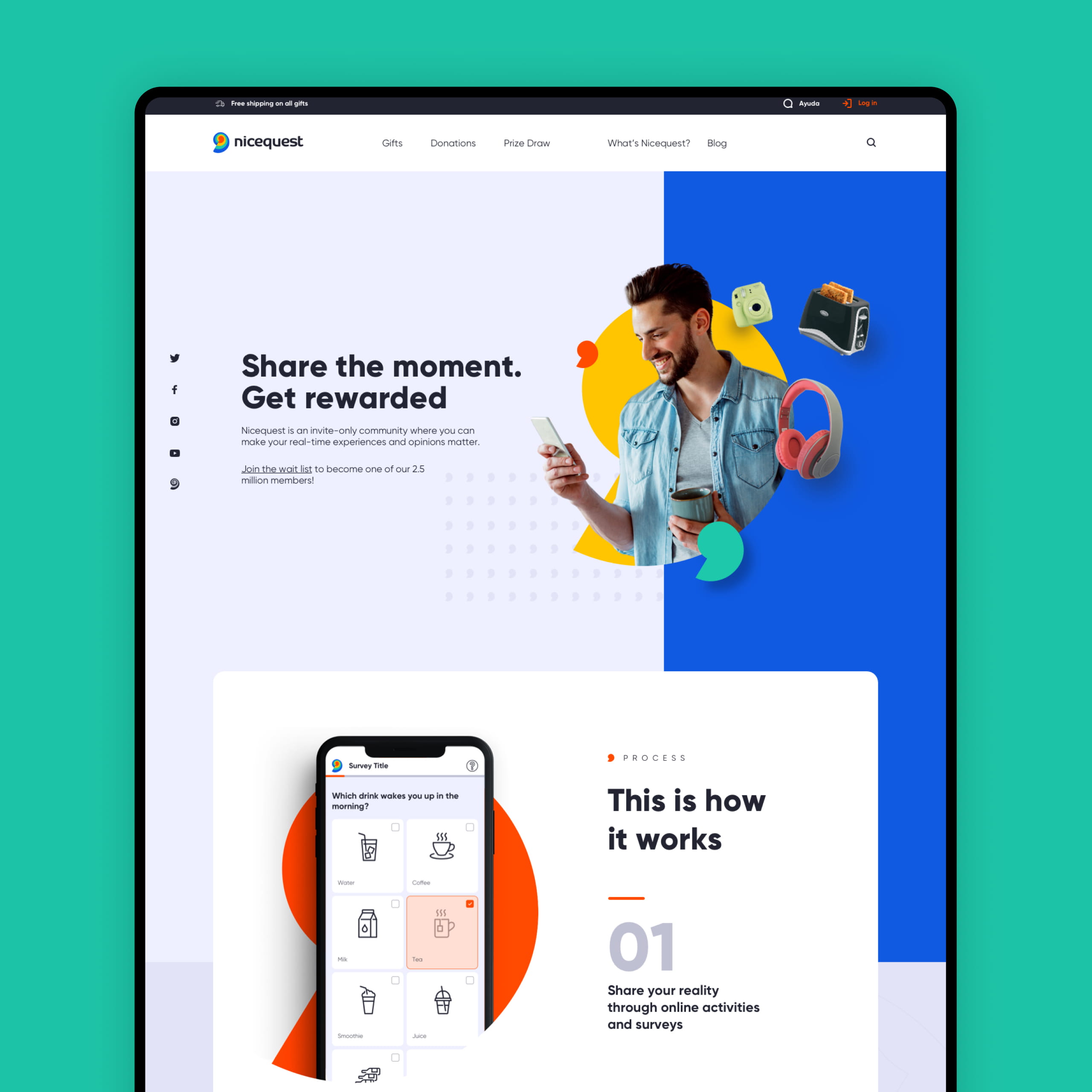
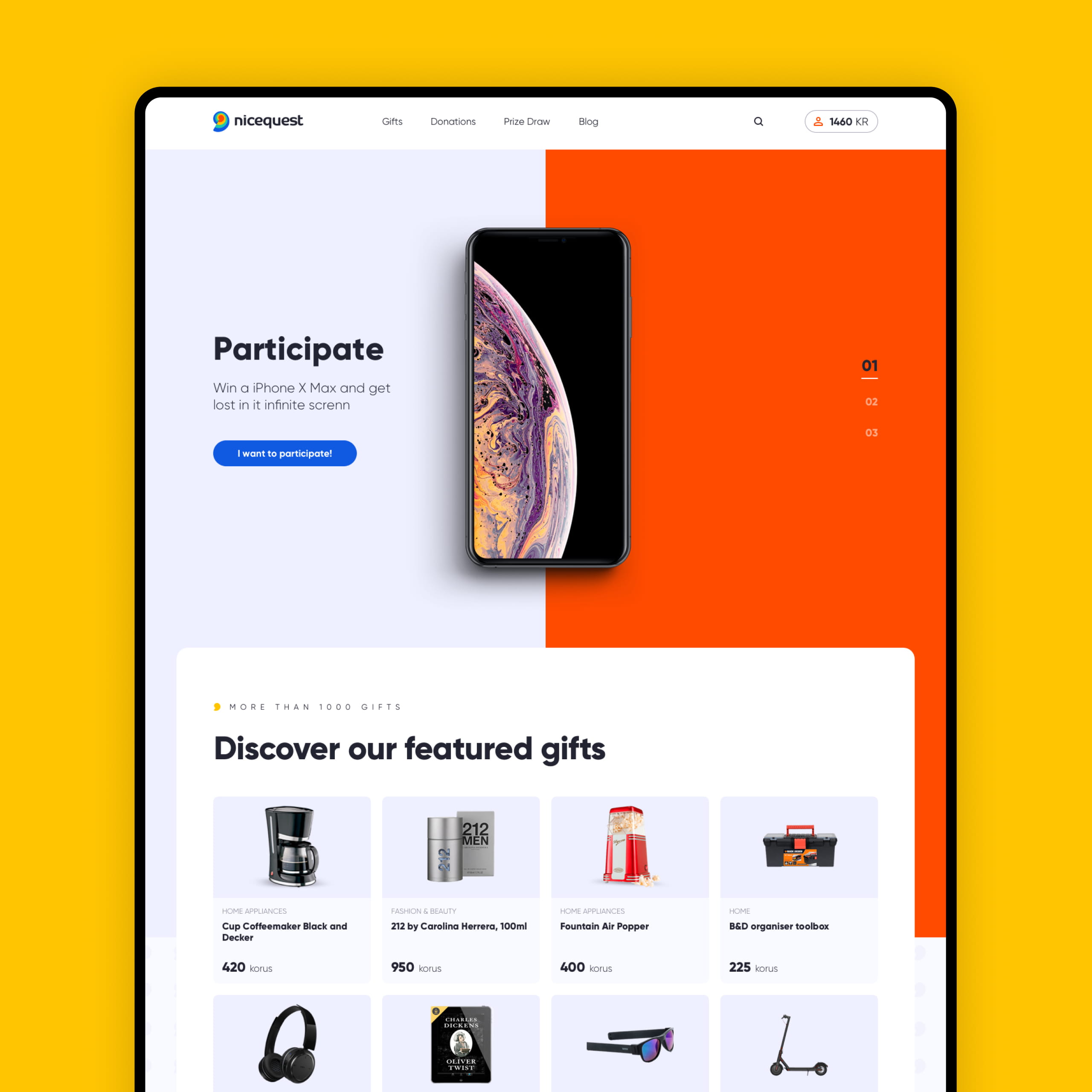
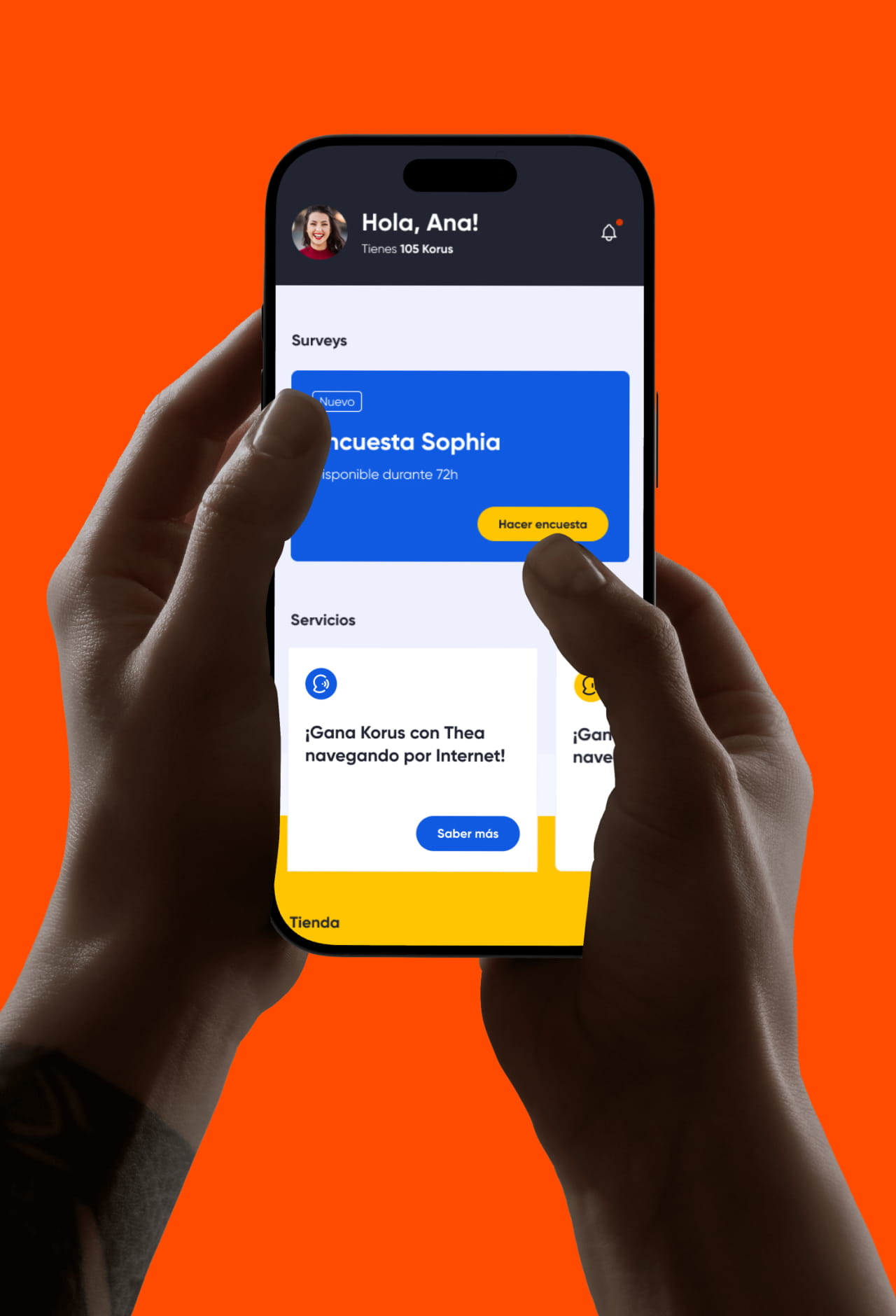
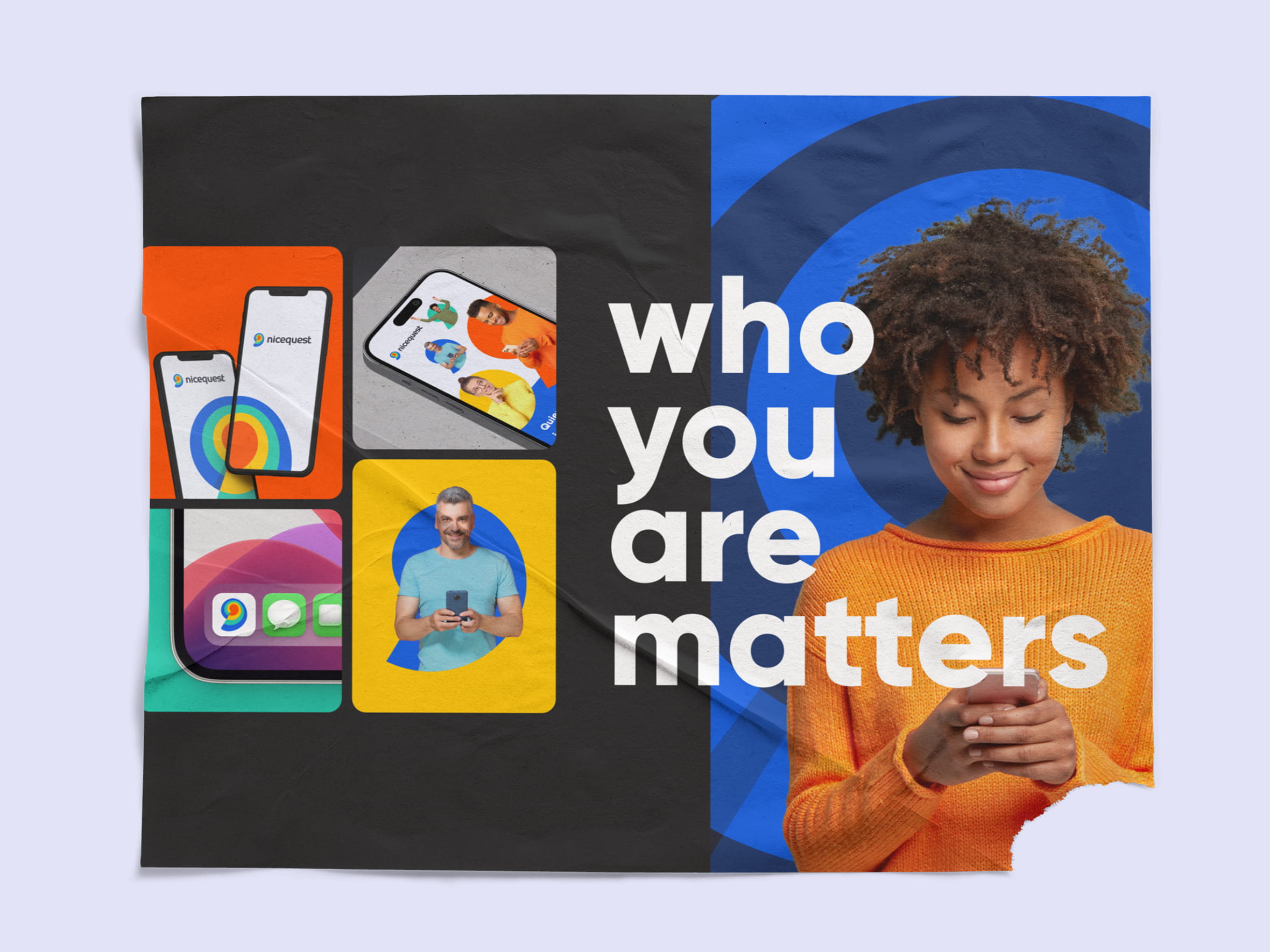
I led the development of a scalable UI kit that translated the new identity into the surfaces where users actually encountered the brand: emails and survey UI, web and onboarding layouts, iconography, patterns, layout rules, and campaign visuals. The system was designed so that teams could apply it consistently without design involvement on every execution. Consistency was built into the components themselves, not dependent on whoever was using them.

The Nicequest design system didn’t just serve the rebrand. It became the foundation for the One Panel / Evolv initiative — GfK’s effort to unify its entire global panel ecosystem under a single visual and technical framework.


ncq-28b
ncq-29a
ncq-40
ncq-31
ncq-32
ncq-43

Reflection

The most important decision in this project wasn’t visual. It was the choice to start with what already existed in users’ minds rather than what we wanted to put there.

The 5-second drawing exercise wasn’t a design tool. It was a listening tool. It told us that the brand had already evolved in the minds of its users — we just needed to catch up with them. That reframing changed everything: instead of imposing a new identity, we were articulating one that was already latent in the relationship between the brand and its audience.

Evolving a brand people trust is harder than building one from scratch. The constraints are tighter, the stakes are higher, and the margin for error is smaller. What this project made clear is that the discipline of brand evolution isn’t about how much you change. It’s about knowing exactly what to protect.

ncq-34
ncq-35

Impact

Nicequest had over 850,000 panelists across 20+ countries. That meant the rebrand had to work at real scale — with real users who had already built trust with the brand over years.

To check that the new identity strengthened rather than broke that trust, a brand perception survey was run with 4,000 panelists across eight markets right after launch.

82%

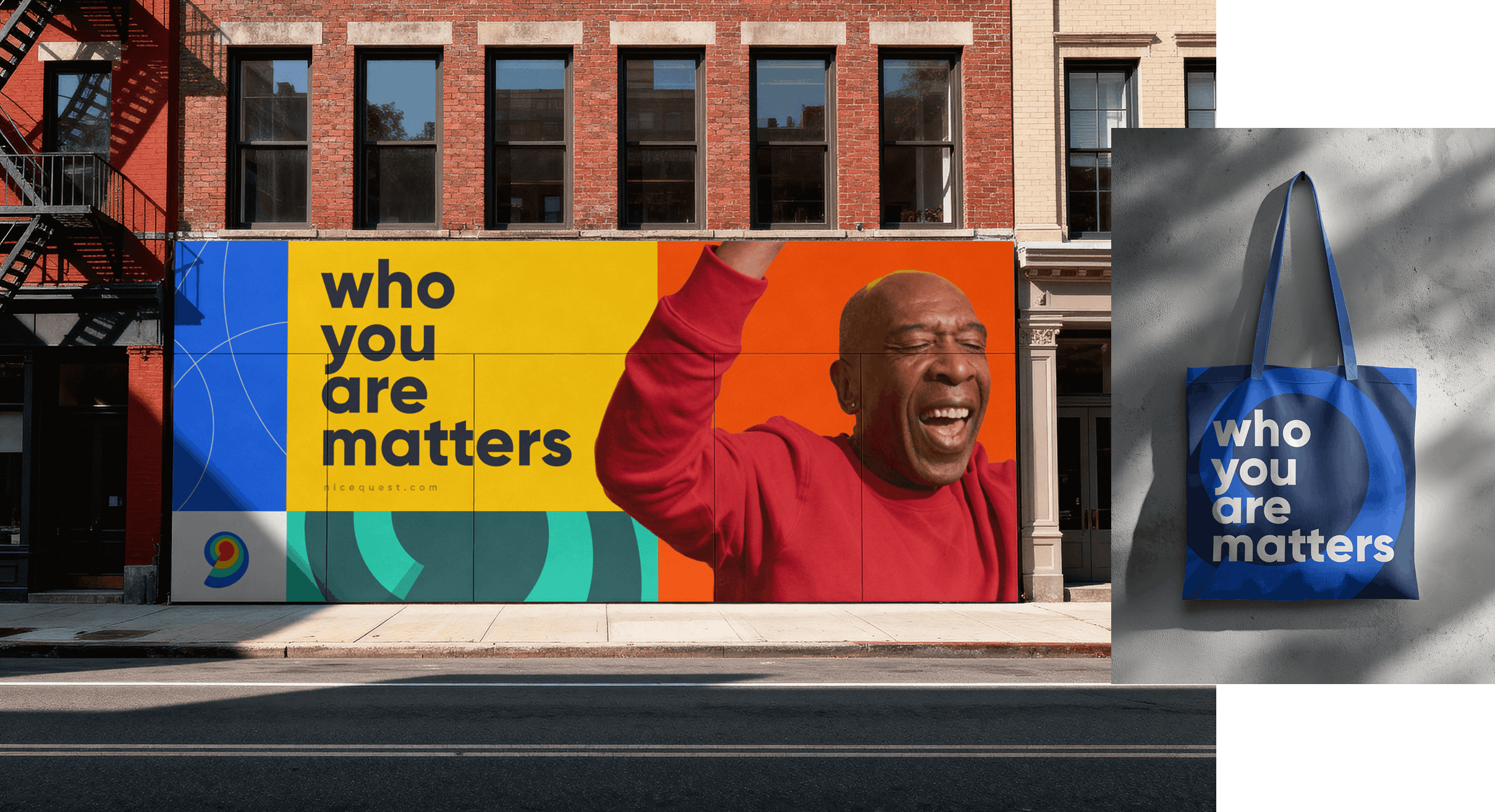
average identification with the new claim “Who you are matters”.

90%+

of panelists across all countries reported feeling their data is protected.

7/10

An average score of 7/10 associating Nicequest with key attributes such as Trustworthy, Transparent, Honest, and Approachable.

Foundation for the One Panel / Evolv

The Nicequest design system became the technical and visual foundation for the One Panel / Evolv initiative — enabling GfK to unify and scale its global panel portfolio without rebuilding from scratch each time.

DESIGN-DEPT.

Barcelona, Spain
Phone: +34 622 712 521
Email: fabioestellita@gmail.com
Linkedin: /in/fabioestellita/

Copyright © 2026 DESIGN DEPT. 

All rights reserved.

Back to top Arrow