BASED IN BARCELONA.
One Panel: Building brand infrastructure that outlasts the brand
Evolving Nicequest into a tokenised design system for GfK's panel portfolio, and how that system held together when the identity it was built for was rolled back.
Context
GfK managed multiple B2C panels across different markets and initiatives. Each had grown independently, leading to fragmented identities, inconsistent UX, and high cost every time a panel needed to launch.
But the fragmentation went deeper than the visual layer. Every panel ran its own customer ID system — a user in Spain had a different identity than the same user in Germany or Brazil. There was no shared login, no unified profile, no common foundation. Panelists existed market by market, not as a global community.
One Panel was the initiative to fix both problems at once: unify the brand and the customer identity infrastructure across the entire portfolio. This meant coordinating design, product, engineering, legal, and panel operations teams across multiple countries over 1.5 years — with the design system as the thread holding it all together.
This wasn’t a rebrand. It was a platform integration.
My role
Led brand architecture, visual identity, and design system alongside Jennie Magill (Head of UX) and UX/UI designers David Martinez, Santi Sanchez, and Arnau Clavero — working across product, engineering, and global stakeholders.


The Challenge
The identity was done. Validated across eight markets, research-backed, ready to launch. Then leadership made the call to roll back to GfK branding. All of it, indefinitely.
That’s the version of this project most people don’t see in a case study. The work held anyway — and understanding why is the point.
The problem had three sides: the business needed a system that could scale, users needed an experience they could trust, and every team across every market needed to work from the same foundation.
Business need
- Unify customer identity across all panels — one ID, one profile, one platform
- Simplify brand management across panels and markets
- Create consistent UX across different panel types
- Reduce the time and cost of launching or updating panels
- Build something resilient enough to survive corporate change
Users needed
- Clear, consistent experiences regardless of which panel they used
- A modern, approachable B2C interface
- Trust and transparency when sharing increasingly sensitive personal data
Fixing only the brand would leave the identity infrastructure fragmented.
Fixing only the technical layer without the design system meant every team would still build independently. The solution had to connect all three.

Many panels. Zero shared foundation.
Strategic Direction
Before any design work started, three directions were considered:
1. Create a new standalone B2C panel brand
Clean slate, but no existing trust to build on.
2. Extend the GfK B2B brand to panelists
Easier internally, but GfK’s positioning doesn’t translate well to a consumer audience.
3. Build an overarching ecosystem rooted in Nicequest
Nicequest already had real trust with panelists. It was the strongest foundation to grow from.
We went with option three. But trust alone doesn’t scale — we needed a system behind it, not just a set of guidelines.


Images generated with NanoBanana

Logo Design Process
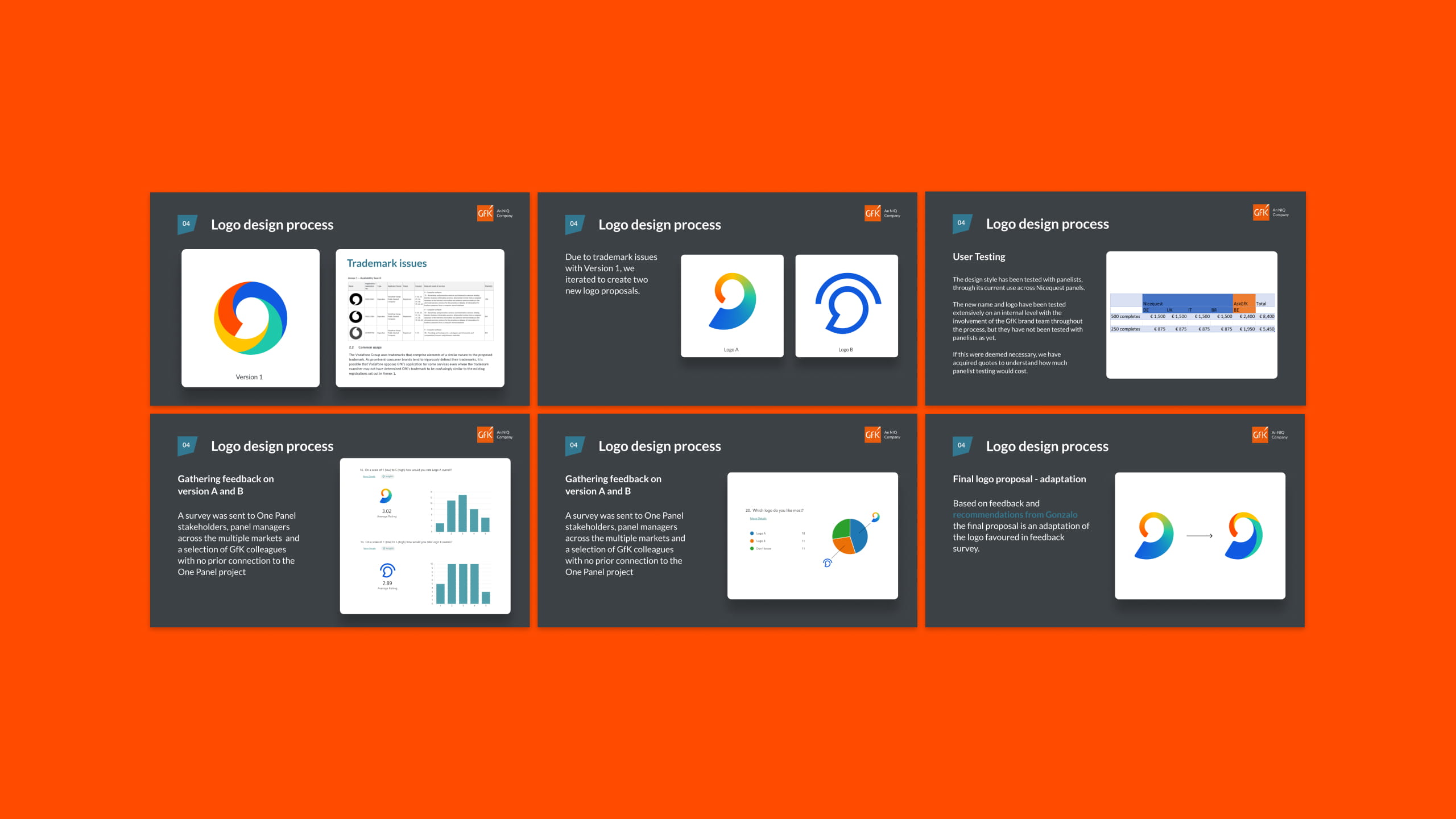
The first logo direction was blocked by a trademark conflict across several markets. Rather than patch it, two new directions were developed and tested through a survey with stakeholders, panel managers, and GfK colleagues who had no prior involvement in the project.

Video generated with Veo 3.1

Naming, Validation & Governance
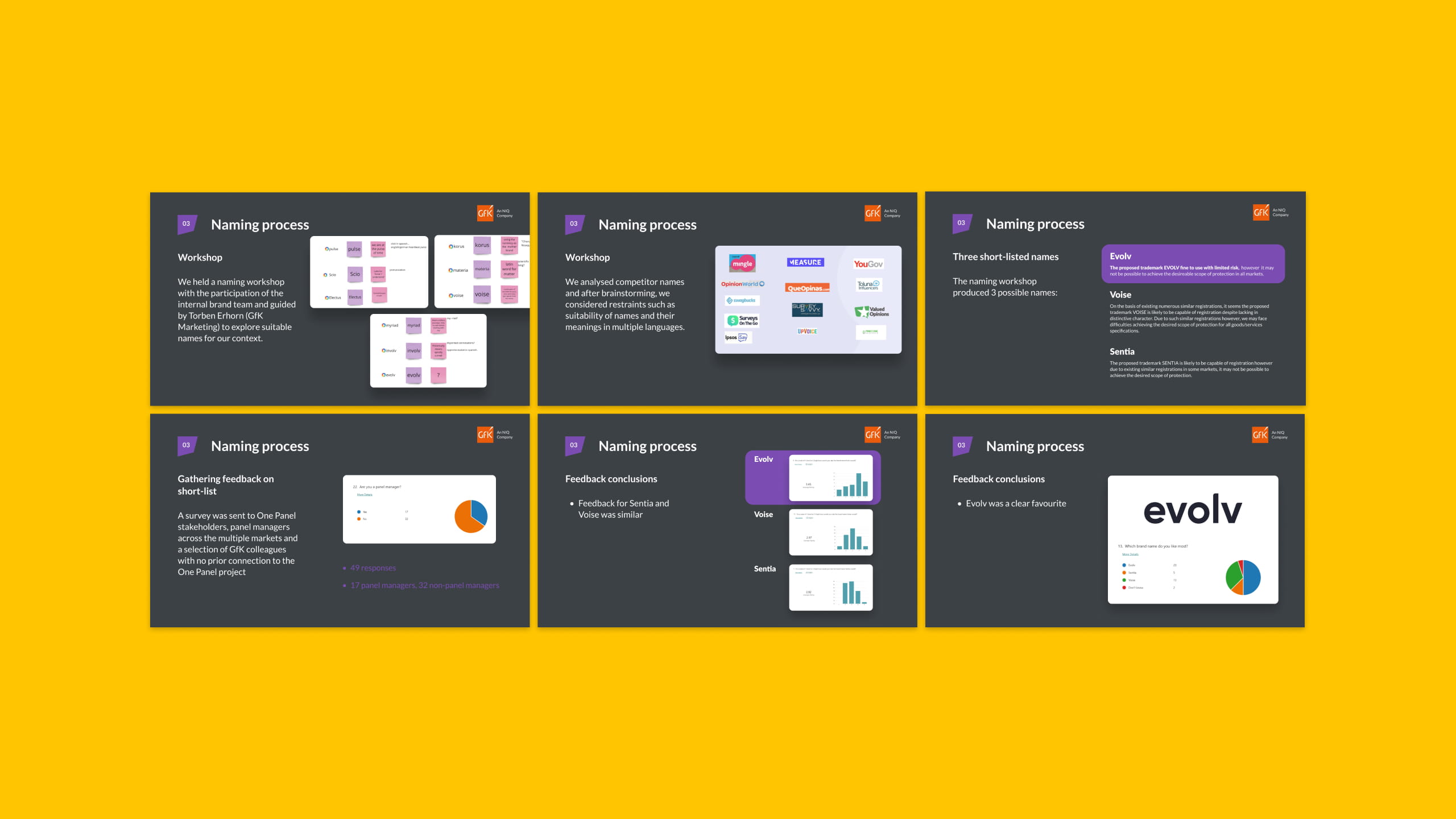
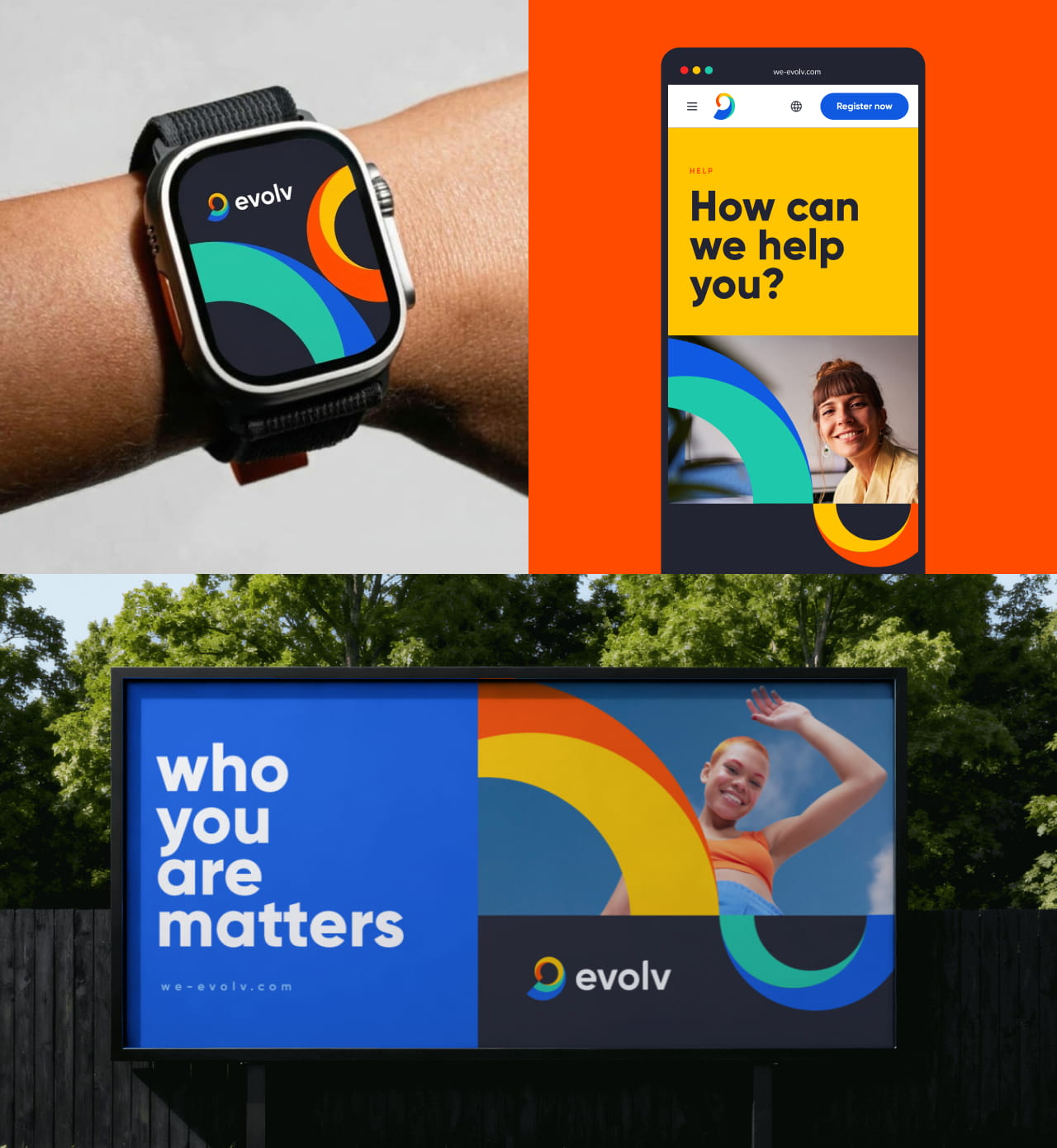
The system needed a name. Evolv wasn’t chosen by gut feeling — it was tested. We reviewed the competitive landscape, checked trademark availability across markets, and ran a survey with key stakeholders to validate the shortlist.
Evolv won clearly. It signals growth and continuous improvement, which is exactly what the system was built to do. More than a name, it became the reference point for brand and product decisions across the whole panel portfolio.
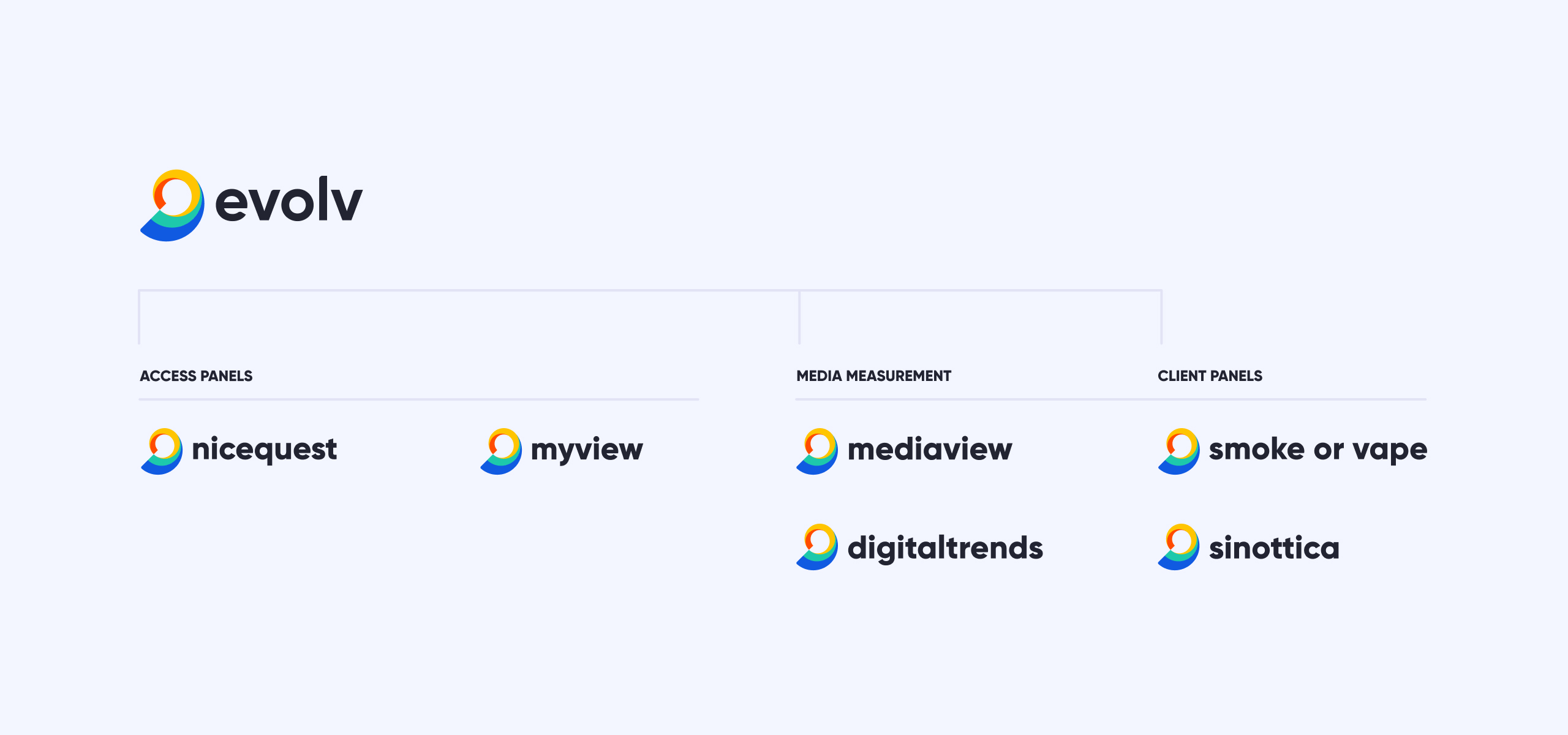
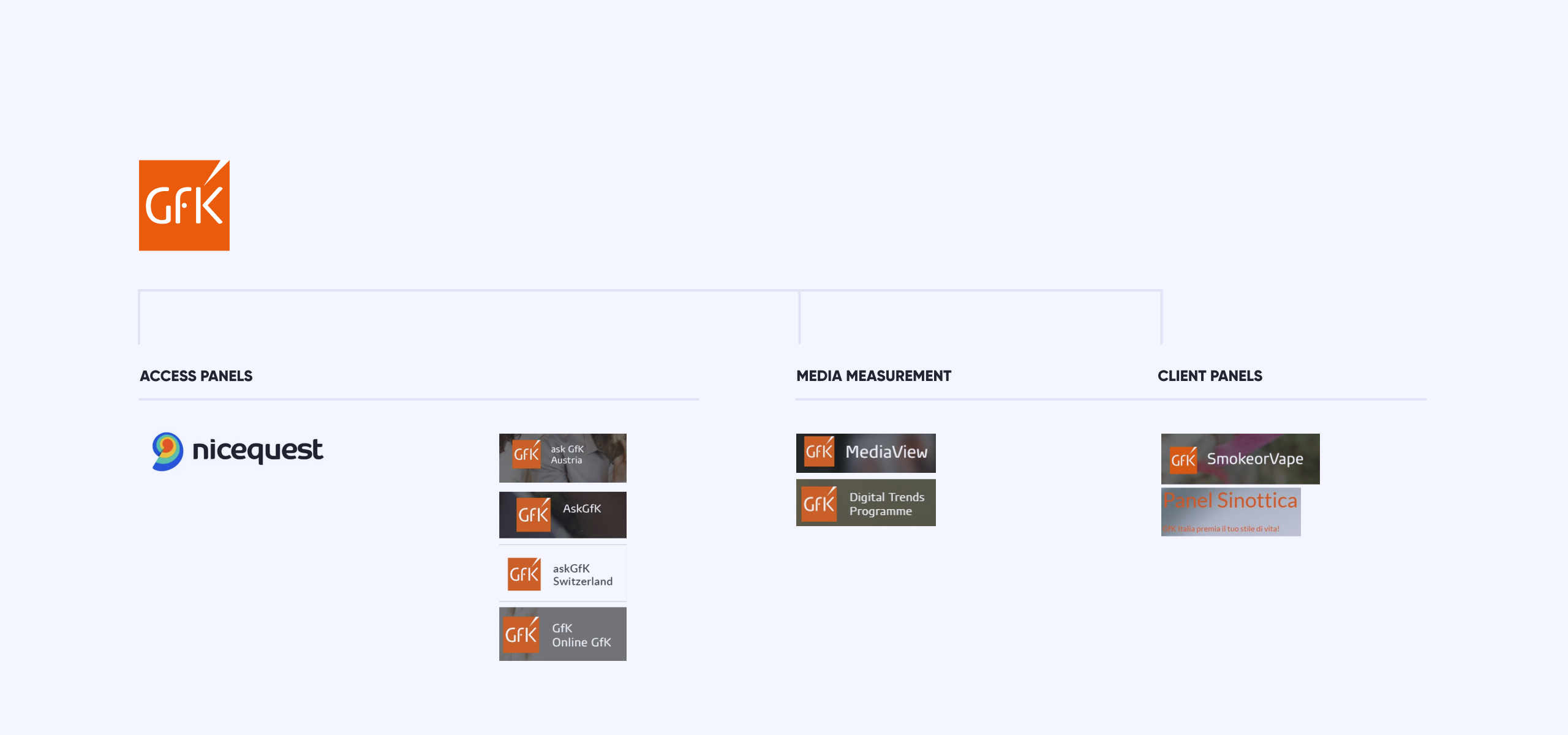
The portfolio, before and after
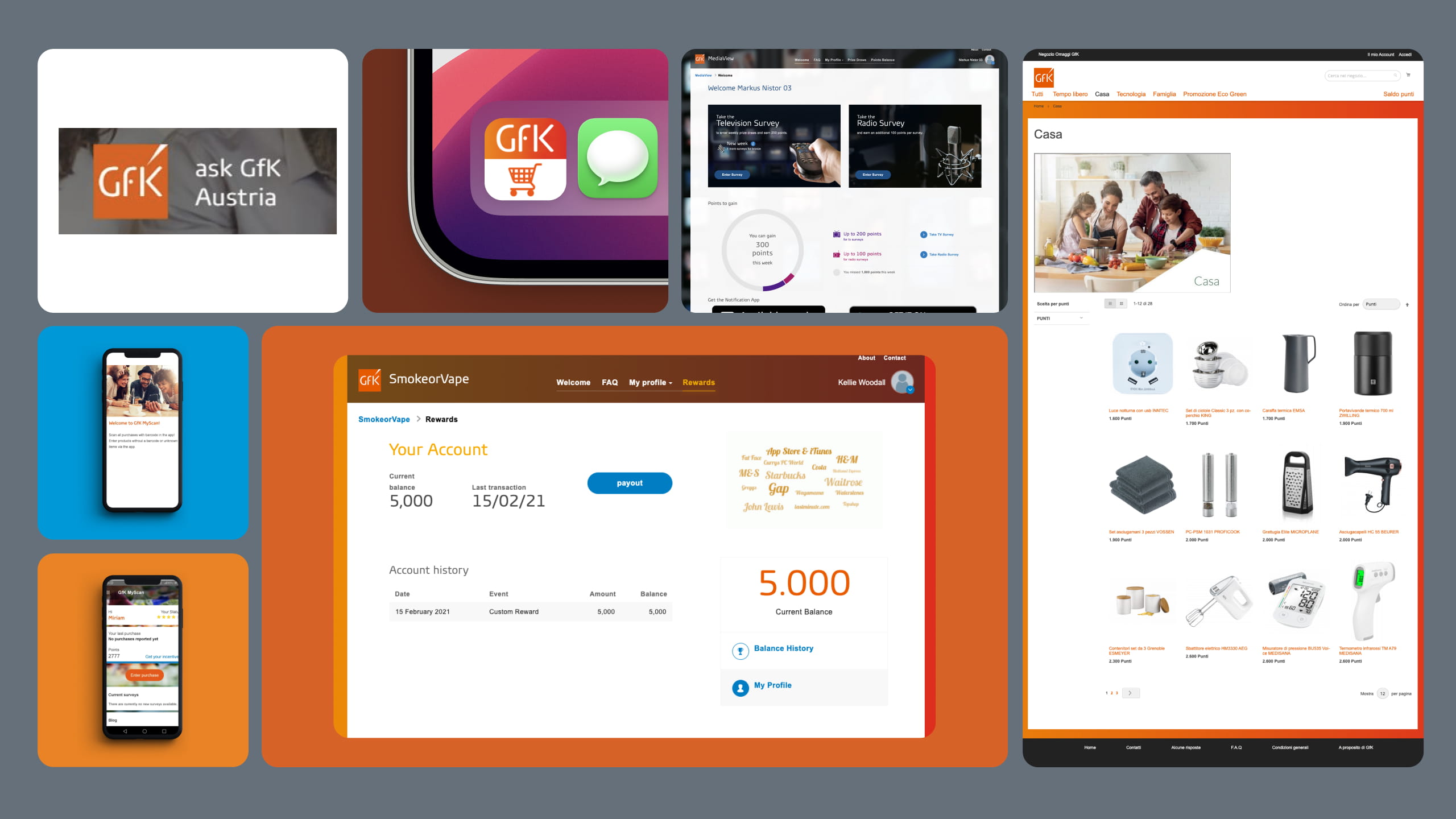
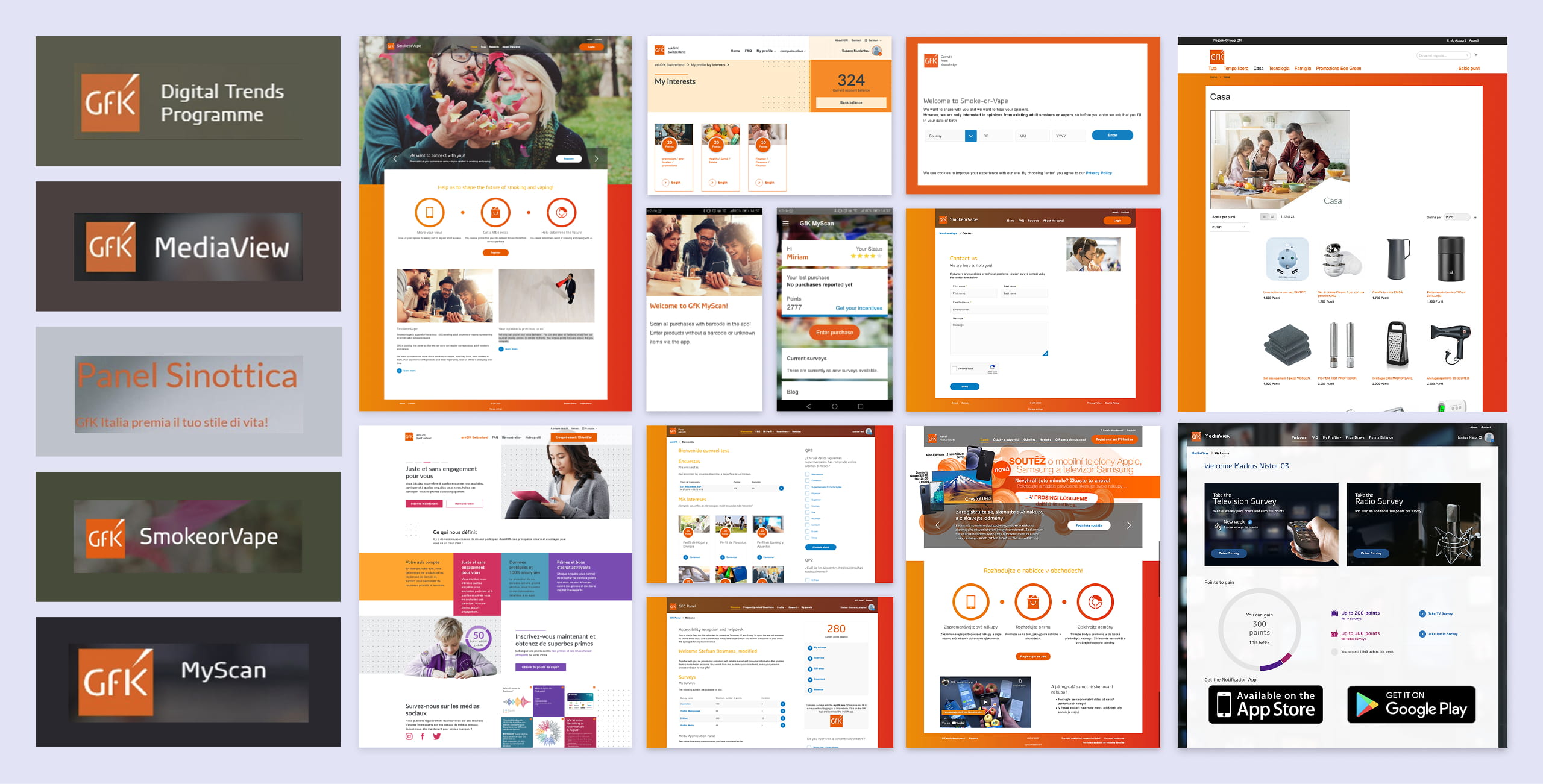
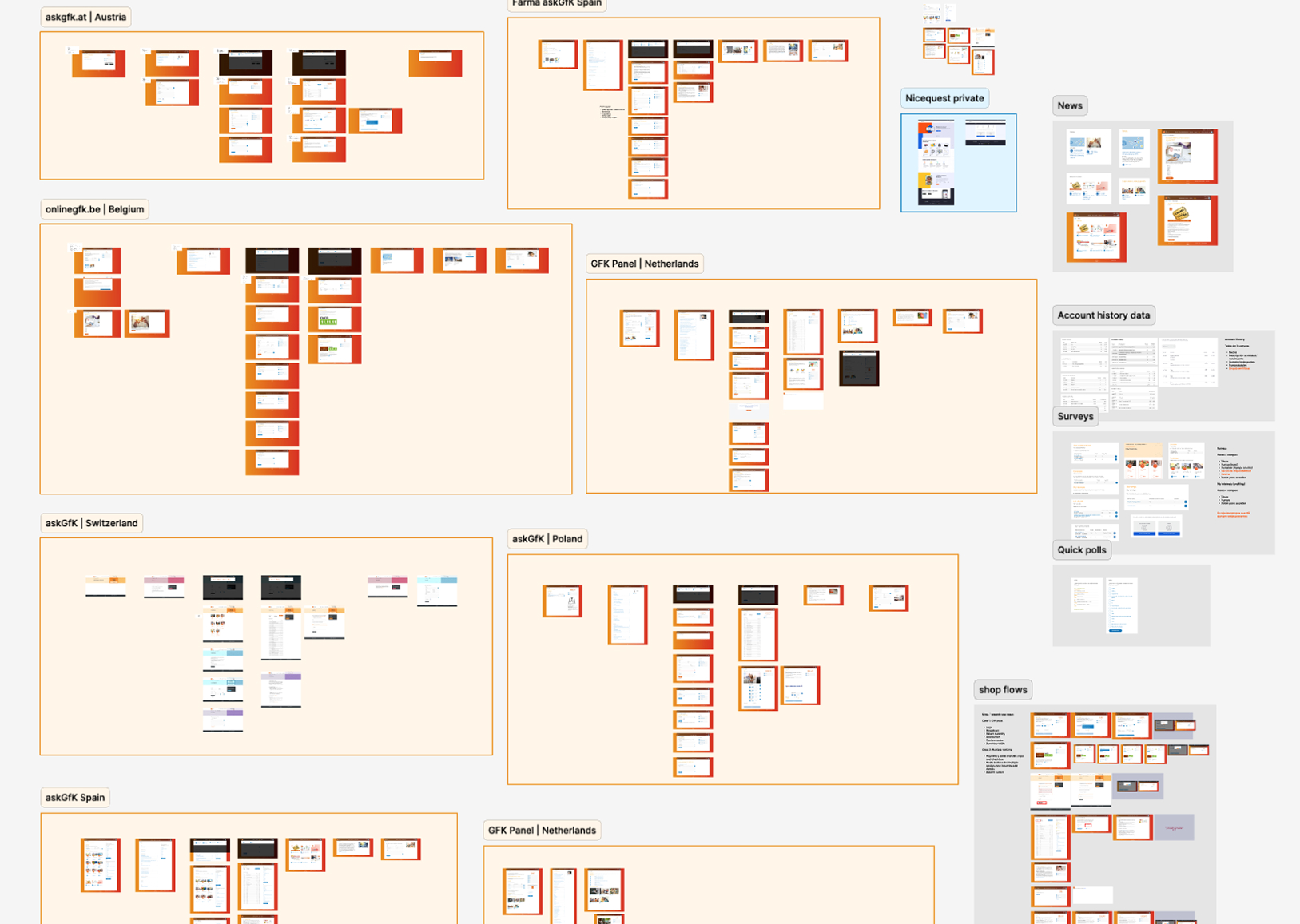
Before One Panel, the portfolio was a patchwork: Nicequest, AskGfK, MediaView, SmokeorVape, Sinottica — each with its own identity, built independently, with nothing shared between them.
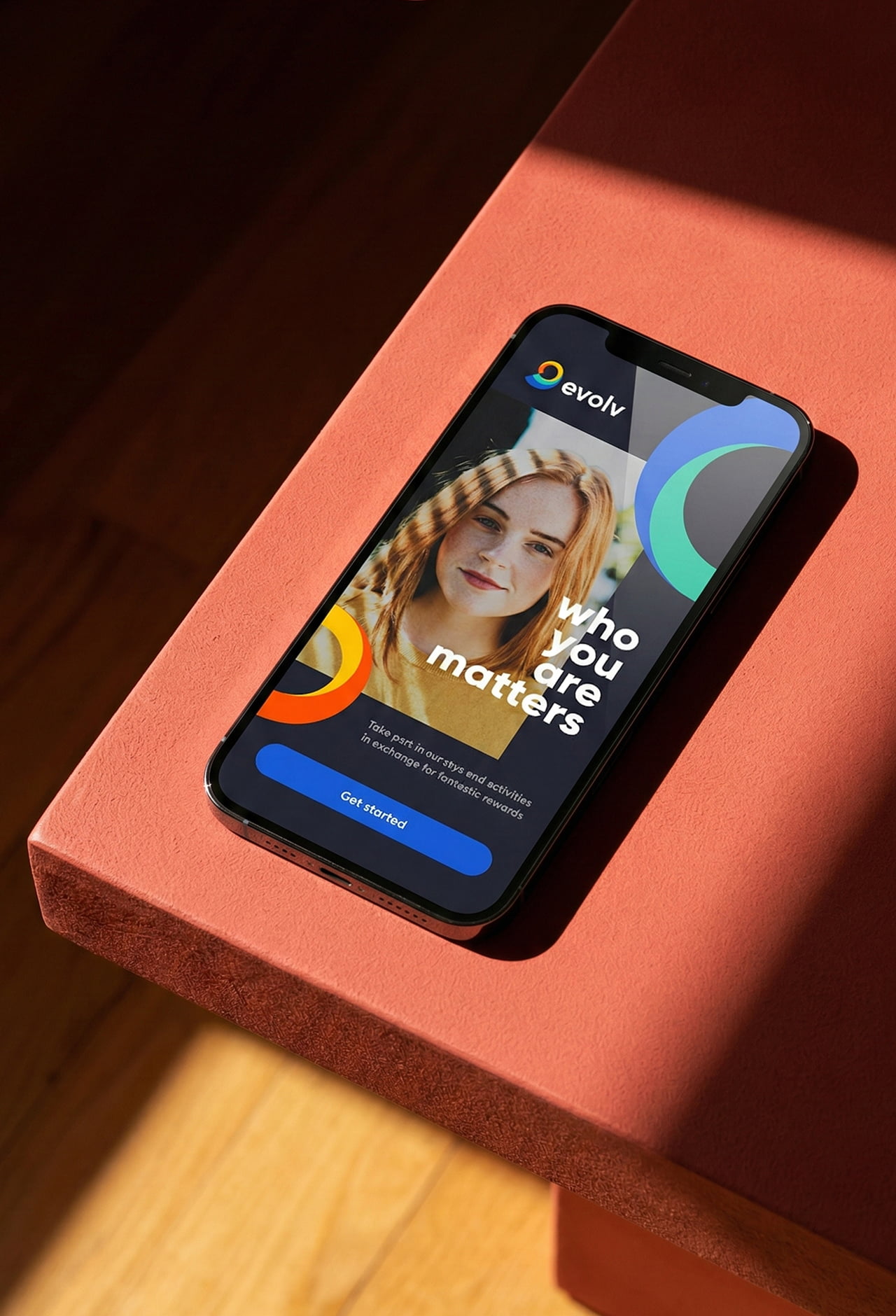
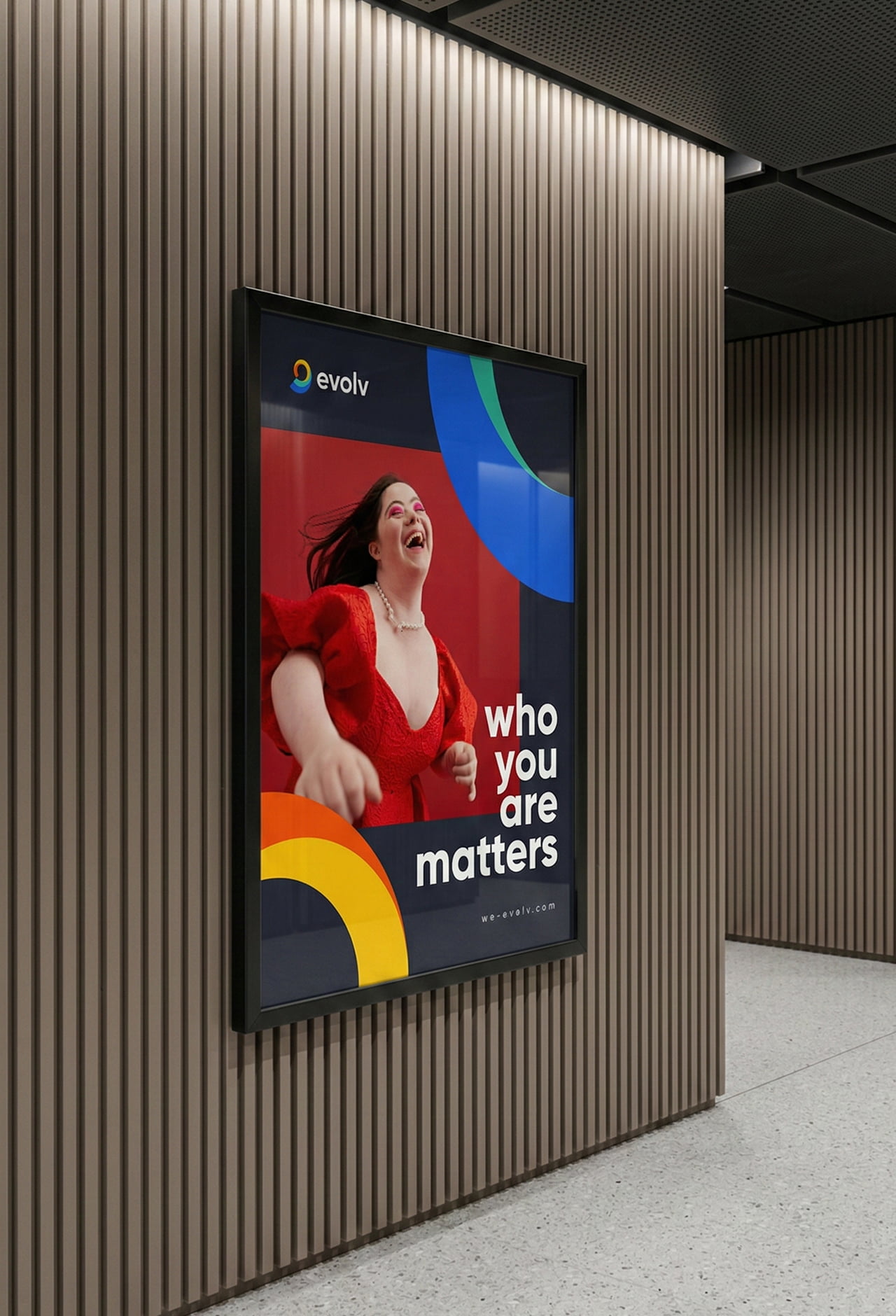
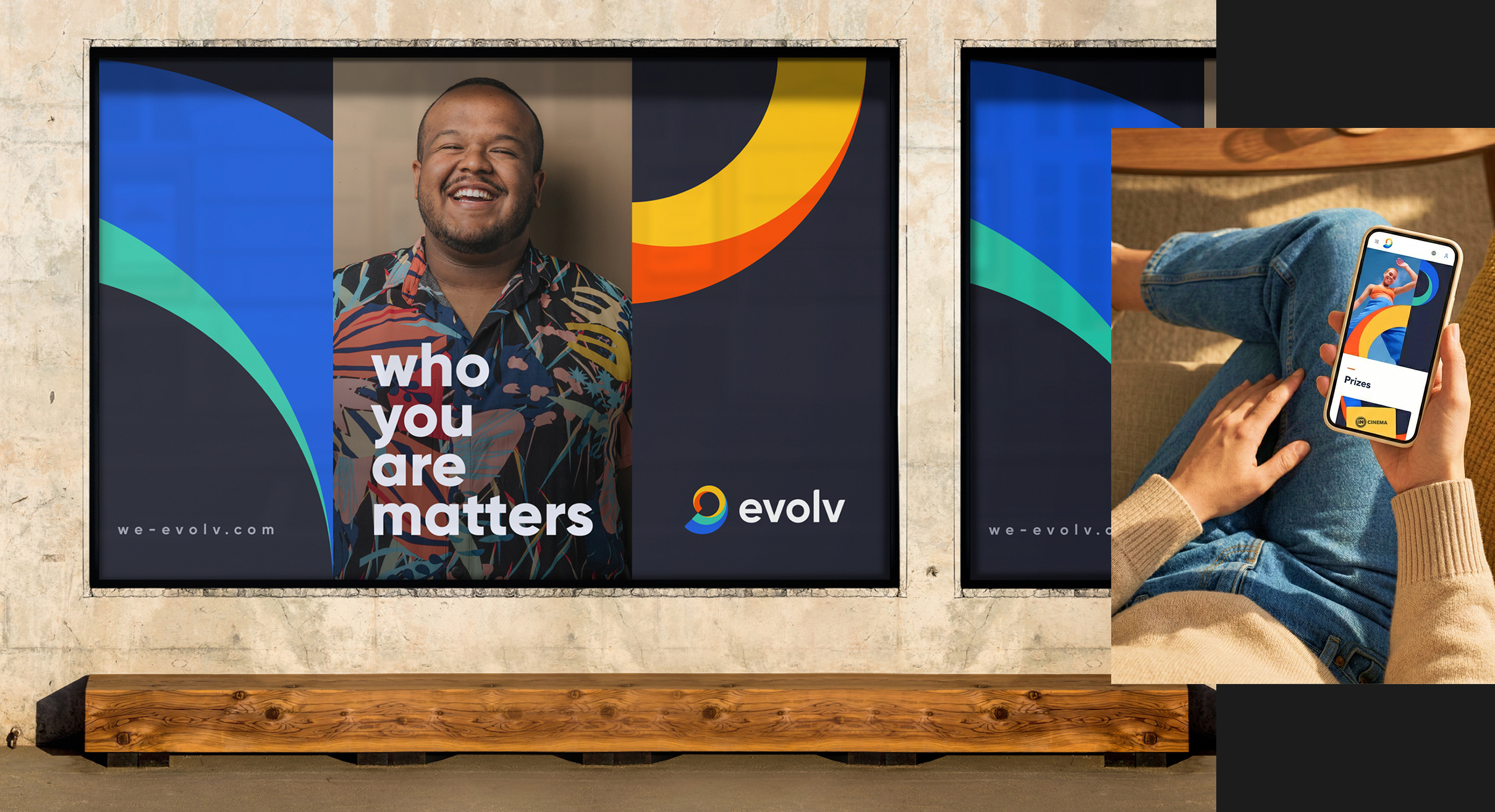
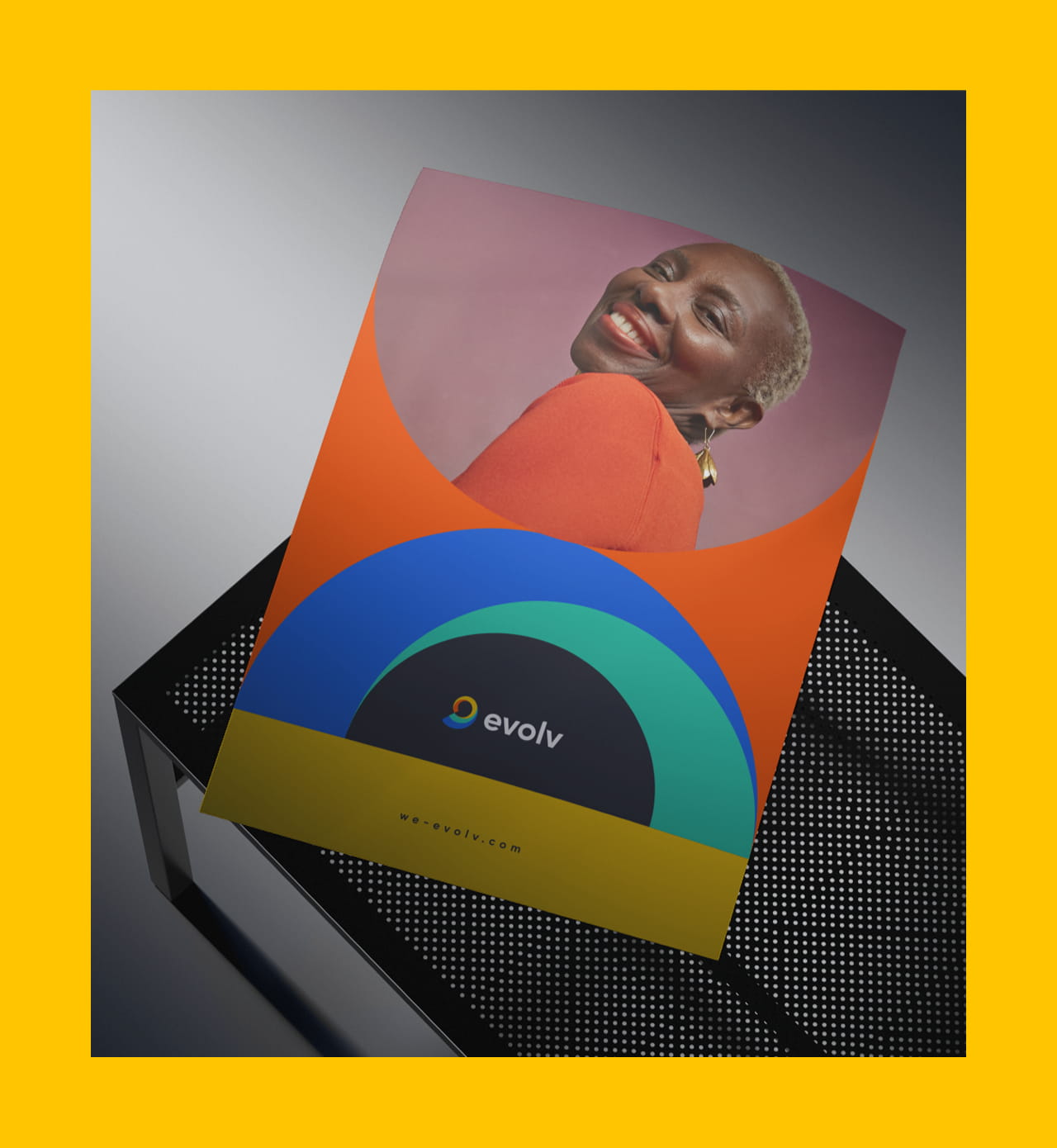
After Evolv, every panel in the portfolio shared the same icon. The panel name stayed its own, but the Evolv mark became the common visual thread across access panels, media measurement, and client panels. Existing recognition was preserved, and the whole portfolio finally felt like it belonged together.
Design System as the Core Deliverable
The real deliverable wasn’t the brand. It was the system that would let every panel run on the same visual foundation.
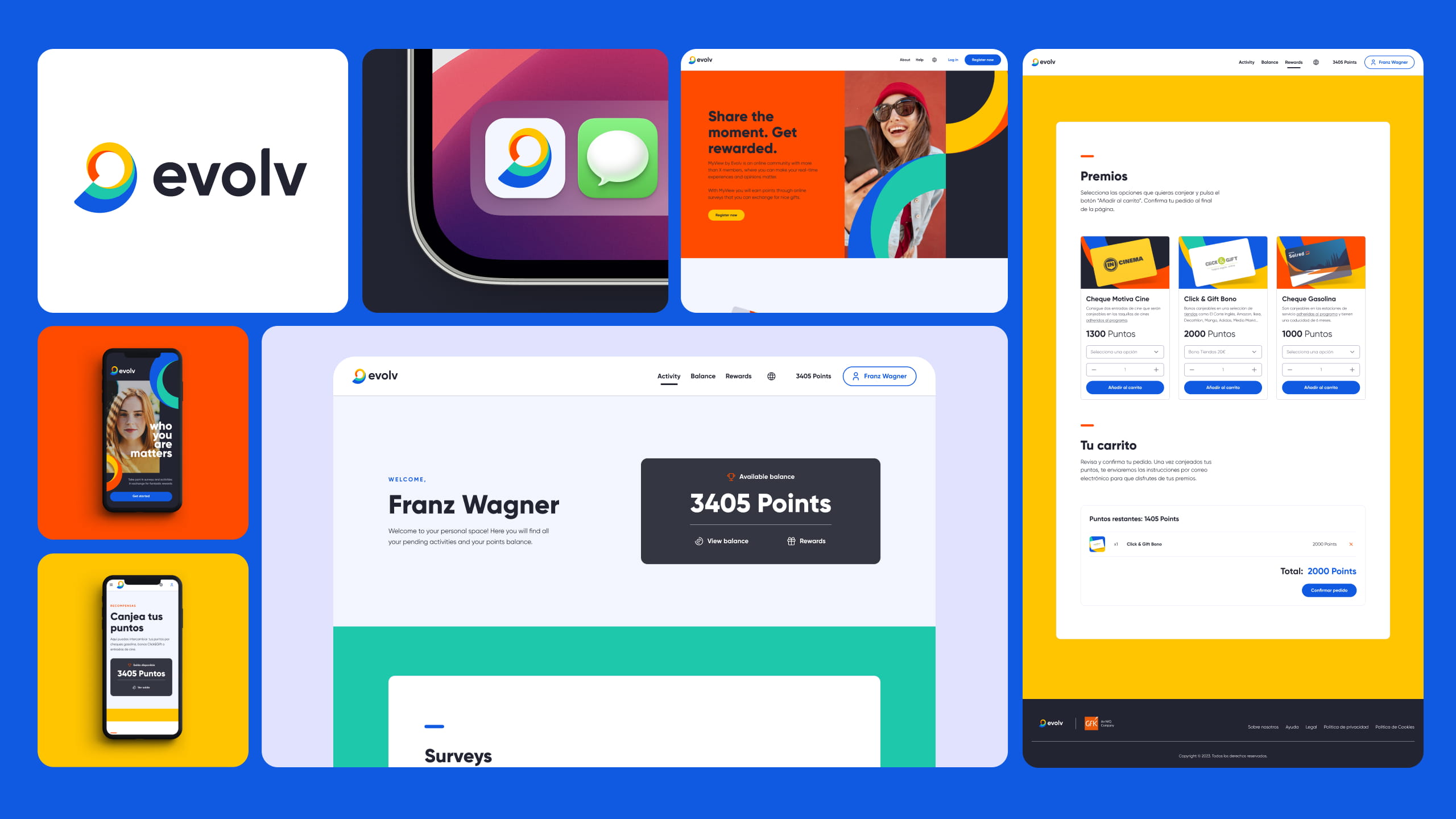
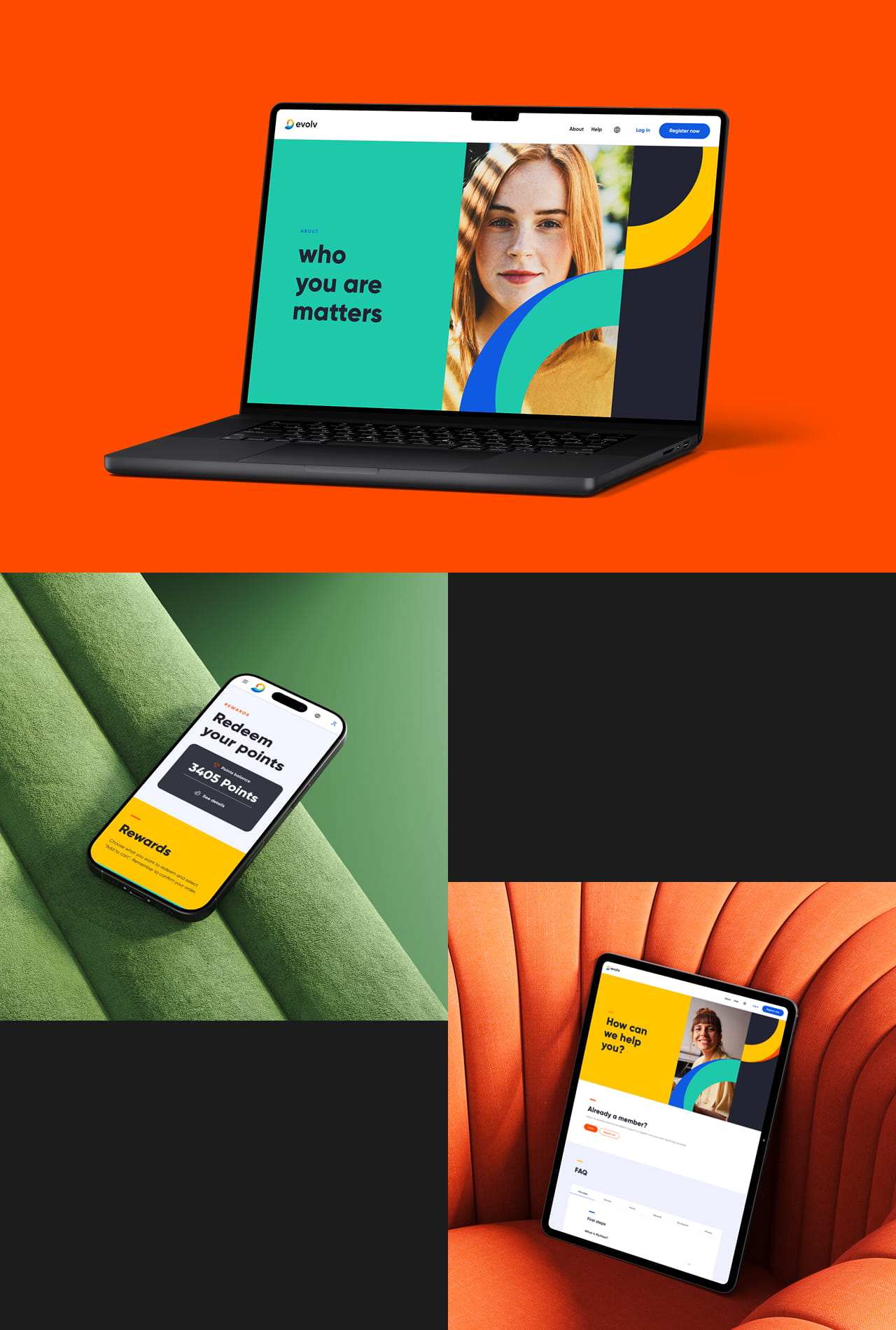
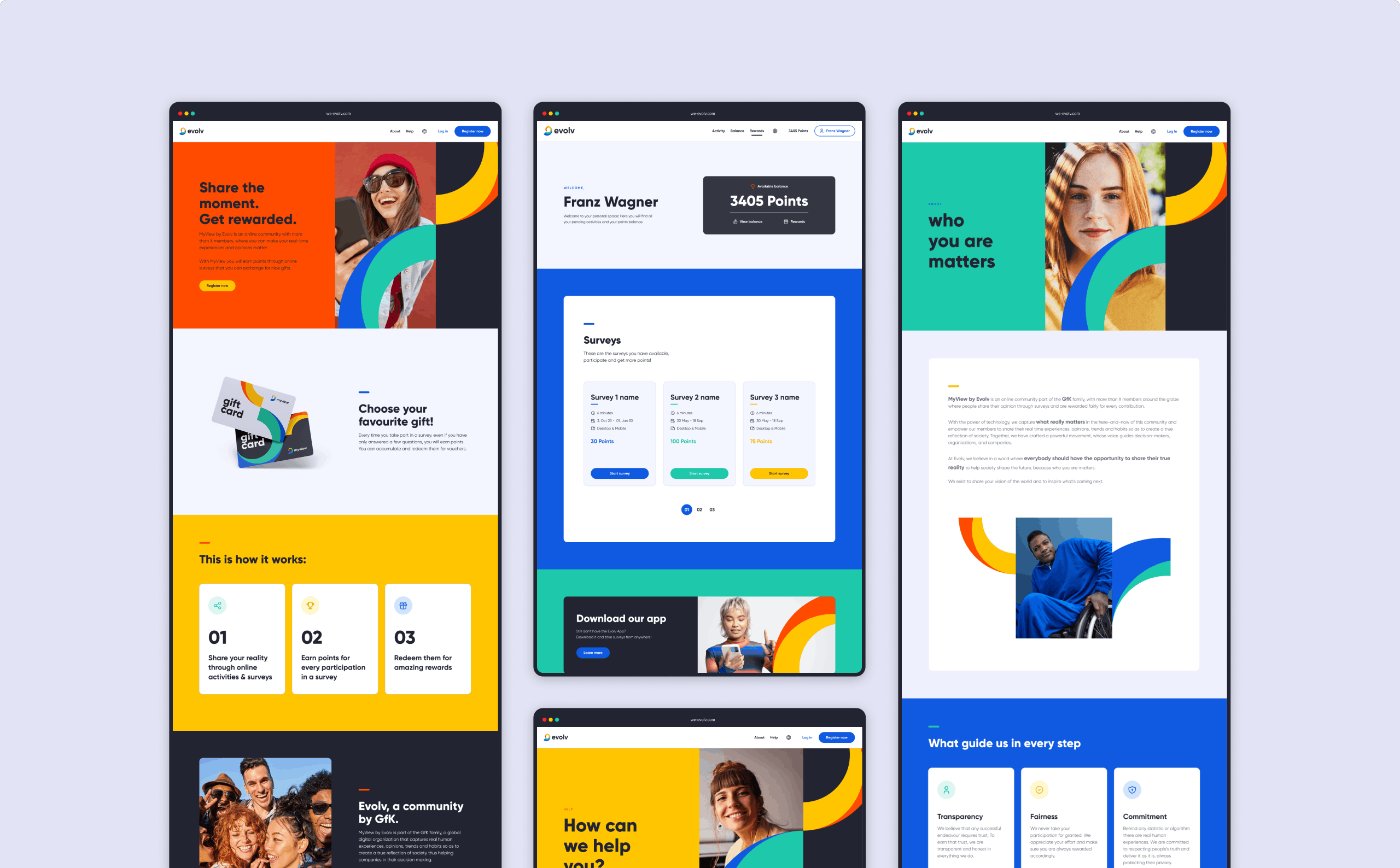
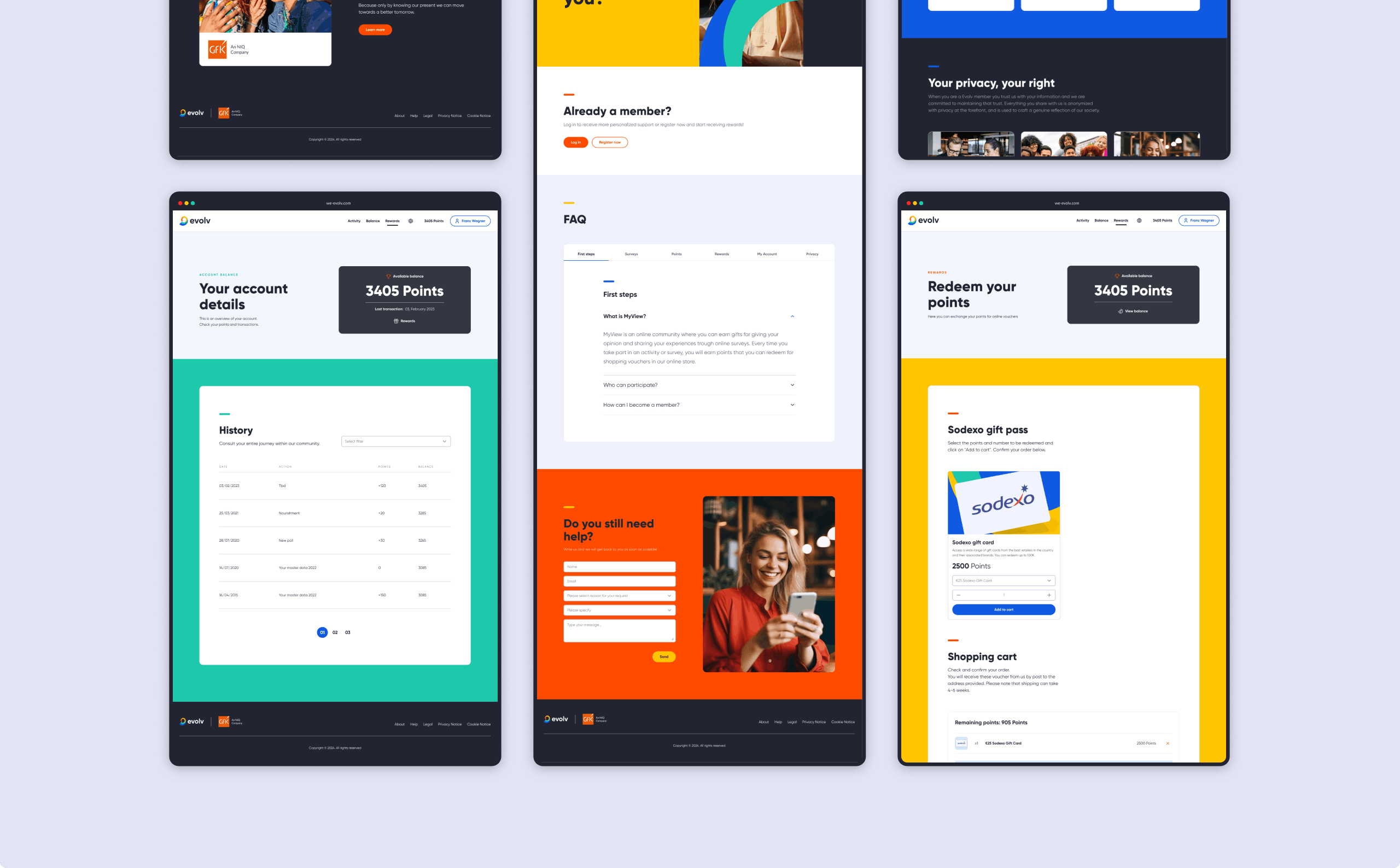
Evolv was built as a modular, tokenised design system — one codebase, one component library, one visual language across all panels. The goal was simple: every panel should feel like it belonged to the same family, without each one needing to be built from scratch.

The starting point: a fragmented portfolio across 8 markets, each panel built independently with no shared infrastructure.
Built to be:
- Consistent: the same components and patterns across every panel
- Tokenised: brand values like colour and typography controlled through a single layer
- Production-ready across web, mobile, email, and portals
It included
- Shared UI components and interaction patterns
- Tokenised typography, colour, and spacing
- Layout rules that worked across different panel expressions
- Figma library, templates, and Storybook documentation for engineering

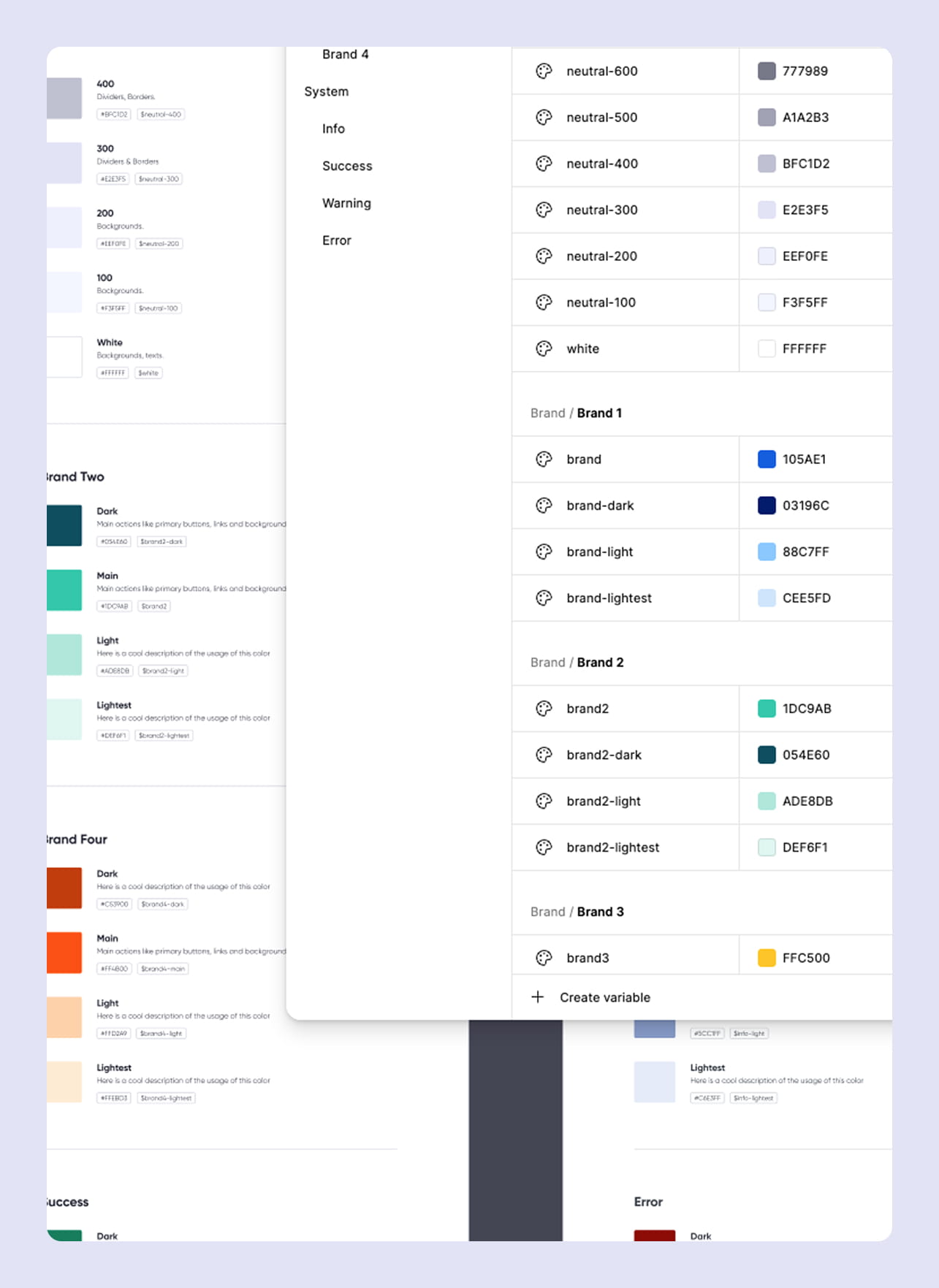
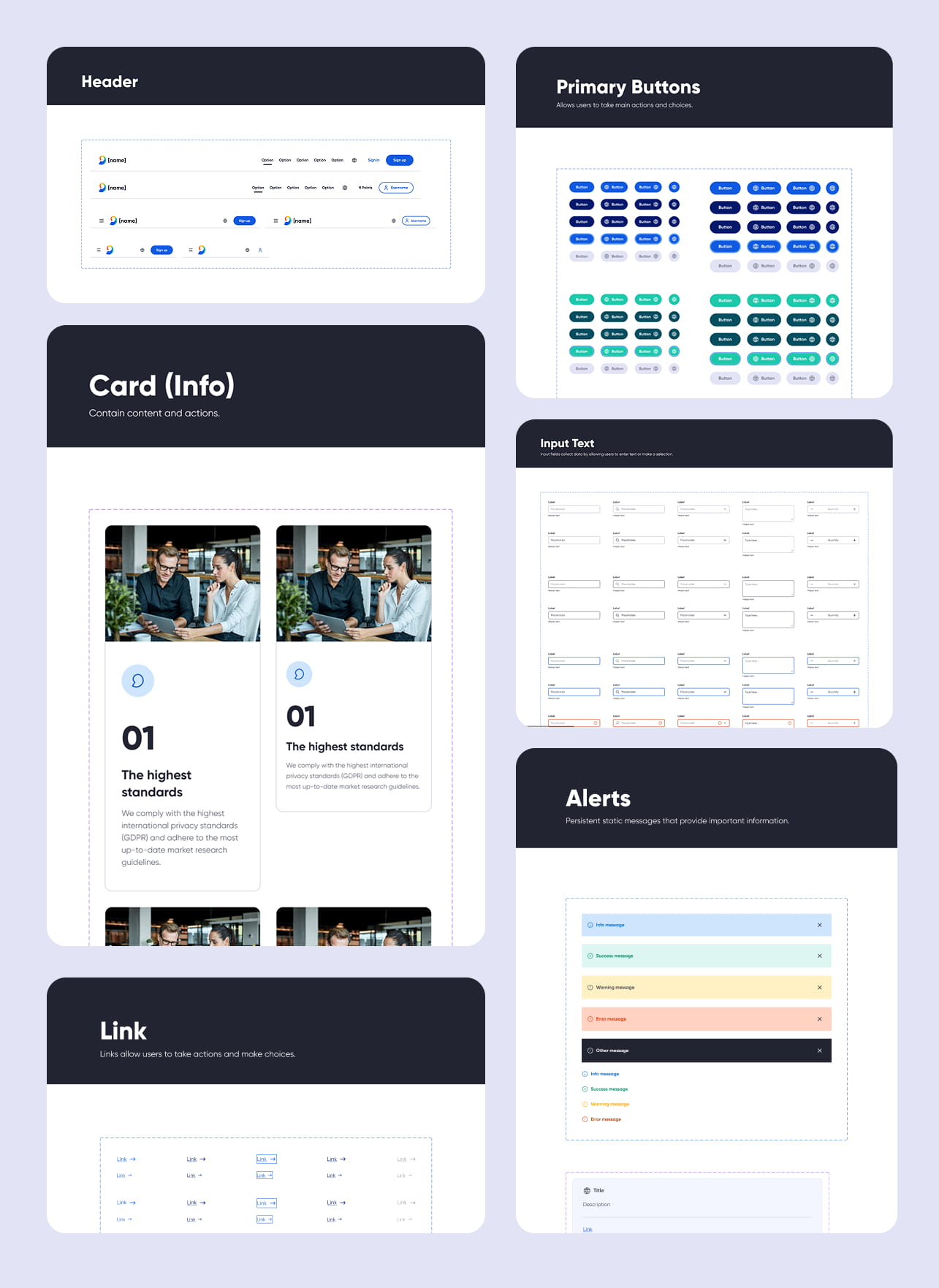
The foundation layer: design tokens controlling colour and typography across all panels, paired with the full component library used across every surface.

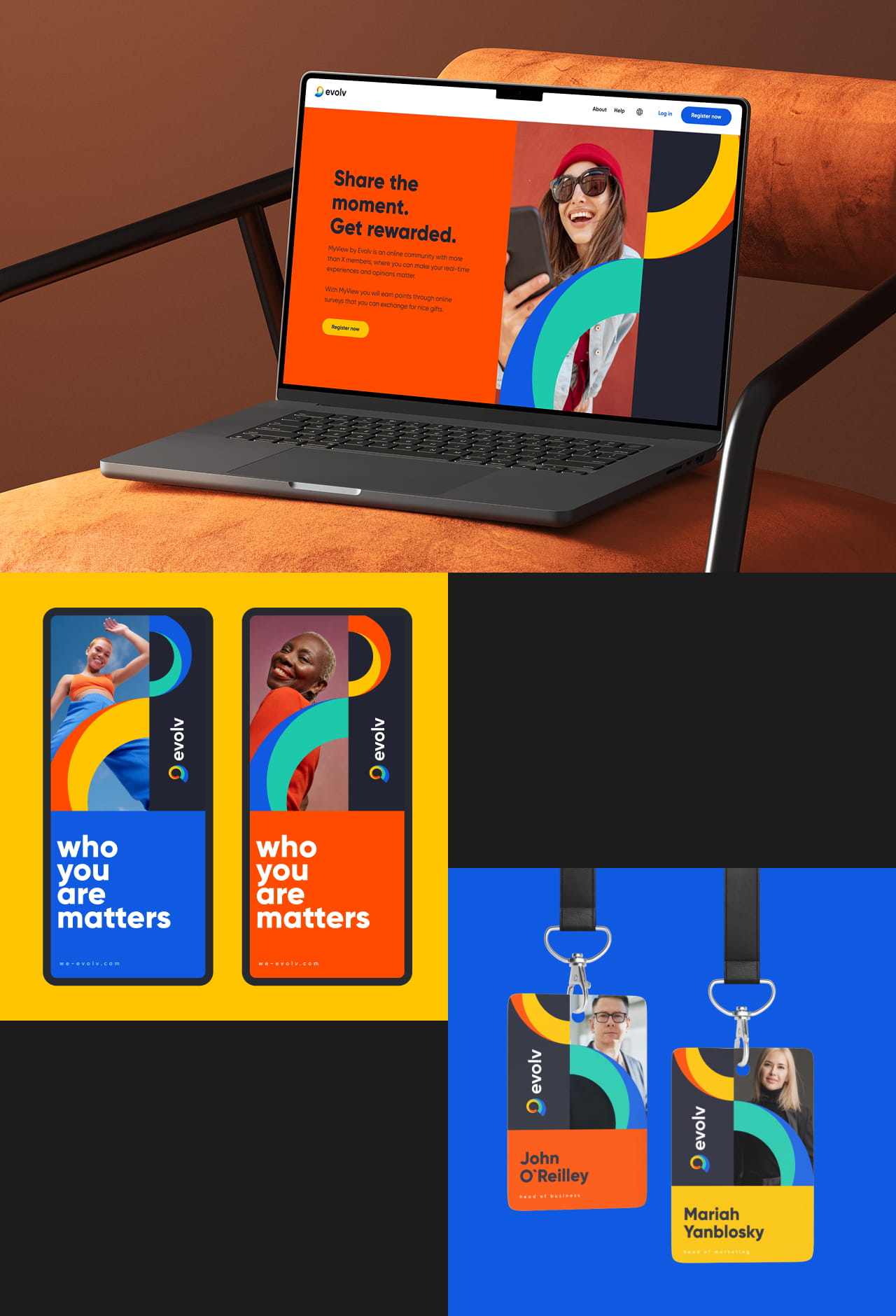
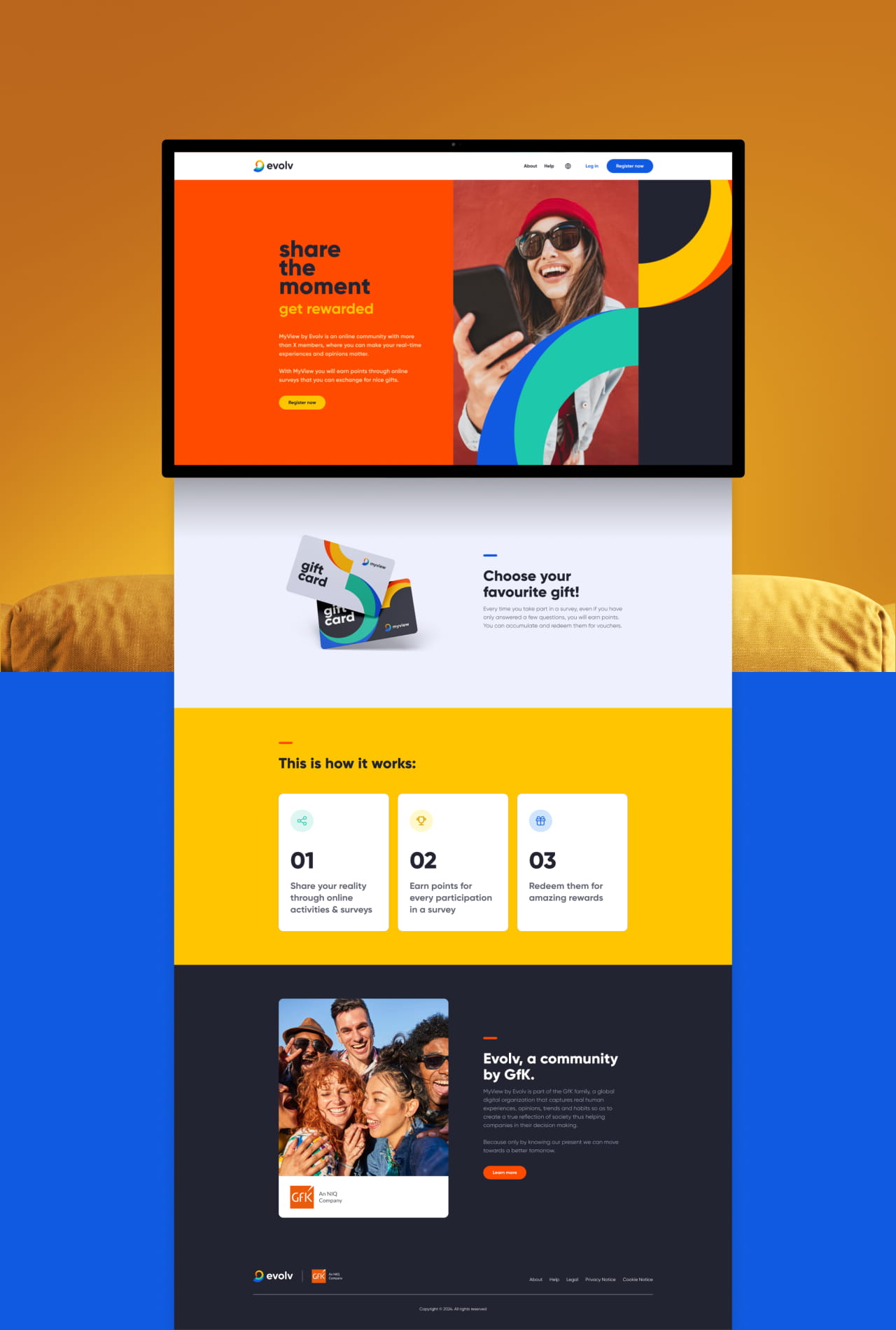
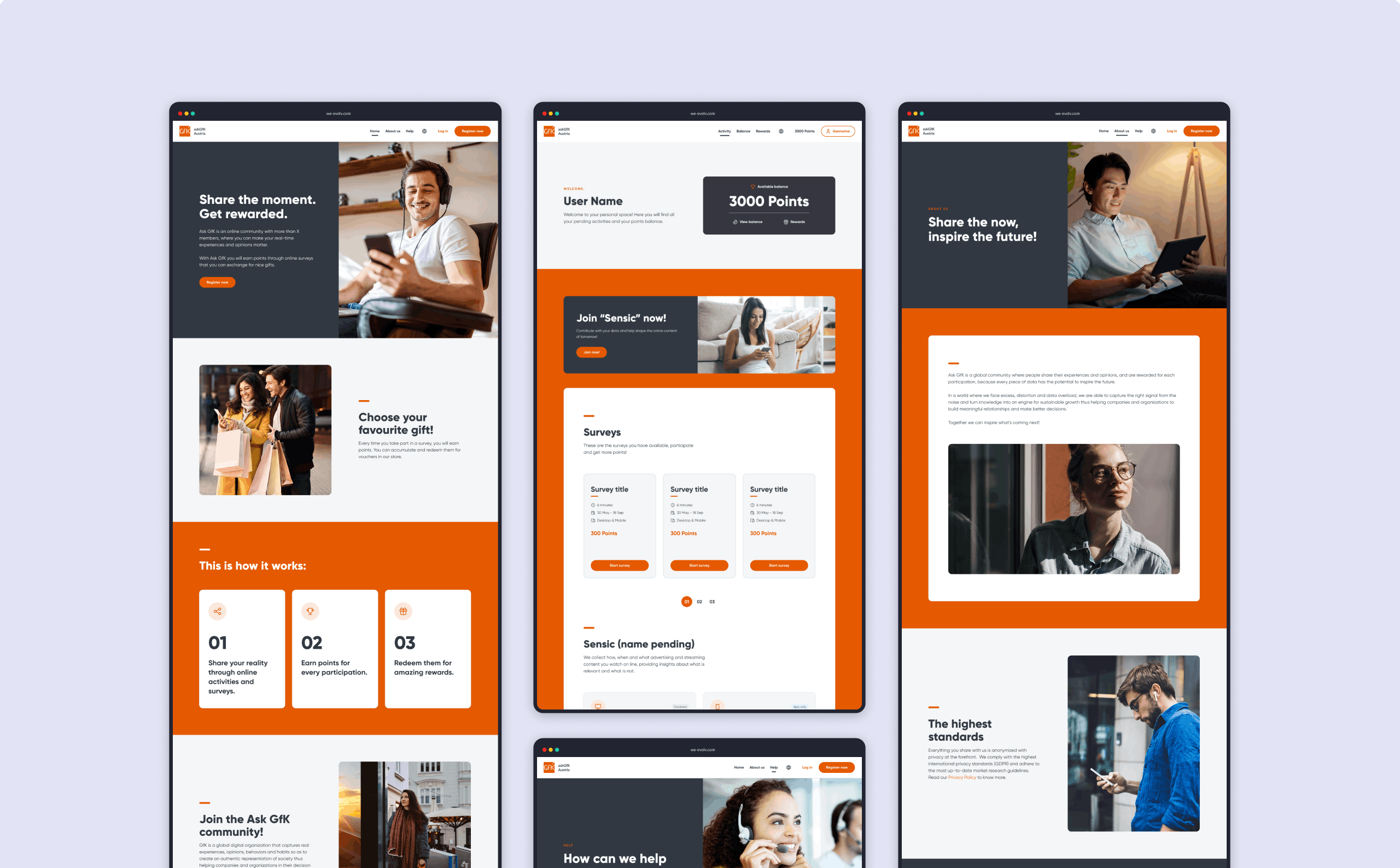
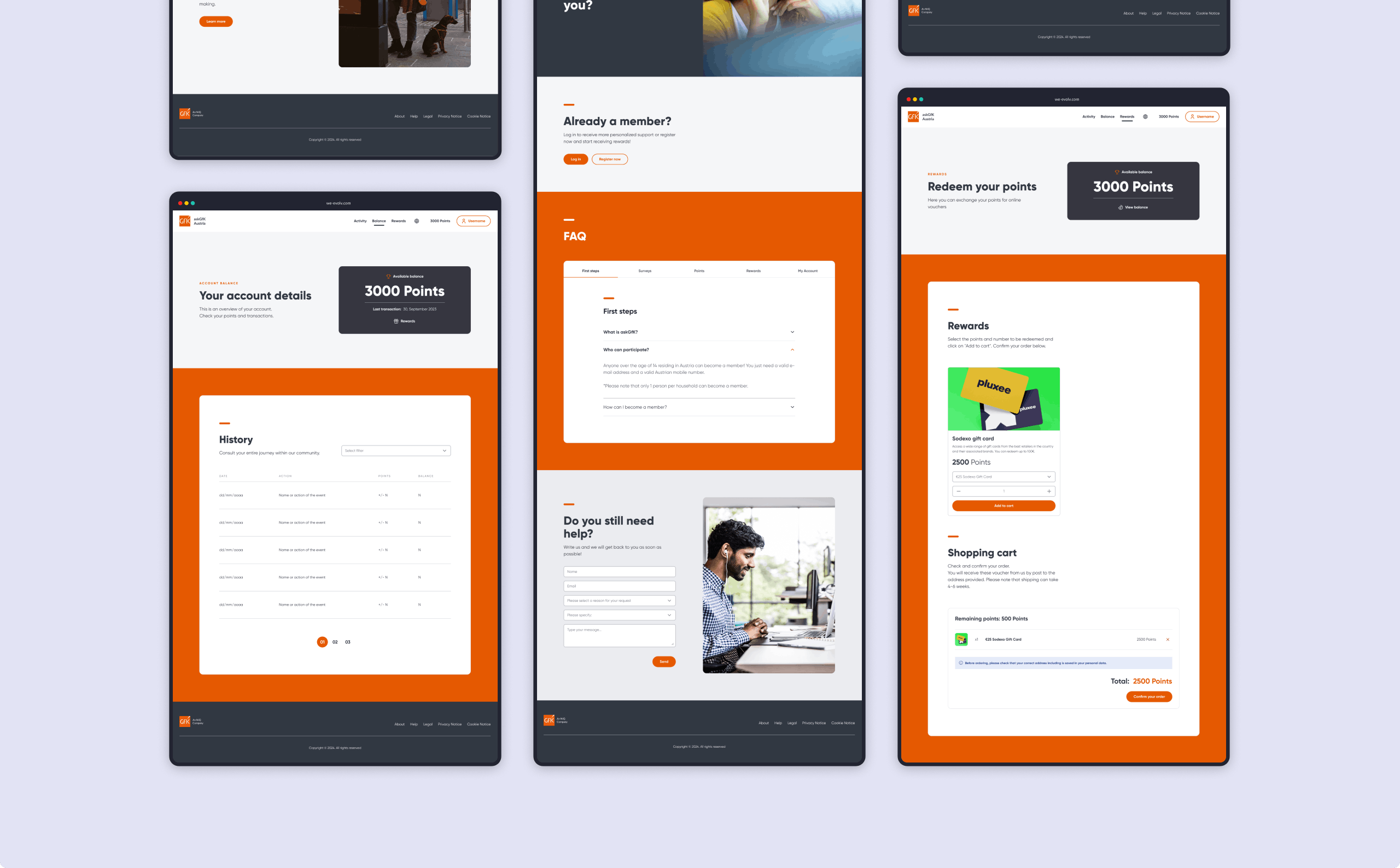
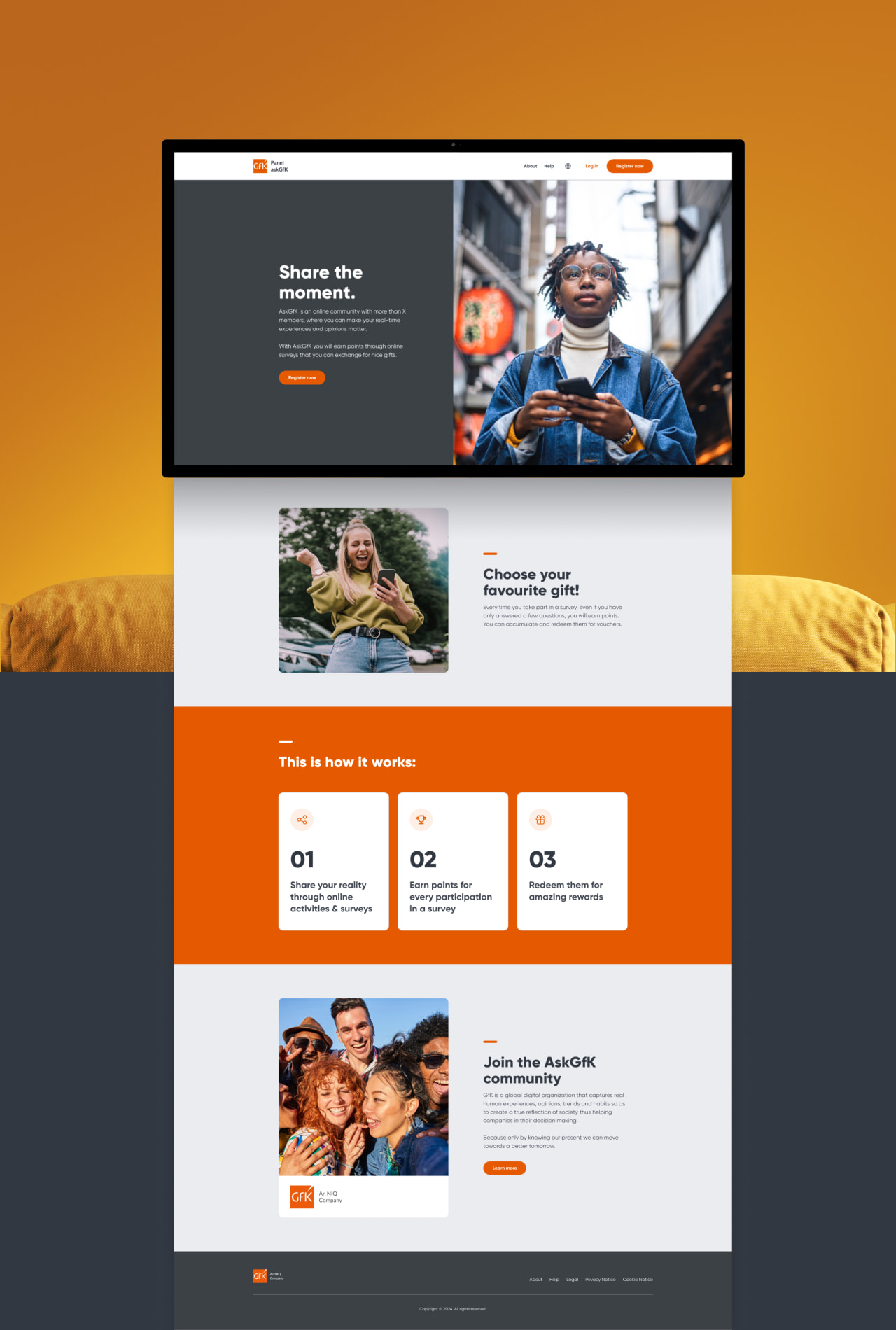
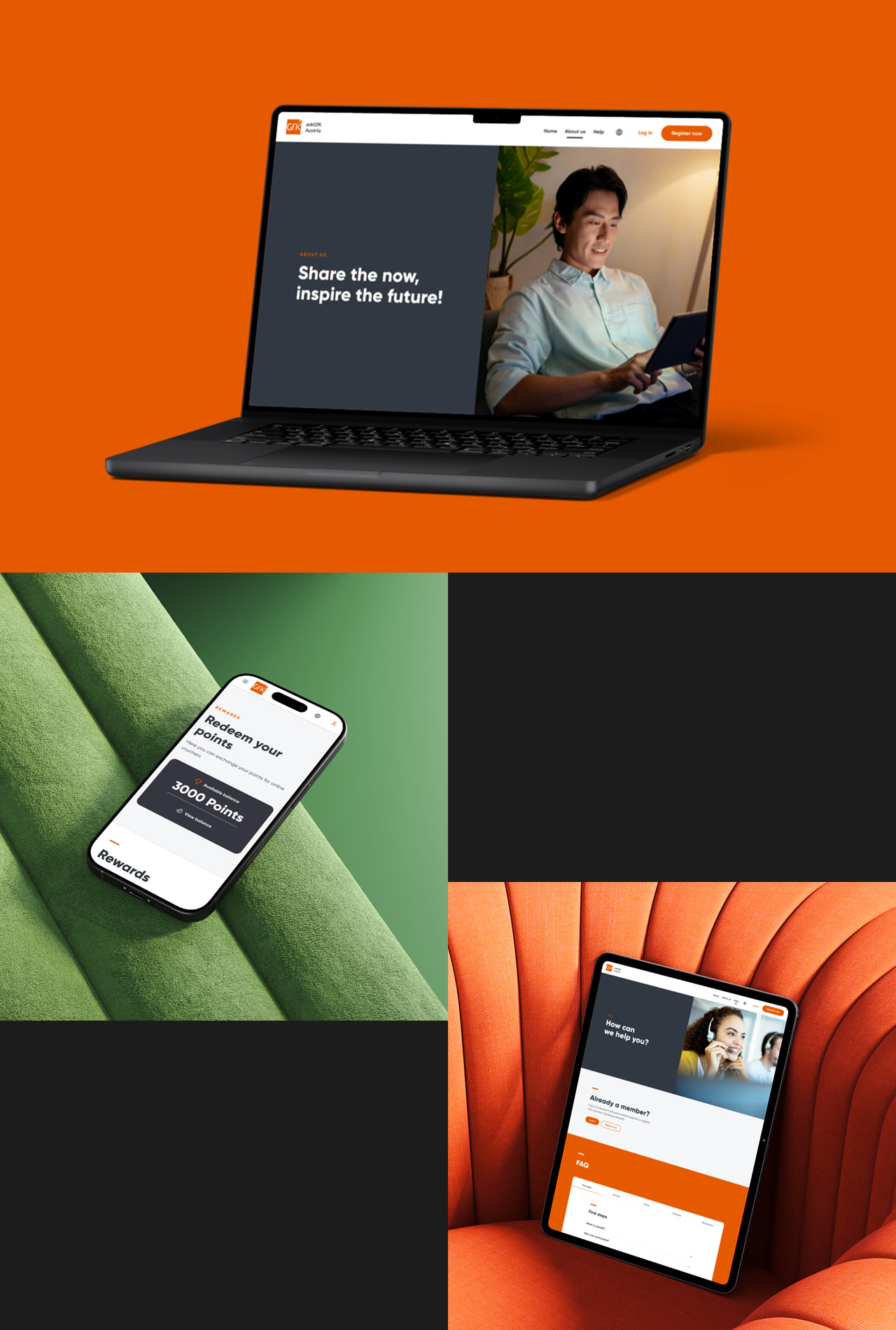
The output layer: production-ready templates showing how the system translates into real panel experiences across markets.
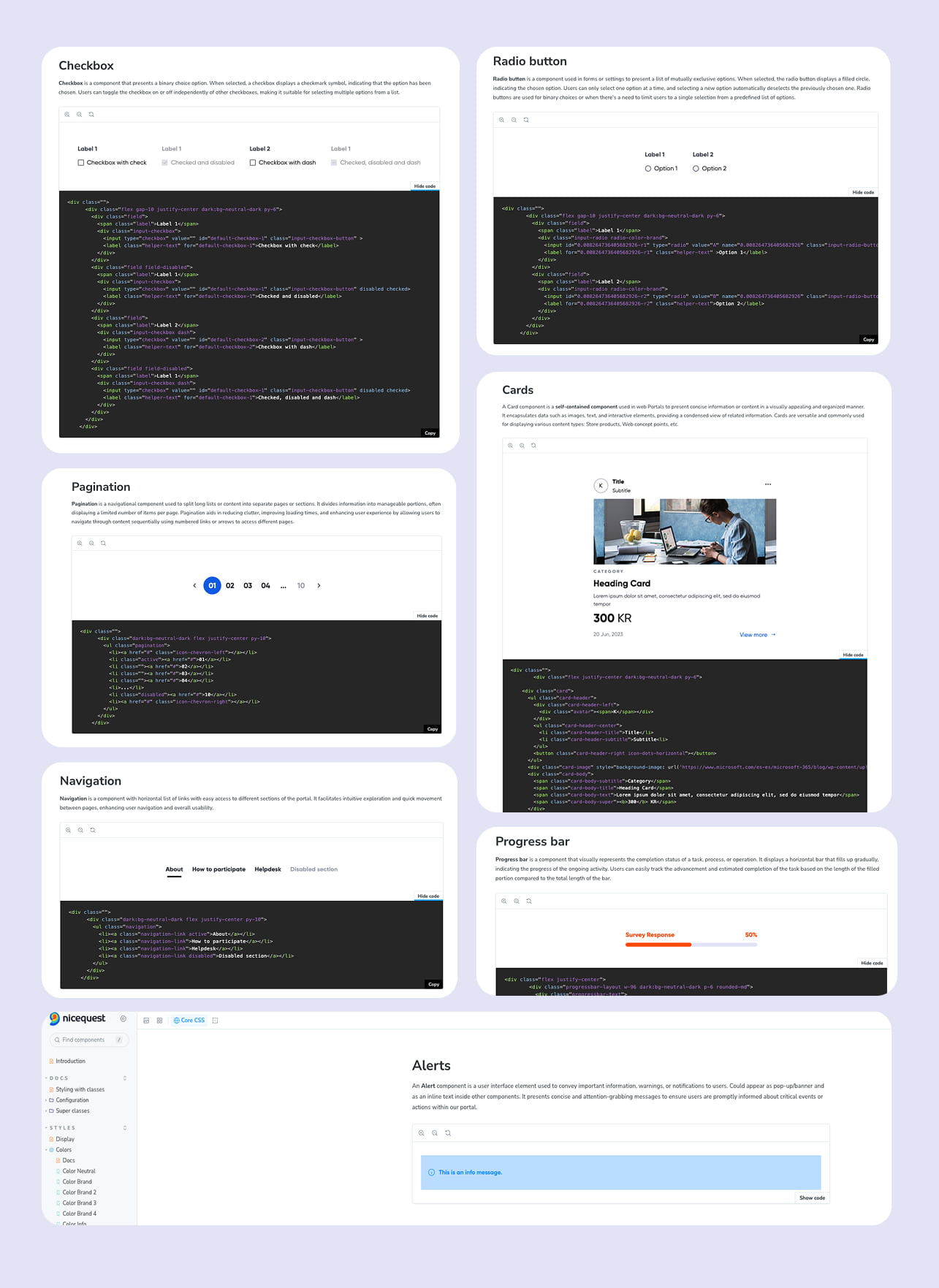
Engineering handoff: every component documented in Storybook with usage guidelines, properties, and code specs — reducing design dependency in production.


When the rollback to GfK branding came, the tokenised architecture meant the switch was a configuration change, not a redesign. The system wasn’t built for that scenario — it just happened to be exactly what was needed.
From kickoff to live, the design system side of One Panel took 1.5 years — coordinating across design, engineering, product, and panel operations teams spread across Europe and Latin America.
The Complication
During the final executive review, leadership decided to roll back to GfK branding. The Nicequest direction wouldn’t go to market.
This could have meant rebuilding everything. It didn’t — because the tokenised system meant brand values like colour and typography could be swapped at the token level, without touching components or logic. What would have been weeks of rework became a controlled handoff.
The system had been built so every panel shared the same foundation. That same architecture is what made the rollback clean. We hadn’t planned for this scenario — but good system design handled it anyway.


What Changed
For the brand:
- Trademark risk resolved before any market deployment
- Brand equity preserved through the transition
- A major strategic pivot absorbed without rework or disruption
For the organization
- Brand, Legal, Panel Operations, and Engineering aligned around a shared process for the first time
- Identity decisions moved from personal preference to research-backed validation
- A clear, repeatable model for future brand decisions


Reflection
Brand architecture is infrastructure. That’s the thing this project made clearest.
The trademark issue, the multi-market research, the executive rollback — none of these were surprises. They’re just what brand work looks like at this scale. The system held because it was designed for that reality, not just for the ideal scenario.
What shifted wasn’t just the logo. It was how the organization makes brand decisions — with more rigour, more alignment, and a foundation that doesn’t need to be rebuilt every time something changes.
Impact
Post-launch research across all 8 markets measured how panelists responded to the new identity. The results showed the transition hadn’t damaged the trust that made the panels work.
Launch cycles reduced
through reusable templates and shared components.
Consistent UX
across panel types and markets.
≈70% of panelists
overall panelist satisfaction, stable across demographics.
Lower rebrand risk
and safer brand pivots.
Stronger alignment
between design, product, and engineering.
DESIGN-DEPT.
Barcelona, Spain
Phone: +34 622 712 521
Email: fabioestellita@gmail.com
Linkedin: /in/fabioestellita/
Copyright © 2026 DESIGN DEPT.
All rights reserved.